
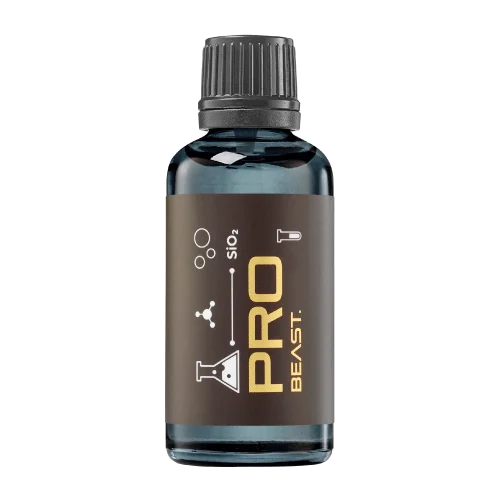
A full polishing range.
From cutting and one-step correction to final finishing.
Specialist chemistry. Expert application.
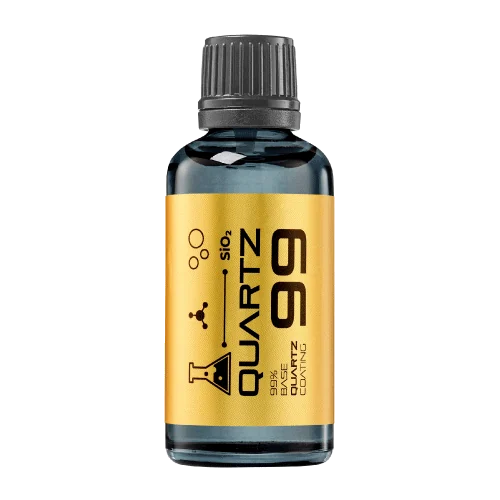 QUARTZ99 / CERAMIC BASE COAT
The foundation of your coating system.
A layerable quartz base coat designed for mechanical protection. Pair it with a suitable top coat to create the final finish.
For application by NANOLAB certified installers only.
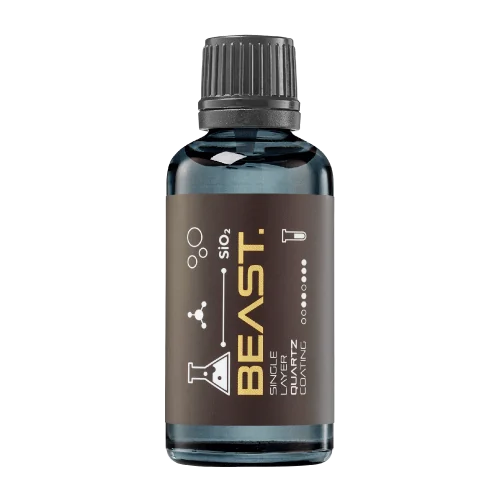
Four formulas. Extended working time. Find the coating for your finish.
Explore the BEAST family of ceramic coatings.
Find the coating for each exterior surface.
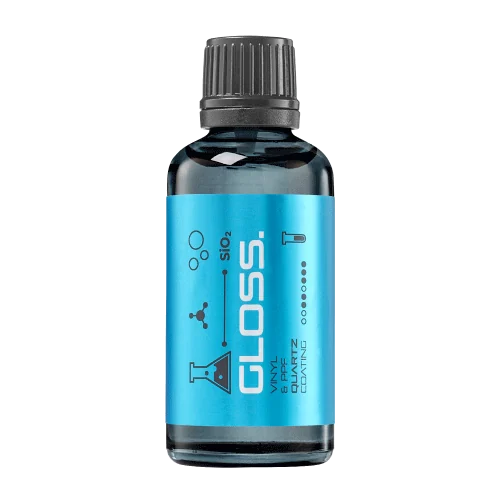 PPF & VINYLGLOSSProtection for glossy films and wraps.Discover
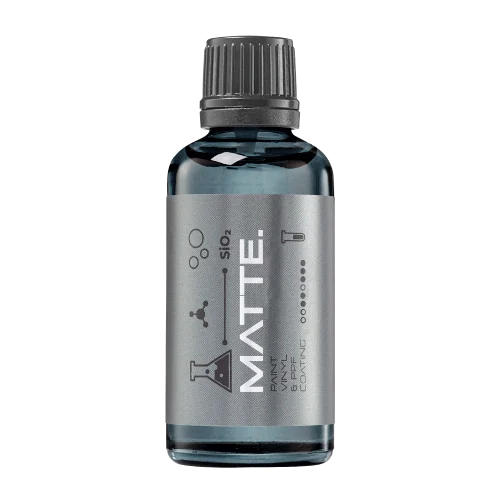 MATTE & SATINMATTEProtection that respects the finish.Discover
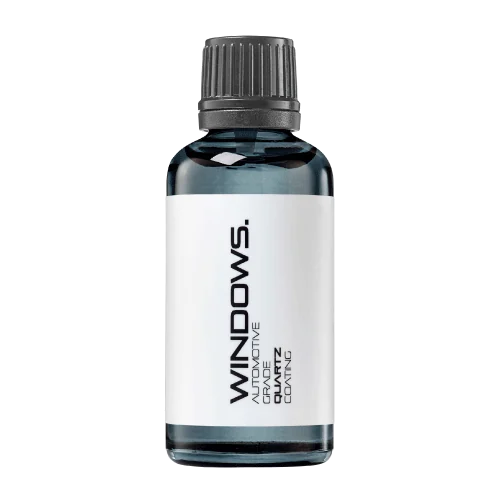 GLASSWINDOWSExplore dedicated glass protection.Discover
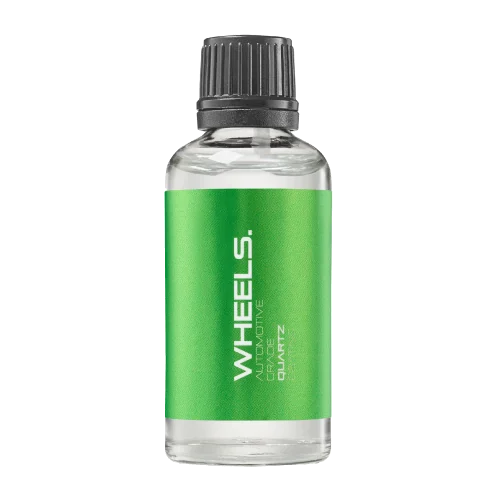 WHEEL PROTECTIONWHEELSA dedicated coating for your wheels.Discover
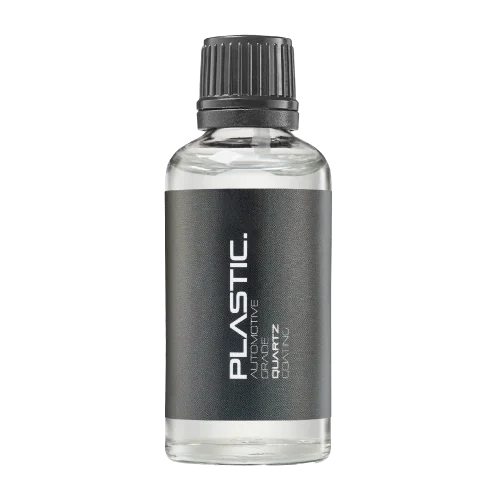 TRIM PROTECTIONPLASTICProtection for plastic surfaces.Discover
Dedicated care for the surfaces inside.
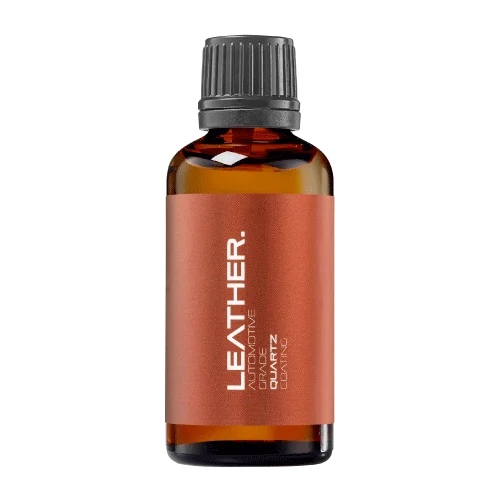 LEATHER SURFACESLEATHERDiscover NANOLAB leather protection.Discover PLASTIC SURFACESPLASTICProtection for interior plastic surfaces.Discover TEXTILE SURFACESFABRICExplore the latest fabric formulation.Discover
 Preview all six shampoos →
Spray protection, maintenance and upcoming wash products.
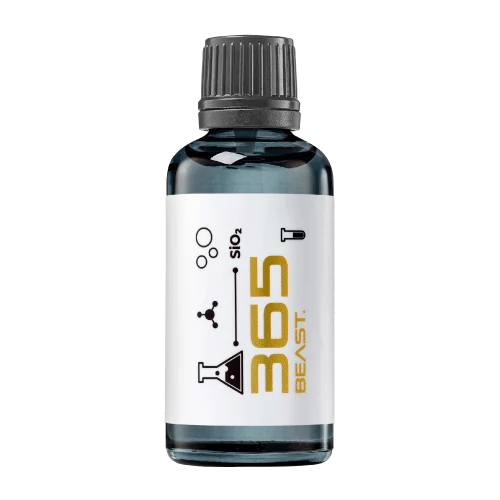 MAINTENANCEBEAST 365Explore the BEAST maintenance range.Discover
Next in washing, cleaning & care.
Ceramic protection for boats and yachts.
An easy-to-apply ceramic coating with an established track record on boats and yachts around the world.
Results vary with surface preparation, exposure and maintenance.
Read 50 MARINE guides →Explore MARINEProtection for the surfaces you live with.
A look at what we’re developing.
From cutting and one-step correction to final finishing.
A wider range for professional vehicle care.
Taking shape alongside BEAST & MATRIX.
Practical guidance for your next coating project.
Explore all guides →
Read an amplitude-sweep example, choose a defensible working region and distinguish a liquid formulation’s response from the durability of its cured film.
Updated · NANOLAB Knowledge
An oscillatory amplitude sweep helps determine how strongly a formulation can be deformed before its measured viscoelastic response changes with the imposed amplitude. This is useful when developing a structured shampoo, polish or coating dispersion and planning subsequent oscillatory measurements. It is not a test of scratch resistance on a finished vehicle.
The laboratory varies strain or stress amplitude while holding the selected frequency and temperature constant. The storage modulus G′ describes the elastic contribution and the loss modulus G″ the dissipative contribution under those conditions. A range where the moduli are effectively independent of amplitude is the linear viscoelastic region, often abbreviated LVR or LVE region.
A plateau must be measured within the instrument’s reliable signal range. Tiny amplitudes are not automatically better. Likewise, G′ exceeding G″ at one frequency describes that test condition; it does not prove permanent solidity or storage stability.
Imagine the following data for one structured liquid at a fixed frequency and temperature. They are invented teaching values, not NANOLAB results.
| Strain amplitude | G′ | G″ |
|---|---|---|
| 0.05% | 100 Pa | 40 Pa |
| 0.10% | 100 Pa | 40 Pa |
| 0.20% | 99 Pa | 40 Pa |
| 0.50% | 96 Pa | 41 Pa |
| 1.00% | 87 Pa | 44 Pa |
If the predefined screening criterion is no more than a 5% decrease from a 100 Pa G′ plateau, the threshold is 95 Pa. The sampled 0.50% point remains above it; 1.00% does not. The actual crossing lies somewhere between the sampled points, assuming a smooth decrease. The table does not locate an exact boundary.
A candidate follow-up amplitude such as 0.10% leaves space below that boundary, but it still requires adequate signal and confirmation under every planned condition. The 5% criterion is illustrative, not a universal product acceptance rule. Examine G″ and data quality too rather than accepting a result solely because one column passes.
TA Instruments shows that the linear-region boundary can depend on temperature and frequency and recommends checking the relevant extremes. Therefore a single room-temperature sweep is not blanket permission for every later measurement. A crossover where G′ equals G″ is also a different event from the first departure from a plateau.
For a development comparison, report both the plateau behaviour and the defined boundary with repeatability information. Then test practical dispensing, spreading and storage separately. See the distinction between yield behaviour and viscosity before turning an instrument curve into a process setting.
Technical references: Anton Paar: amplitude sweeps; TA Instruments: temperature and frequency effects on the linear region.