






A full polishing range.
From cutting and one-step correction to final finishing.
Specialist chemistry. Expert application.
 QUARTZ99 / CERAMIC BASE COAT
The foundation of your coating system.
A layerable quartz base coat designed for mechanical protection. Pair it with a suitable top coat to create the final finish.
For application by NANOLAB certified installers only.
Four formulas. Extended working time. Find the coating for your finish.
Explore the BEAST family of ceramic coatings.
Find the coating for each exterior surface.
 PPF & VINYLGLOSSProtection for glossy films and wraps.Discover
 MATTE & SATINMATTEProtection that respects the finish.Discover
 GLASSWINDOWSExplore dedicated glass protection.Discover
 WHEEL PROTECTIONWHEELSA dedicated coating for your wheels.Discover
 TRIM PROTECTIONPLASTICProtection for plastic surfaces.Discover
Dedicated care for the surfaces inside.
 LEATHER SURFACESLEATHERDiscover NANOLAB leather protection.Discover PLASTIC SURFACESPLASTICProtection for interior plastic surfaces.Discover TEXTILE SURFACESFABRICExplore the latest fabric formulation.Discover
Spray protection, maintenance and upcoming wash products.
 MAINTENANCEBEAST 365Explore the BEAST maintenance range.Discover
Next in washing, cleaning & care.
Ceramic protection for boats and yachts.
An easy-to-apply ceramic coating with an established track record on boats and yachts around the world.
Results vary with surface preparation, exposure and maintenance.
Read 50 MARINE guides →Explore MARINEProtection for the surfaces you live with.
A look at what we’re developing.
From cutting and one-step correction to final finishing.
A wider range for professional vehicle care.
Taking shape alongside BEAST & MATRIX.
Practical guidance for your next coating project.
Explore all guides →
Measure wash-bay water use by stage, include the full job boundary, and evaluate savings without compromising rinsing or finish quality.
Updated · NANOLAB Knowledge
Water use per job is easiest to understand when the wash process is divided into measurable stages. Total meter change gives the overall amount, while stage records show where operational changes could matter. Keep coating preparation and maintenance quality as the required outcome.
Record whether the figure includes pre-rinse, bucket filling, chemical dilution, final rinse, equipment cleanup and water-treatment losses. A “litres per car” claim that excludes half the process cannot fairly be compared with a whole-bay total.
In an illustrative job, 25 litres of pre-rinse, 15 litres for buckets, 30 litres of rinsing and 10 litres of cleanup total 80 litres. If reverse-osmosis concentrate is generated separately, identify whether it is included in that total.
Measure the actual process before changing it. A hose left running while tools are moved is different from water used to rinse cleaner thoroughly. Reducing the former may save water without changing the specified cleaning procedure; reducing the latter could leave residue.
Record vehicle size, contamination and unusual work. A muddy large vehicle and a lightly dusty compact car should not be treated as identical jobs. Use representative groups rather than selecting the easiest example as the universal standard.
After a procedural change, compare water use alongside cleaning result, time and any rework. If the team saves 10 litres but must repeat the rinse, the initial saving is incomplete. Include the whole job in the revised total.
Use the findings to size tanks, plan mobile visits and identify waste. Do not turn a small internal study into an environmental performance claim without a clear boundary and representative evidence. The immediate benefit is a practical operating number that staff can reproduce and explain.
For product-specific application instructions, consult NANOLAB technical documentation or ask about your surface and intended use.
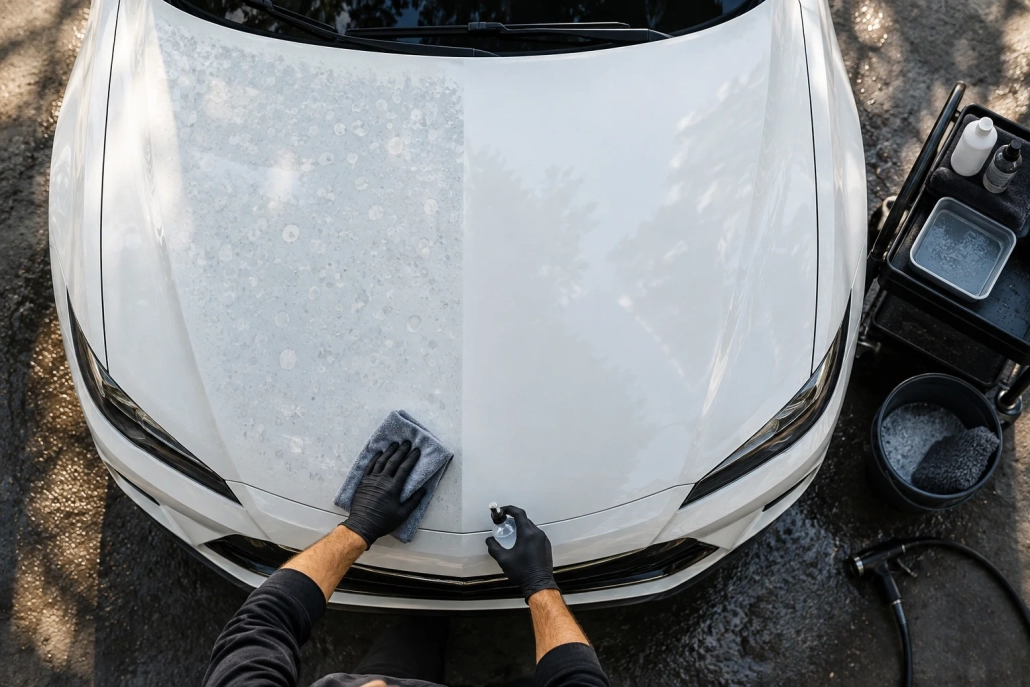
Understand why softened water and deionised rinse water are different when planning washing and drying for a ceramic-coated car.
A TDS display can help monitor a water-treatment system, but it does not describe every contaminant or guarantee that drying will leave no marks.
Estimate hose flow with a timed collection test, calculate litres per minute, and keep flow measurement separate from pressure.