






A full polishing range.
From cutting and one-step correction to final finishing.
Specialist chemistry. Expert application.
 QUARTZ99 / CERAMIC BASE COAT
The foundation of your coating system.
A layerable quartz base coat designed for mechanical protection. Pair it with a suitable top coat to create the final finish.
For application by NANOLAB certified installers only.
Four formulas. Extended working time. Find the coating for your finish.
Explore the BEAST family of ceramic coatings.
Find the coating for each exterior surface.
 PPF & VINYLGLOSSProtection for glossy films and wraps.Discover
 MATTE & SATINMATTEProtection that respects the finish.Discover
 GLASSWINDOWSExplore dedicated glass protection.Discover
 WHEEL PROTECTIONWHEELSA dedicated coating for your wheels.Discover
 TRIM PROTECTIONPLASTICProtection for plastic surfaces.Discover
Dedicated care for the surfaces inside.
 LEATHER SURFACESLEATHERDiscover NANOLAB leather protection.Discover PLASTIC SURFACESPLASTICProtection for interior plastic surfaces.Discover TEXTILE SURFACESFABRICExplore the latest fabric formulation.Discover
Spray protection, maintenance and upcoming wash products.
 MAINTENANCEBEAST 365Explore the BEAST maintenance range.Discover
Next in washing, cleaning & care.
Ceramic protection for boats and yachts.
An easy-to-apply ceramic coating with an established track record on boats and yachts around the world.
Results vary with surface preparation, exposure and maintenance.
Read 50 MARINE guides →Explore MARINEProtection for the surfaces you live with.
A look at what we’re developing.
From cutting and one-step correction to final finishing.
A wider range for professional vehicle care.
Taking shape alongside BEAST & MATRIX.
Practical guidance for your next coating project.
Explore all guides →
Verify product roles and limitations before releasing a comparative article or brochure.
Updated · NANOLAB Knowledge
A coating comparison can become inaccurate even when each individual product page is correct. The table may compare different scopes, omit important conditions or use an old image. Review the comparison as its own publication before releasing it.
State who the comparison is for and which decision it supports. Products with different roles may need an explanation of sequence rather than a ranking. Avoid making a base layer, standalone product and maintenance item compete in one undefined performance score.
Record the exact source for intended surfaces, finish scope, instructions and other included facts. Verify that the source refers to the current variant. Mark unknown information instead of filling the cell from a similar product or a marketing assumption. Remove metrics that do not help the intended reader make a valid choice.
For example, placing professional-only requirements in a footnote can make a product appear suitable for every buyer even if the words are technically present. Review headings, ordering, icons and calls to action together. Have a product owner check the final layout and retain the approval record. A good comparison makes differences understandable without turning visual hierarchy or missing context into an unsupported superiority claim.
List each statement being made about each product and its current source. Confirm that the comparison uses equivalent definitions, surfaces and conditions where a direct comparison is intended. Mark information that is unavailable instead of filling it with assumptions.
Do not turn a manufacturer's named test result into a broader ranking across all uses. Also check whether the compared products perform different roles, such as a maintenance treatment and a curing coating. Keep the review date and evidence owner with the draft. The page should help a buyer understand relevant differences, not create an impression of superiority from incompatible tests, selective omissions or unverified descriptions of another company's product.
Discuss a NANOLAB private-label project. For supporting information, review the current product documentation and the private-label guides.

Use consistent product codes to distinguish coating formulas, pack sizes and kits across purchasing, storage and customer orders.
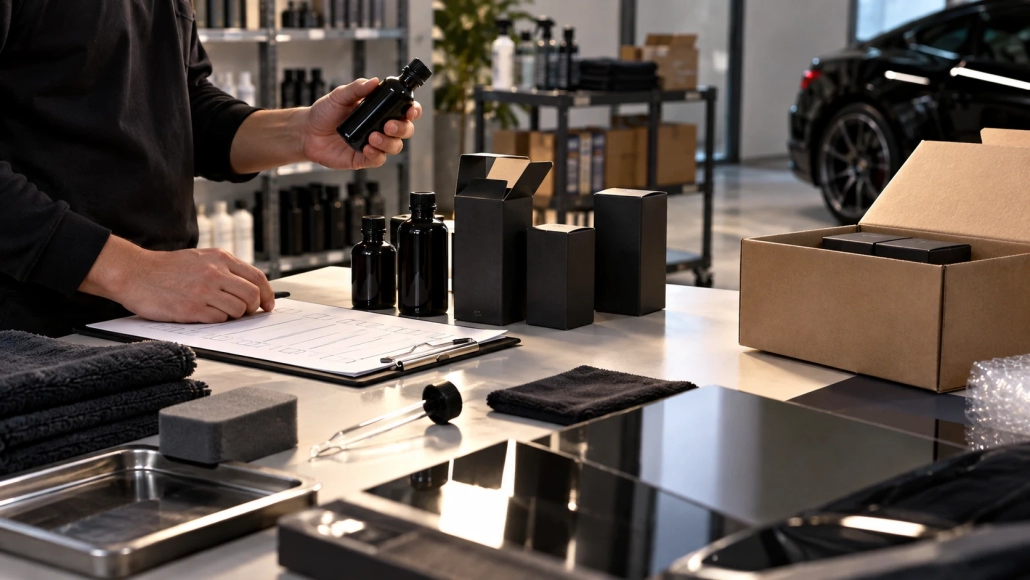
Check product approval, packaging, instructions, stock readiness and support before launching a private label ceramic coating range.

Keep product pages, labels and support answers aligned through one controlled fact register.