






A full polishing range.
From cutting and one-step correction to final finishing.
Specialist chemistry. Expert application.
 QUARTZ99 / CERAMIC BASE COAT
The foundation of your coating system.
A layerable quartz base coat designed for mechanical protection. Pair it with a suitable top coat to create the final finish.
For application by NANOLAB certified installers only.
Four formulas. Extended working time. Find the coating for your finish.
Explore the BEAST family of ceramic coatings.
Find the coating for each exterior surface.
 PPF & VINYLGLOSSProtection for glossy films and wraps.Discover
 MATTE & SATINMATTEProtection that respects the finish.Discover
 GLASSWINDOWSExplore dedicated glass protection.Discover
 WHEEL PROTECTIONWHEELSA dedicated coating for your wheels.Discover
 TRIM PROTECTIONPLASTICProtection for plastic surfaces.Discover
Dedicated care for the surfaces inside.
 LEATHER SURFACESLEATHERDiscover NANOLAB leather protection.Discover PLASTIC SURFACESPLASTICProtection for interior plastic surfaces.Discover TEXTILE SURFACESFABRICExplore the latest fabric formulation.Discover
Spray protection, maintenance and upcoming wash products.
 MAINTENANCEBEAST 365Explore the BEAST maintenance range.Discover
Next in washing, cleaning & care.
Ceramic protection for boats and yachts.
An easy-to-apply ceramic coating with an established track record on boats and yachts around the world.
Results vary with surface preparation, exposure and maintenance.
Read 50 MARINE guides →Explore MARINEProtection for the surfaces you live with.
A look at what we’re developing.
From cutting and one-step correction to final finishing.
A wider range for professional vehicle care.
Taking shape alongside BEAST & MATRIX.
Practical guidance for your next coating project.
Explore all guides →
Plan coating and maintenance for glass behind fixed shower screens by checking reach, tool access and rinse removal before promising easier cleaning.
Updated · NANOLAB Knowledge
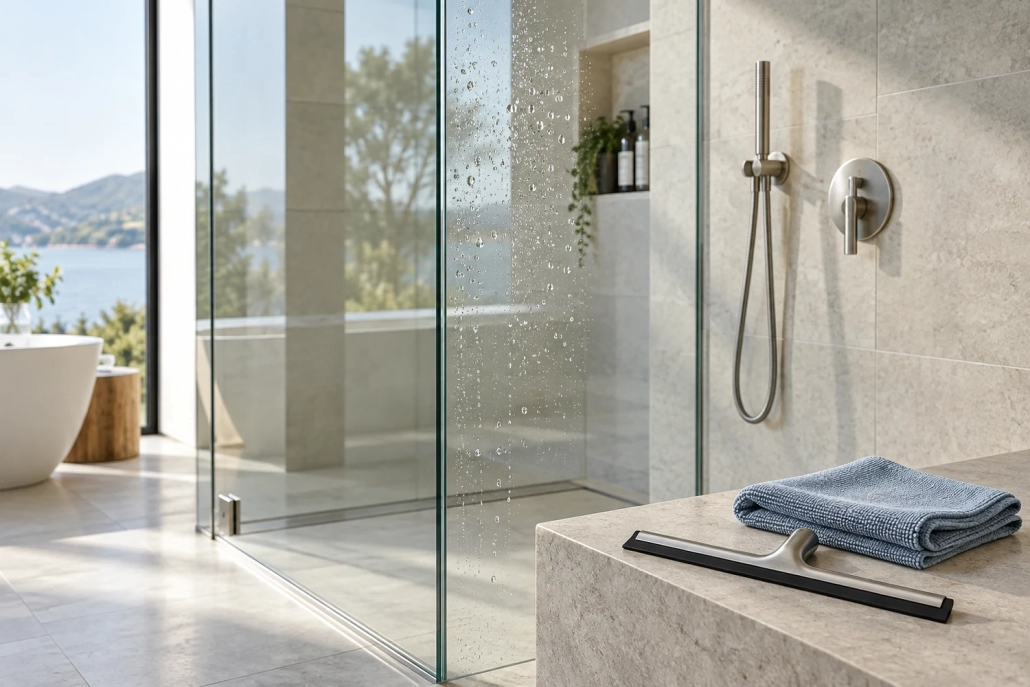
A coated glass surface can still be difficult to maintain if the cleaner cannot safely reach it. Fixed screens, narrow overlaps and nearby cabinets can restrict application, inspection and routine drying. Resolve access during planning instead of assuming the coating will compensate for an inaccessible layout.
Inspect the installed geometry or a reliable drawing. Identify the face to be coated and the space available for a hand, cloth or approved tool. Check the top, bottom and overlap zones separately. A gap that admits a tool may still be too narrow to move it with controlled pressure or remove the cleaning solution afterward.
| Task | Access question |
|---|---|
| Preparation | Can residue be removed without trapping cleaner? |
| Application | Can the product be distributed and finished as instructed? |
| Inspection | Can the dry surface be viewed under useful light? |
| Maintenance | Can the user reach and clean the full treated area? |
| Recovery | How would an unexpected residue or defect be addressed? |
A fabricator may be able to coat a panel before assembly while the eventual cleaner cannot reach part of it. Factory application can solve an application-access problem; it does not automatically solve the future maintenance problem. Both should appear in the project scope.
Do not remove structural fittings or alter glass supports as an informal detailing step. Any disassembly or layout change belongs with the responsible installer and the product’s installation requirements.
Use a safe mock-up where possible to confirm reach and motion with the intended tool. Check that the handle, frame and abrasive edges do not contact adjacent finishes. Confirm how the tool is cleaned and dried between uses. A long handle is not useful if it converts a controlled wiping motion into an uncontrolled scrape.
For an illustrative narrow overlap, the team may discover that a cloth can enter but cannot be turned or retrieved without contacting a seal. That is a design or method limitation to resolve before application, not a reason to pour more cleaner into the gap.
If an area cannot be prepared, coated or inspected by the supported process, identify it clearly. Do not describe the entire screen as uniformly treated. If a maintenance route remains unresolved, state it in the handover and obtain the appropriate supplier or installer advice before promising easier care.
A realistic quotation can distinguish accessible glass, factory-treated areas and zones requiring a separate decision. That is more useful than one blanket promise that later becomes a dispute about a hidden strip.
Replacement handles, seals, storage accessories or cabinets can change the available space. Recheck the care plan when the enclosure changes. The aim is a maintainable system: suitable glass and coating, an accessible layout, compatible tools and a cleaning routine the actual user can perform.
Discuss your shower-glass project. Follow the current instructions for the exact product when planning application and care.

 Stainless Steel beside Painted Cabinets: Control Cleaner Runoff and Tool Co...