






A full polishing range.
From cutting and one-step correction to final finishing.
Specialist chemistry. Expert application.
 QUARTZ99 / CERAMIC BASE COAT
The foundation of your coating system.
A layerable quartz base coat designed for mechanical protection. Pair it with a suitable top coat to create the final finish.
For application by NANOLAB certified installers only.
Four formulas. Extended working time. Find the coating for your finish.
Explore the BEAST family of ceramic coatings.
Find the coating for each exterior surface.
 PPF & VINYLGLOSSProtection for glossy films and wraps.Discover
 MATTE & SATINMATTEProtection that respects the finish.Discover
 GLASSWINDOWSExplore dedicated glass protection.Discover
 WHEEL PROTECTIONWHEELSA dedicated coating for your wheels.Discover
 TRIM PROTECTIONPLASTICProtection for plastic surfaces.Discover
Dedicated care for the surfaces inside.
 LEATHER SURFACESLEATHERDiscover NANOLAB leather protection.Discover PLASTIC SURFACESPLASTICProtection for interior plastic surfaces.Discover TEXTILE SURFACESFABRICExplore the latest fabric formulation.Discover
Spray protection, maintenance and upcoming wash products.
 MAINTENANCEBEAST 365Explore the BEAST maintenance range.Discover
Next in washing, cleaning & care.
Ceramic protection for boats and yachts.
An easy-to-apply ceramic coating with an established track record on boats and yachts around the world.
Results vary with surface preparation, exposure and maintenance.
Read 50 MARINE guides →Explore MARINEProtection for the surfaces you live with.
A look at what we’re developing.
From cutting and one-step correction to final finishing.
A wider range for professional vehicle care.
Taking shape alongside BEAST & MATRIX.
Practical guidance for your next coating project.
Explore all guides →
Request a small set of purposeful photographs for remote coating diagnosis, with consistent lighting and clear surface locations.
Updated · NANOLAB Knowledge

Ten close-ups of the same reflection may provide less diagnostic value than three photographs answering different questions. Remote support benefits from an image plan matched to the uncertainty.
A wide view shows the affected area relative to panel edges, water paths, joints and surrounding materials. Mark the location without covering the defect. Include the surface identity and whether the photograph is before or after cleaning.
| Image | Question |
|---|---|
| Close-up | What is the local pattern or texture? |
| Angled reflection | Does lighting reveal haze or unevenness? |
| Comparable unaffected area | What does the accepted condition look like? |
| Repeat view after an approved step | What changed during that step? |
Use original files without beauty filters or selective enhancement. Keep camera distance and lighting comparable for before-and-after images. Avoid including unnecessary people, documents or identifying details in the frame.
Images may guide the next check but cannot reliably identify every chemical deposit, hidden layer or tactile change. If the evidence remains ambiguous, request an in-person inspection or appropriate sample assessment. Do not turn a plausible visual explanation into a definitive diagnosis. Record the working hypothesis and the observation that would confirm or challenge it.
Ask NANOLAB about your surface and intended use. For application and care, use the current instructions for the exact product.
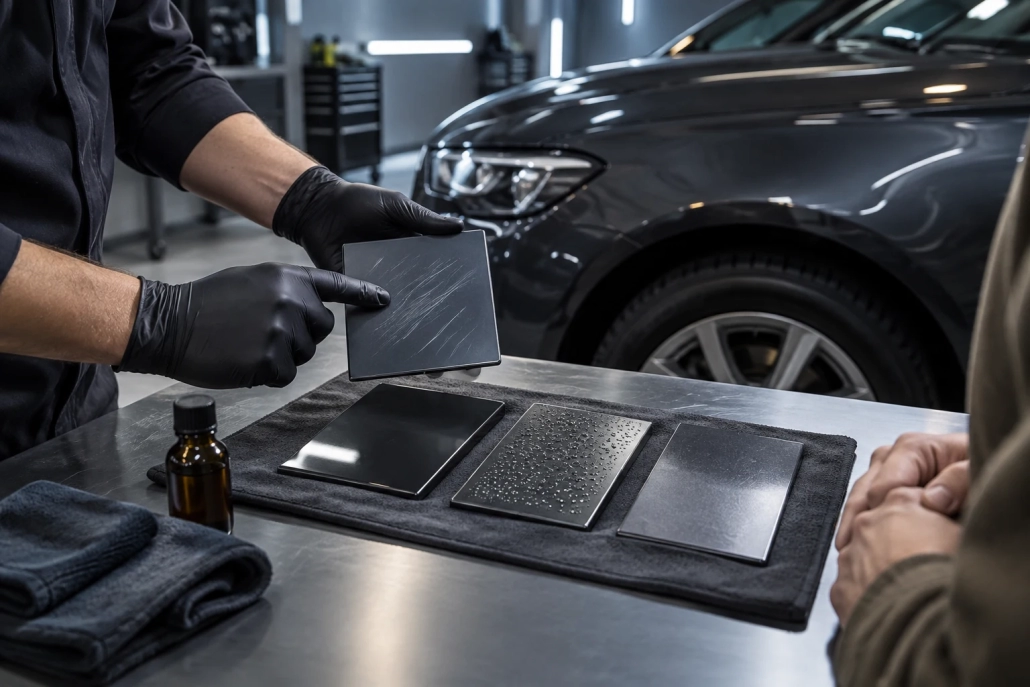
Keep coating performance statements connected to their product version, test method and limitations before using them in sales material.
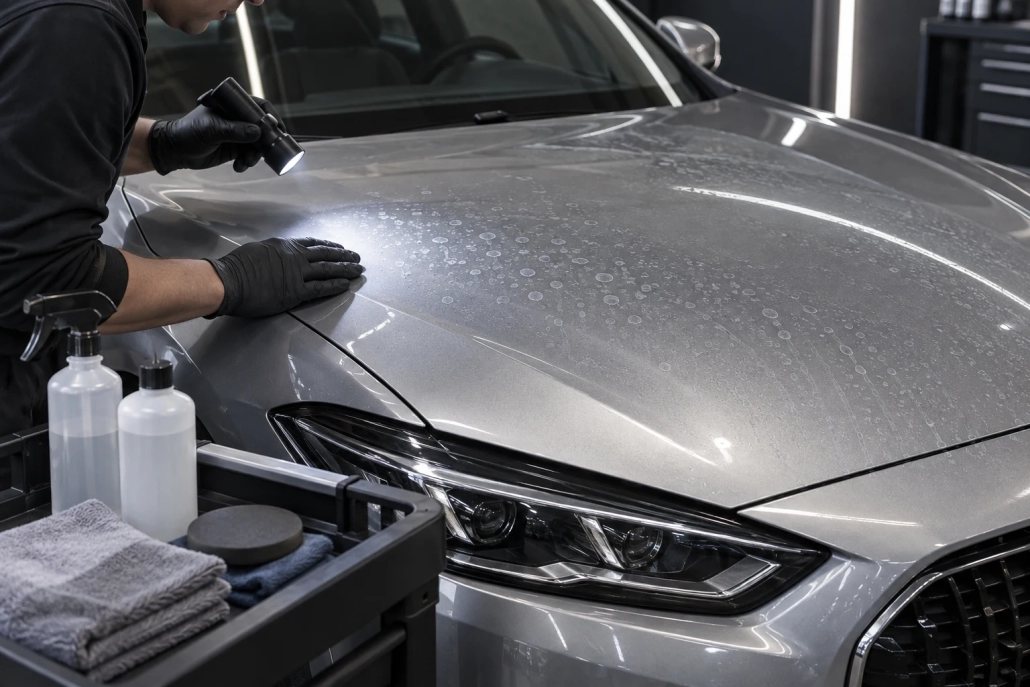
Distinguish mineral deposits from etched damage and choose a compatible response before considering polishing or coating renewal.
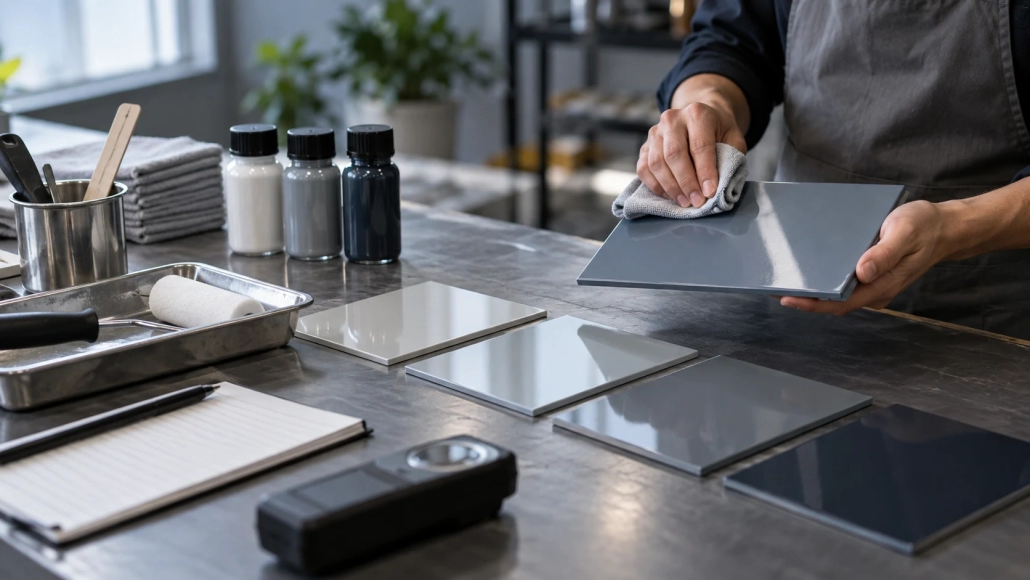
Keep coating instructions, service commitments and warranty documents aligned while preserving the different purpose of each.

 Product Instructions, Service Promises and Warranty Documents: Keep Their Roles...