






A full polishing range.
From cutting and one-step correction to final finishing.
Specialist chemistry. Expert application.
 QUARTZ99 / CERAMIC BASE COAT
The foundation of your coating system.
A layerable quartz base coat designed for mechanical protection. Pair it with a suitable top coat to create the final finish.
For application by NANOLAB certified installers only.
Four formulas. Extended working time. Find the coating for your finish.
Explore the BEAST family of ceramic coatings.
Find the coating for each exterior surface.
 PPF & VINYLGLOSSProtection for glossy films and wraps.Discover
 MATTE & SATINMATTEProtection that respects the finish.Discover
 GLASSWINDOWSExplore dedicated glass protection.Discover
 WHEEL PROTECTIONWHEELSA dedicated coating for your wheels.Discover
 TRIM PROTECTIONPLASTICProtection for plastic surfaces.Discover
Dedicated care for the surfaces inside.
 LEATHER SURFACESLEATHERDiscover NANOLAB leather protection.Discover PLASTIC SURFACESPLASTICProtection for interior plastic surfaces.Discover TEXTILE SURFACESFABRICExplore the latest fabric formulation.Discover
Spray protection, maintenance and upcoming wash products.
 MAINTENANCEBEAST 365Explore the BEAST maintenance range.Discover
Next in washing, cleaning & care.
Ceramic protection for boats and yachts.
An easy-to-apply ceramic coating with an established track record on boats and yachts around the world.
Results vary with surface preparation, exposure and maintenance.
Read 50 MARINE guides →Explore MARINEProtection for the surfaces you live with.
A look at what we’re developing.
From cutting and one-step correction to final finishing.
A wider range for professional vehicle care.
Taking shape alongside BEAST & MATRIX.
Practical guidance for your next coating project.
Explore all guides →
Preserve grain direction and handling history when comparing brushed stainless steel samples before and after a surface treatment.
Updated · NANOLAB Knowledge
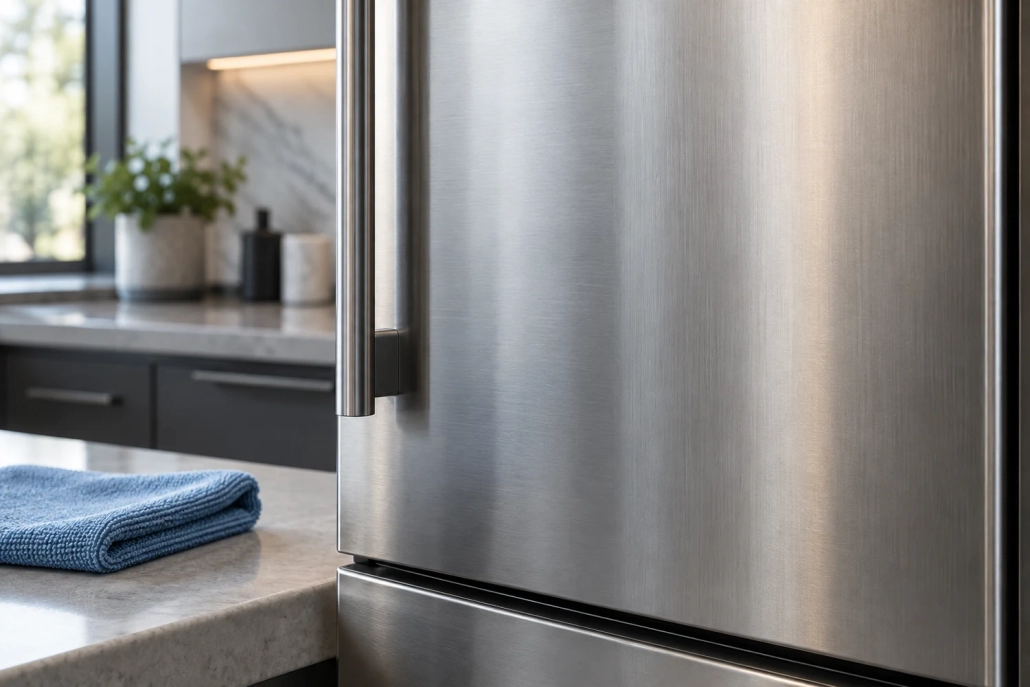
Brushed stainless steel can look lighter or darker as its orientation changes. A sample turned through ninety degrees may appear different even when nothing has happened to its surface. Handling and orientation therefore belong in the comparison method.
Put a grain-direction arrow and sample identifier on the reverse or an agreed non-test area. Record which edge is uppermost in photographs. Do not write on the measurement area or use a label that contaminates it.
Handle samples using a documented method that avoids fingerprints and contact marks. Store them separately so faces do not rub together. If protective film is present, record when and how it was removed and follow the supplier’s instructions.
| Control | Reason |
|---|---|
| Same grain direction | Reduces orientation-driven appearance differences |
| Same light and camera position | Makes reflected features comparable |
| Same cleaning history | Avoids comparing residue with treatment effect |
| Untreated reference | Preserves the original accepted finish |
Photograph each sample before coating and after the specified conditioning period. Include a second viewing direction if that reflects the installed use, but keep it consistent across samples. For example, a lift-panel sample should be judged in its intended vertical grain orientation as well as any agreed inspection angle. If a handling mark appears, record it rather than quietly cleaning only one sample with a different process. That distinction prevents a preparation change from being mistaken for coating performance.
Ask NANOLAB about your surface and intended use. For application and care, use the current instructions for the exact product.
Stainless steel appears in appliances, decorative panels, fittings and architectural details.
Brushed and polished stainless steel can show cleaning and application marks differently.
Compare protective-film removal patterns across incoming stainless sheets to distinguish handling variation from later coating effects.

 Incoming Stainless Sheets: Compare Protective-Film Peel Patterns across a D...