






A full polishing range.
From cutting and one-step correction to final finishing.
Specialist chemistry. Expert application.
 QUARTZ99 / CERAMIC BASE COAT
The foundation of your coating system.
A layerable quartz base coat designed for mechanical protection. Pair it with a suitable top coat to create the final finish.
For application by NANOLAB certified installers only.
Four formulas. Extended working time. Find the coating for your finish.
Explore the BEAST family of ceramic coatings.
Find the coating for each exterior surface.
 PPF & VINYLGLOSSProtection for glossy films and wraps.Discover
 MATTE & SATINMATTEProtection that respects the finish.Discover
 GLASSWINDOWSExplore dedicated glass protection.Discover
 WHEEL PROTECTIONWHEELSA dedicated coating for your wheels.Discover
 TRIM PROTECTIONPLASTICProtection for plastic surfaces.Discover
Dedicated care for the surfaces inside.
 LEATHER SURFACESLEATHERDiscover NANOLAB leather protection.Discover PLASTIC SURFACESPLASTICProtection for interior plastic surfaces.Discover TEXTILE SURFACESFABRICExplore the latest fabric formulation.Discover
Spray protection, maintenance and upcoming wash products.
 MAINTENANCEBEAST 365Explore the BEAST maintenance range.Discover
Next in washing, cleaning & care.
Ceramic protection for boats and yachts.
An easy-to-apply ceramic coating with an established track record on boats and yachts around the world.
Results vary with surface preparation, exposure and maintenance.
Read 50 MARINE guides →Explore MARINEProtection for the surfaces you live with.
A look at what we’re developing.
From cutting and one-step correction to final finishing.
A wider range for professional vehicle care.
Taking shape alongside BEAST & MATRIX.
Practical guidance for your next coating project.
Explore all guides →
Record cover contact, trapped moisture and movement when investigating local changes on coated boats kept under covers.
Updated · NANOLAB Knowledge
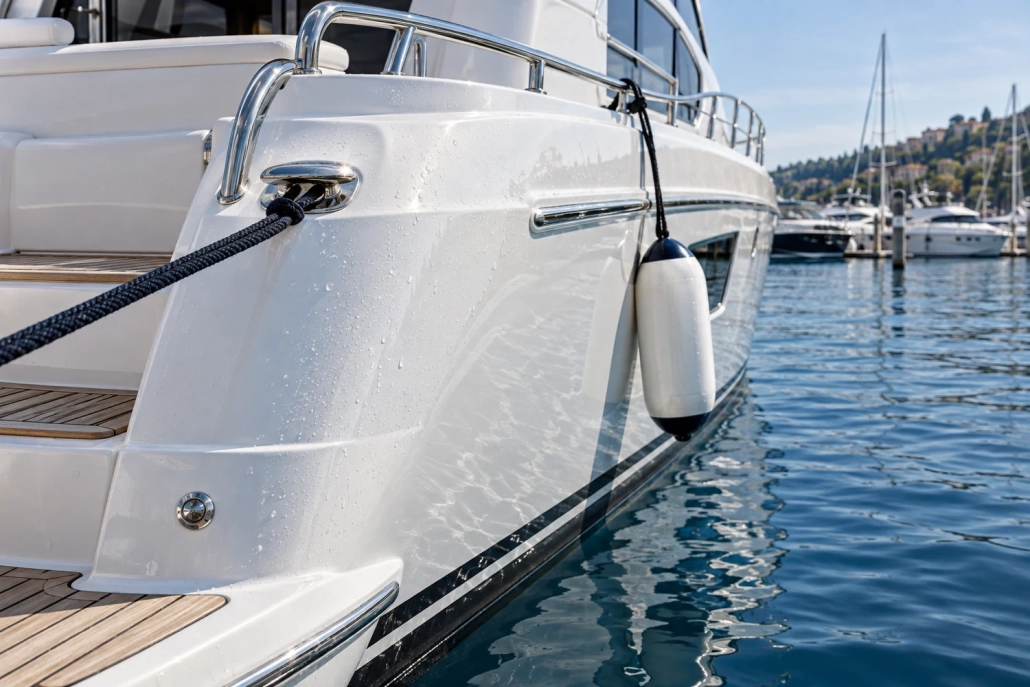
A mark beneath a boat cover may follow the cover’s seams or contact points rather than the coating application pattern. Before assigning cause, examine how the cover interacts with the surface during storage.
Photograph the cover in place, then the exposed surface. Mark supports, straps, seams and areas where water can collect. Record whether the surface was dry when covered and how long it remained covered. Unknown history should be labelled rather than reconstructed from assumptions.
Contact pressure, movement, contamination and prolonged dampness can occur together. A mark at a seam does not by itself identify abrasion, staining or a coating change. Use approved cleaning and inspection methods to determine which observations remain after removable material is addressed.
If the cover repeatedly holds contaminated water against one area, recoating alone leaves the exposure unchanged. Discuss fit, support, ventilation and cleaning with the relevant suppliers. For example, a new mark appearing only beneath one strap warrants a local contact investigation even when the surrounding panel performs normally. Keep any repair approval and revised storage arrangement in the service record so the next inspection tests whether the underlying condition has actually changed.
Ask NANOLAB about your surface and intended use. For application and care, use the current instructions for the exact product.
A pre-coating inspection prevents attractive results in one area from hiding unresolved problems elsewhere.
A cover can help manage exposure, but its contact points still need attention.
Separate time in shore storage from time in marine service when evaluating coating appearance and maintenance behaviour.
 Testing a Coated Boat after Shore Storage: Separate Storage from Service Ex...