






A full polishing range.
From cutting and one-step correction to final finishing.
Specialist chemistry. Expert application.
 QUARTZ99 / CERAMIC BASE COAT
The foundation of your coating system.
A layerable quartz base coat designed for mechanical protection. Pair it with a suitable top coat to create the final finish.
For application by NANOLAB certified installers only.
Four formulas. Extended working time. Find the coating for your finish.
Explore the BEAST family of ceramic coatings.
Find the coating for each exterior surface.
 PPF & VINYLGLOSSProtection for glossy films and wraps.Discover
 MATTE & SATINMATTEProtection that respects the finish.Discover
 GLASSWINDOWSExplore dedicated glass protection.Discover
 WHEEL PROTECTIONWHEELSA dedicated coating for your wheels.Discover
 TRIM PROTECTIONPLASTICProtection for plastic surfaces.Discover
Dedicated care for the surfaces inside.
 LEATHER SURFACESLEATHERDiscover NANOLAB leather protection.Discover PLASTIC SURFACESPLASTICProtection for interior plastic surfaces.Discover TEXTILE SURFACESFABRICExplore the latest fabric formulation.Discover
Spray protection, maintenance and upcoming wash products.
 MAINTENANCEBEAST 365Explore the BEAST maintenance range.Discover
Next in washing, cleaning & care.
Ceramic protection for boats and yachts.
An easy-to-apply ceramic coating with an established track record on boats and yachts around the world.
Results vary with surface preparation, exposure and maintenance.
Read 50 MARINE guides →Explore MARINEProtection for the surfaces you live with.
A look at what we’re developing.
From cutting and one-step correction to final finishing.
A wider range for professional vehicle care.
Taking shape alongside BEAST & MATRIX.
Practical guidance for your next coating project.
Explore all guides →
Allocate compound consumption across shared jobs using a defined issue-and-return method rather than estimating from the bottle’s final level.
Updated · NANOLAB Knowledge
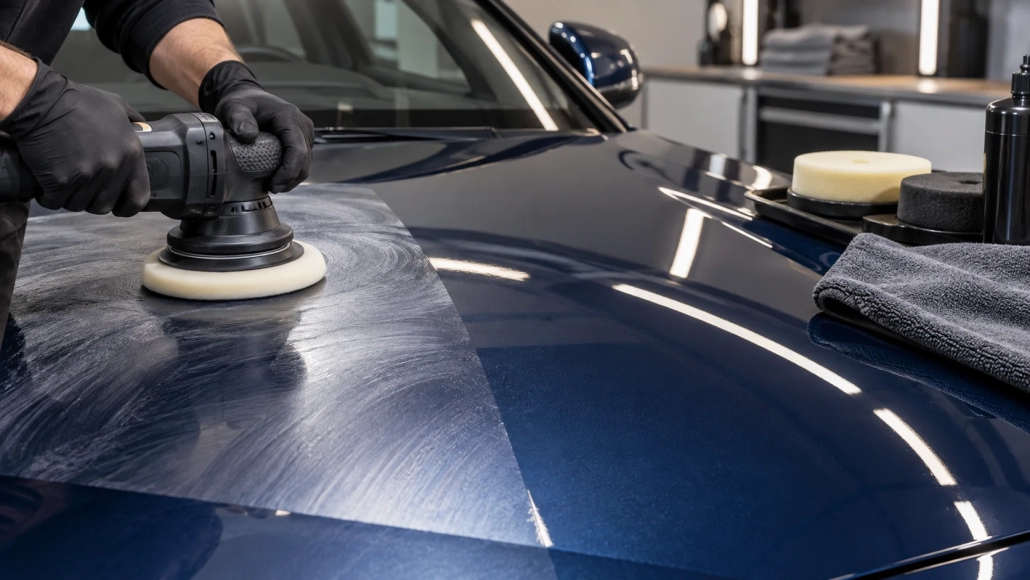
When several operators share one compound bottle, its final level cannot show which job used the material. That makes cost comparisons and unusual-consumption investigations unreliable.
Use dedicated identified working quantities or record the shared container before and after a defined job period with suitable measurement. Preserve product identity and follow the manufacturer’s handling instructions when dispensing into approved working containers.
| Quantity | Record separately where practical |
|---|---|
| Issued product | Assigned to the job or period |
| Returned usable product | Handled under the approved procedure |
| Spill or dispensing loss | Does not represent useful polishing |
If 180 g is issued and 35 g remains in the identified working container at the end, the net disappearance is 145 g. It includes product used on pads, residue and any unrecorded loss; it is not the mass removed from the paint or deposited on the vehicle.
Compare consumption with the job scope, area and correction process. A difficult multi-stage job should not be judged against a light enhancement simply because both involved one car.
High consumption may reflect application practice, pad condition, dispensing loss or unusual paint response. Investigate before setting a universal reduction target.
A simple traceable issue-and-return record turns bottle usage into useful process data. It supports purchasing and training without pretending that an approximate visual fill level can accurately explain several overlapping jobs.
Ask NANOLAB about your surface and intended use. For application and care, use the current instructions for the exact product.
Choose a polishing process by testing defect removal, finishing quality and clear-coat preservation rather than counting steps alone.
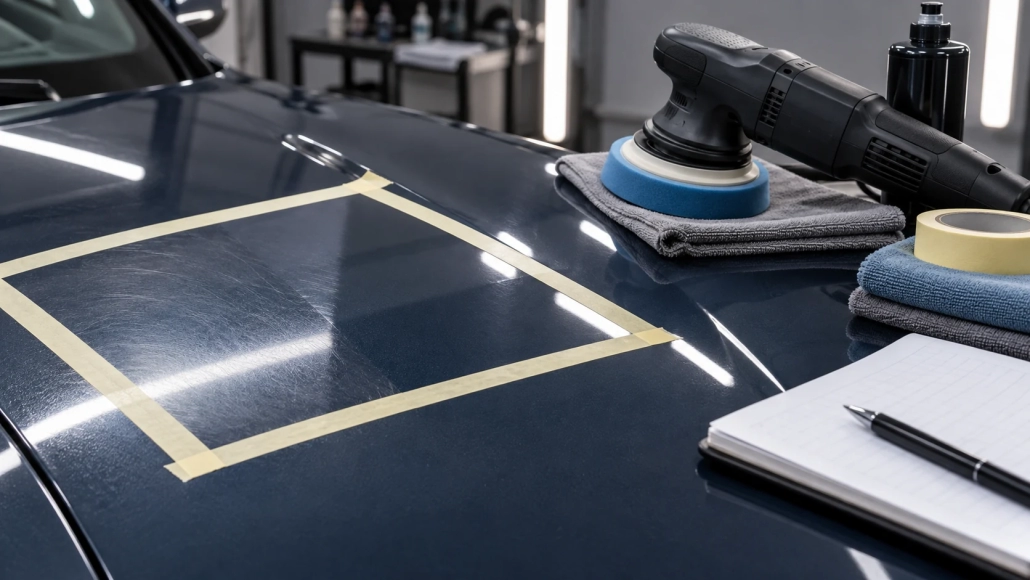
Reduce brand expectation in car polish trials with coded samples, while keeping product instructions and safety information available to the operator.
Agree paint-finish acceptance under relevant lighting before delivery so a change in viewing conditions does not create an avoidable surprise.
 Polish Finish Acceptance when Delivery-Day Lighting Differs from Inspection...