






A full polishing range.
From cutting and one-step correction to final finishing.
Specialist chemistry. Expert application.
 QUARTZ99 / CERAMIC BASE COAT
The foundation of your coating system.
A layerable quartz base coat designed for mechanical protection. Pair it with a suitable top coat to create the final finish.
For application by NANOLAB certified installers only.
Four formulas. Extended working time. Find the coating for your finish.
Explore the BEAST family of ceramic coatings.
Find the coating for each exterior surface.
 PPF & VINYLGLOSSProtection for glossy films and wraps.Discover
 MATTE & SATINMATTEProtection that respects the finish.Discover
 GLASSWINDOWSExplore dedicated glass protection.Discover
 WHEEL PROTECTIONWHEELSA dedicated coating for your wheels.Discover
 TRIM PROTECTIONPLASTICProtection for plastic surfaces.Discover
Dedicated care for the surfaces inside.
 LEATHER SURFACESLEATHERDiscover NANOLAB leather protection.Discover PLASTIC SURFACESPLASTICProtection for interior plastic surfaces.Discover TEXTILE SURFACESFABRICExplore the latest fabric formulation.Discover
Spray protection, maintenance and upcoming wash products.
 MAINTENANCEBEAST 365Explore the BEAST maintenance range.Discover
Next in washing, cleaning & care.
Ceramic protection for boats and yachts.
An easy-to-apply ceramic coating with an established track record on boats and yachts around the world.
Results vary with surface preparation, exposure and maintenance.
Read 50 MARINE guides →Explore MARINEProtection for the surfaces you live with.
A look at what we’re developing.
From cutting and one-step correction to final finishing.
A wider range for professional vehicle care.
Taking shape alongside BEAST & MATRIX.
Practical guidance for your next coating project.
Explore all guides →
Observe the rotation behaviour of a free-spinning DA pad on representative contours instead of assuming the machine setting guarantees the same motion everywhere.
Updated · NANOLAB Knowledge
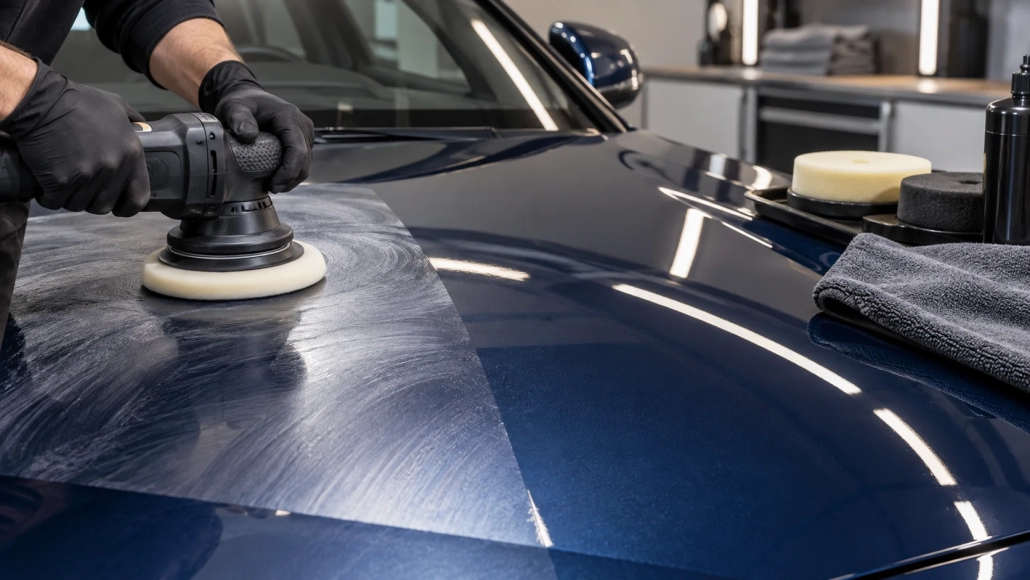
On a free-spinning dual-action polisher, pad rotation can vary with contact, pressure and surface geometry. The speed control setting alone does not prove that the pad moved the same way on every part of a curved panel.
Distinguish free-spinning and driven-rotation designs and follow the manufacturer’s operating guidance. Do not apply an observation or technique from one design as if it were universal.
Where permitted by the equipment guidance, observe a suitable reference on the backing plate or pad assembly without approaching moving parts. Keep hands, clothing and inspection tools clear. The purpose is to understand the motion during normal supported use, not to interact with the rotating system.
| Area | Record |
|---|---|
| Flat section | Baseline motion and finish |
| Curve | Changes in contact and rotation |
| Narrow transition | Need for another suitable tool or method |
If rotation changes, review contact, tool suitability and the supported technique. Pressing harder or increasing speed automatically may not resolve the issue and can change the surface exposure.
Motion observations help explain the process, but the accepted result still requires correction and finish inspection after appropriate residue removal. Record the configuration and method that achieved it.
A repeatable polishing instruction should describe the equipment and the relevant operating behaviour. Treating one dial setting as a complete process can conceal substantial differences across the vehicle.
Ask NANOLAB about your surface and intended use. For application and care, use the current instructions for the exact product.
Choose a polishing process by testing defect removal, finishing quality and clear-coat preservation rather than counting steps alone.
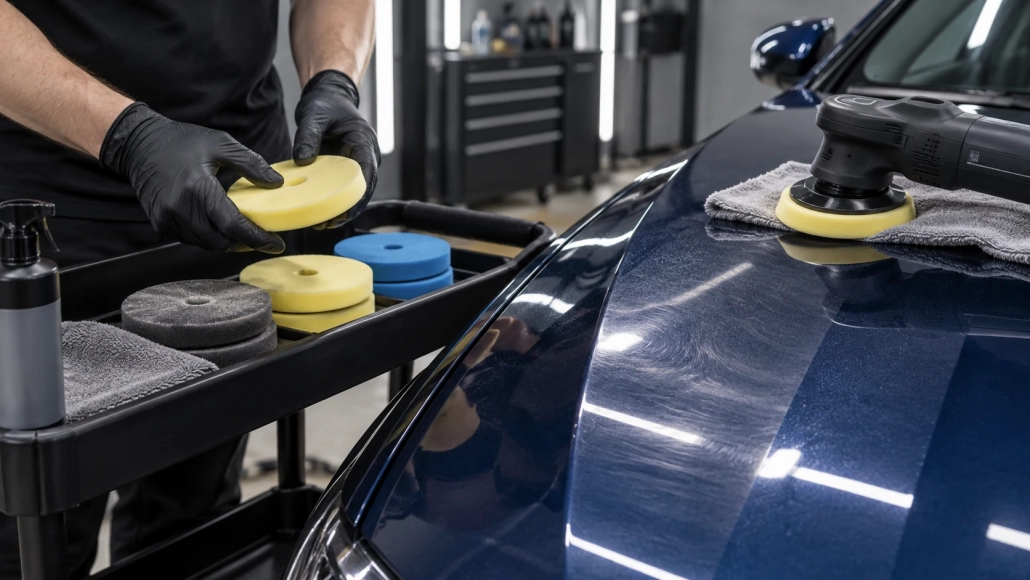
Keep polishing results consistent by rotating clean pads, separating correction stages and recognising when a pad should be retired.
Control inspection-wipe technique when comparing polished surfaces so the assessment step does not introduce different marks or residue removal.
 Inspection-Wipe Pressure: Control the Operator as a Test Variable