






A full polishing range.
From cutting and one-step correction to final finishing.
Specialist chemistry. Expert application.
 QUARTZ99 / CERAMIC BASE COAT
The foundation of your coating system.
A layerable quartz base coat designed for mechanical protection. Pair it with a suitable top coat to create the final finish.
For application by NANOLAB certified installers only.
Four formulas. Extended working time. Find the coating for your finish.
Explore the BEAST family of ceramic coatings.
Find the coating for each exterior surface.
 PPF & VINYLGLOSSProtection for glossy films and wraps.Discover
 MATTE & SATINMATTEProtection that respects the finish.Discover
 GLASSWINDOWSExplore dedicated glass protection.Discover
 WHEEL PROTECTIONWHEELSA dedicated coating for your wheels.Discover
 TRIM PROTECTIONPLASTICProtection for plastic surfaces.Discover
Dedicated care for the surfaces inside.
 LEATHER SURFACESLEATHERDiscover NANOLAB leather protection.Discover PLASTIC SURFACESPLASTICProtection for interior plastic surfaces.Discover TEXTILE SURFACESFABRICExplore the latest fabric formulation.Discover
Spray protection, maintenance and upcoming wash products.
 MAINTENANCEBEAST 365Explore the BEAST maintenance range.Discover
Next in washing, cleaning & care.
Ceramic protection for boats and yachts.
An easy-to-apply ceramic coating with an established track record on boats and yachts around the world.
Results vary with surface preparation, exposure and maintenance.
Read 50 MARINE guides →Explore MARINEProtection for the surfaces you live with.
A look at what we’re developing.
From cutting and one-step correction to final finishing.
A wider range for professional vehicle care.
Taking shape alongside BEAST & MATRIX.
Practical guidance for your next coating project.
Explore all guides →
Match water volume, surface condition and drying geometry when demonstrating two rinse-water sources on coated surfaces.
Updated · NANOLAB Knowledge
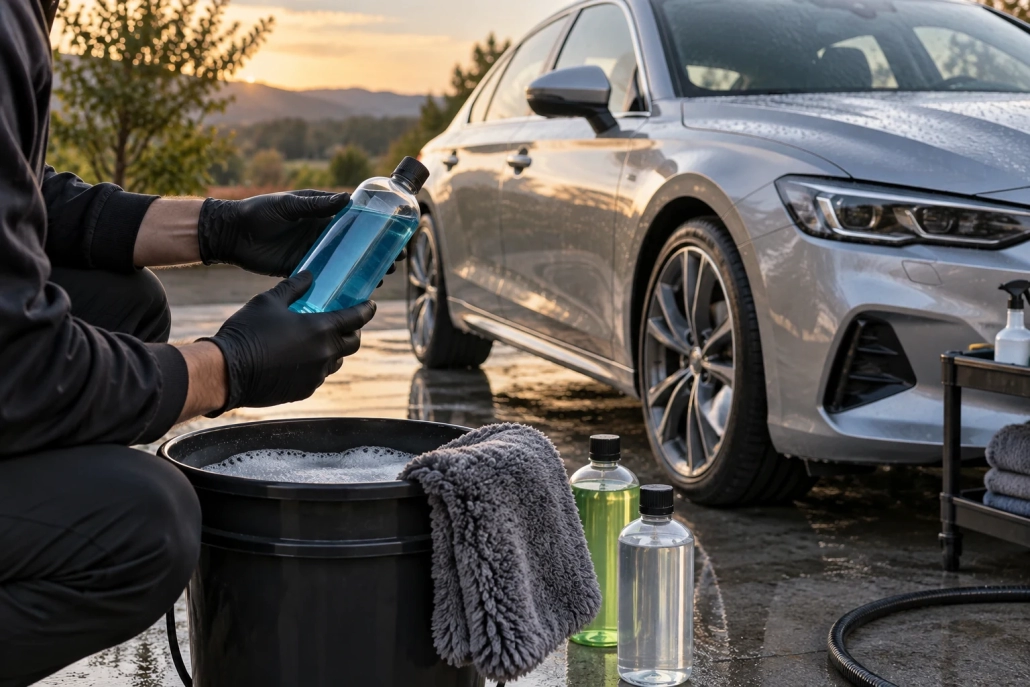
A demonstration comparing two rinse waters can be biased by the amount applied. A large puddle on one sample and a fine mist on another do not create equivalent drying conditions.
Use equal measured volumes on comparable areas through a suitable reproducible method. Record water source, collection time and relevant analysis. Use clean containers and avoid mixing residues from previous demonstrations into the samples.
Choose comparable prepared panels or clearly identified areas. Keep orientation, temperature, airflow and drying time consistent. If one sample sits horizontally and another vertically, drainage becomes an additional factor.
| Control | Reason |
|---|---|
| Applied volume | Controls the initial liquid load |
| Area and orientation | Controls spreading and drainage |
| Drying conditions | Controls the exposure history |
| Inspection light | Makes the final comparison repeatable |
Include an unexposed clean reference and repeat the comparison at fresh locations where appropriate. If one result differs from the rest, investigate rather than selecting the most dramatic pair.
A visible difference shows the outcome under that specific procedure. It does not identify every dissolved component or prove universal performance on all vehicles. A deposit-free-looking panel may still require a more sensitive analytical method for another question.
Keep the original photographs and quantities with the demonstration. A fair water comparison is persuasive because another operator can reproduce the conditions, not because the presentation hides the variables that determined the result.
Ask NANOLAB about your surface and intended use. For application and care, use the current instructions for the exact product.
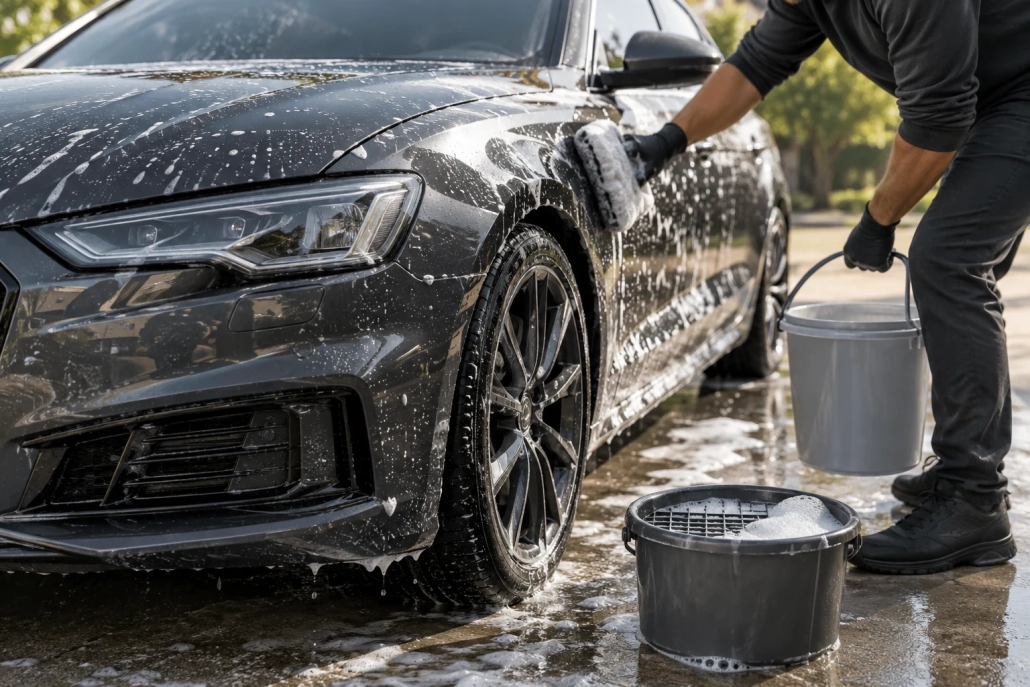
Build a gentle wash routine that removes loose grit before contact, keeps wheel tools separate and ends with careful rinsing and drying.
A surface that has dried is not necessarily a surface that was adequately rinsed. Treat rinse completion and drying as separate checks within the approved cleaning process, especially when investigating repeated residue or streaking.
Establish a repeatable rinse endpoint for a defined wash task before trying to reduce water volume on ceramic-coated vehicles.

 Pad Priming in Polish Trials: Record the Starting Product Load