






A full polishing range.
From cutting and one-step correction to final finishing.
Specialist chemistry. Expert application.
 QUARTZ99 / CERAMIC BASE COAT
The foundation of your coating system.
A layerable quartz base coat designed for mechanical protection. Pair it with a suitable top coat to create the final finish.
For application by NANOLAB certified installers only.
Four formulas. Extended working time. Find the coating for your finish.
Explore the BEAST family of ceramic coatings.
Find the coating for each exterior surface.
 PPF & VINYLGLOSSProtection for glossy films and wraps.Discover
 MATTE & SATINMATTEProtection that respects the finish.Discover
 GLASSWINDOWSExplore dedicated glass protection.Discover
 WHEEL PROTECTIONWHEELSA dedicated coating for your wheels.Discover
 TRIM PROTECTIONPLASTICProtection for plastic surfaces.Discover
Dedicated care for the surfaces inside.
 LEATHER SURFACESLEATHERDiscover NANOLAB leather protection.Discover PLASTIC SURFACESPLASTICProtection for interior plastic surfaces.Discover TEXTILE SURFACESFABRICExplore the latest fabric formulation.Discover
Spray protection, maintenance and upcoming wash products.
 MAINTENANCEBEAST 365Explore the BEAST maintenance range.Discover
Next in washing, cleaning & care.
Ceramic protection for boats and yachts.
An easy-to-apply ceramic coating with an established track record on boats and yachts around the world.
Results vary with surface preparation, exposure and maintenance.
Read 50 MARINE guides →Explore MARINEProtection for the surfaces you live with.
A look at what we’re developing.
From cutting and one-step correction to final finishing.
A wider range for professional vehicle care.
Taking shape alongside BEAST & MATRIX.
Practical guidance for your next coating project.
Explore all guides →
Establish a repeatable rinse endpoint for a defined wash task before trying to reduce water volume on ceramic-coated vehicles.
Updated · NANOLAB Knowledge
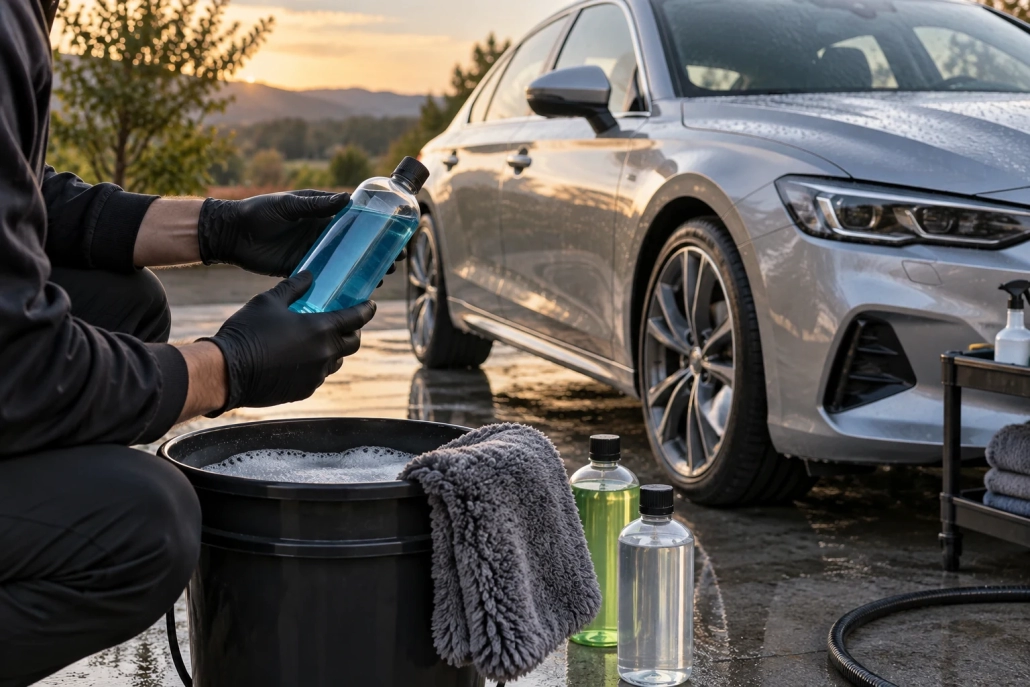
A final-rinse volume is useful only when it produces an accepted result on a defined task. Reducing litres without checking residue can shift the cost into drying marks and repeat washing.
Use the same supported shampoo dose, comparable soil loading, equipment and area. Record water source and flow. Define the accepted dry finish and any relevant checks required by the coating or cleaner instructions.
Where suitable equipment permits, obtain flow from a verified meter or appropriate measurement procedure. Volume equals average flow multiplied by time when flow is sufficiently stable. A nozzle setting alone does not establish the delivered quantity.
Start with the supported routine and measure its outcome. Evaluate justified adjustments in small controlled steps, repeating them on comparable tasks. Do not intentionally leave concentrated cleaner on valuable surfaces to locate a failure point.
| Measure | Keep beside it |
|---|---|
| Rinse litres | Area and soil condition |
| Rinse time | Flow and nozzle configuration |
| Dry appearance | Rework and inspection result |
An illustrative 40-litre rinse followed by a 15-litre corrective rinse uses 55 litres. It should not be advertised as a 40-litre process. Compare accepted completion across several representative jobs.
Different vehicle geometry and soil loads may require different supported routines. Document the conditions where the measured range applies and the cue for reassessment.
The goal is controlled water use with a consistent finish. A single minimum-volume demonstration is weaker evidence than a routine that operators can reproduce without recurring residue.
Ask NANOLAB about your surface and intended use. For application and care, use the current instructions for the exact product.
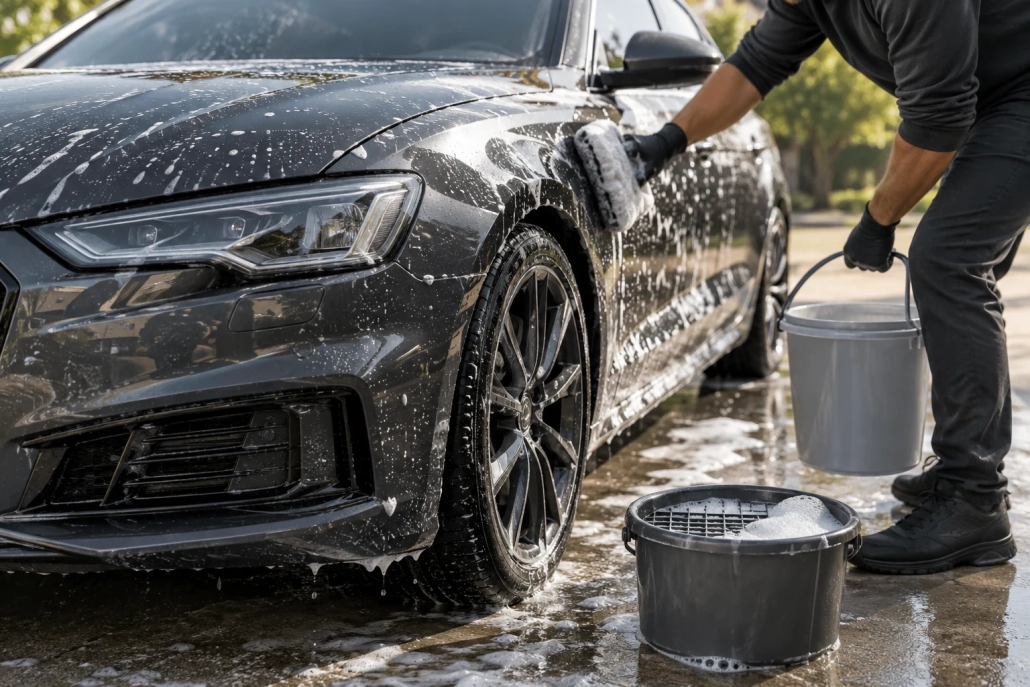
Build a gentle wash routine that removes loose grit before contact, keeps wheel tools separate and ends with careful rinsing and drying.
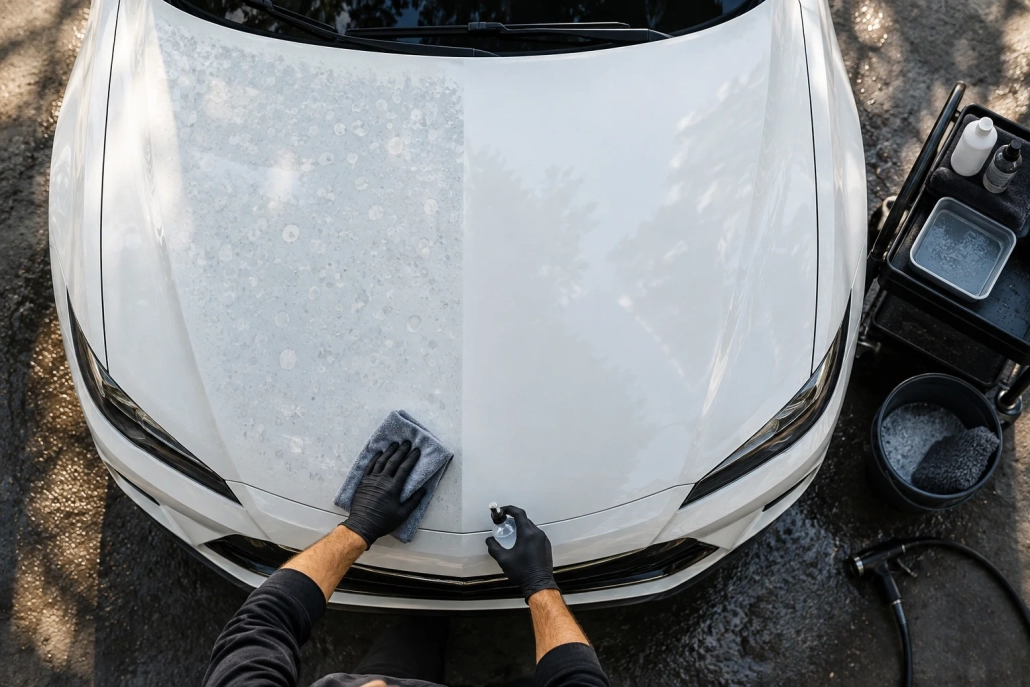
Use ceramic shampoo with a realistic hard-water routine, separating product residue from mineral deposits and planning the rinse and drying sequence.
Check wash-bay splashback and runoff routes when a vehicle becomes dirty again immediately after its final rinse.

 Wash-Bay Floor Splashback: A Source of Contamination after the Final Rinse