






A full polishing range.
From cutting and one-step correction to final finishing.
Specialist chemistry. Expert application.
 QUARTZ99 / CERAMIC BASE COAT
The foundation of your coating system.
A layerable quartz base coat designed for mechanical protection. Pair it with a suitable top coat to create the final finish.
For application by NANOLAB certified installers only.
Four formulas. Extended working time. Find the coating for your finish.
Explore the BEAST family of ceramic coatings.
Find the coating for each exterior surface.
 PPF & VINYLGLOSSProtection for glossy films and wraps.Discover
 MATTE & SATINMATTEProtection that respects the finish.Discover
 GLASSWINDOWSExplore dedicated glass protection.Discover
 WHEEL PROTECTIONWHEELSA dedicated coating for your wheels.Discover
 TRIM PROTECTIONPLASTICProtection for plastic surfaces.Discover
Dedicated care for the surfaces inside.
 LEATHER SURFACESLEATHERDiscover NANOLAB leather protection.Discover PLASTIC SURFACESPLASTICProtection for interior plastic surfaces.Discover TEXTILE SURFACESFABRICExplore the latest fabric formulation.Discover
Spray protection, maintenance and upcoming wash products.
 MAINTENANCEBEAST 365Explore the BEAST maintenance range.Discover
Next in washing, cleaning & care.
Ceramic protection for boats and yachts.
An easy-to-apply ceramic coating with an established track record on boats and yachts around the world.
Results vary with surface preparation, exposure and maintenance.
Read 50 MARINE guides →Explore MARINEProtection for the surfaces you live with.
A look at what we’re developing.
From cutting and one-step correction to final finishing.
A wider range for professional vehicle care.
Taking shape alongside BEAST & MATRIX.
Practical guidance for your next coating project.
Explore all guides →
Check water held in hoses and downstream equipment when the first rinse differs from later flow, especially after long idle periods.
Updated · NANOLAB Knowledge
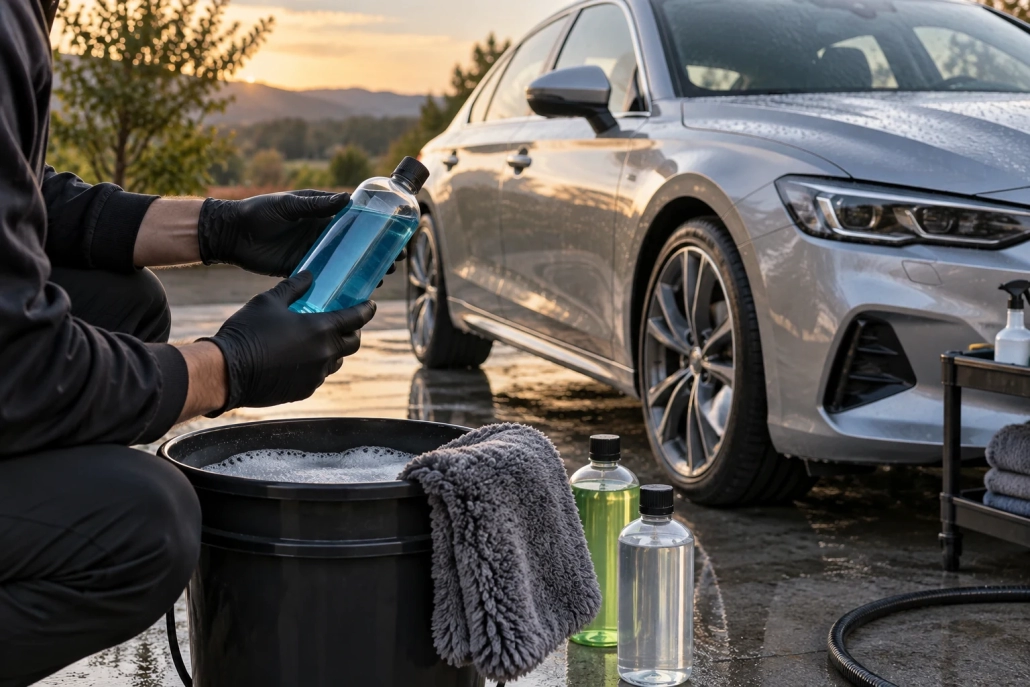
The first water leaving a hose may have spent hours in that hose rather than coming directly from the treatment system. Temperature, storage and downstream contamination can make the first sample different from steady operating flow.
A first-draw sample can help investigate stored-water effects. A sample collected after the prescribed flushing procedure can describe operating water. Both may be useful, but they should not share an unexplained label such as rinse water.
| Sample | Record |
|---|---|
| First draw | Idle time and storage conditions |
| After defined flushing | Procedure and operating state |
| Upstream treatment outlet | Reference before the hose |
Follow the sampling method appropriate to the analysis. A dirty collection bottle can create the same ambiguity as a dirty hose. Record temperature where relevant and avoid comparing incompatible meter settings.
If only the first water creates a visible residue in a controlled drying check, inspect the downstream path and discuss maintenance with the equipment supplier. Do not assume that replacing the membrane or changing shampoo will resolve a hose-specific problem.
Use the equipment’s supported preparation and flushing requirements, considering water efficiency and disposal. Do not invent a universal number of litres for every hose length and system.
The useful distinction is between water produced by the treatment system and water actually delivered after storage. Keeping both visible prevents the first vehicle of the day from becoming an unexplained exception.
Ask NANOLAB about your surface and intended use. For application and care, use the current instructions for the exact product.
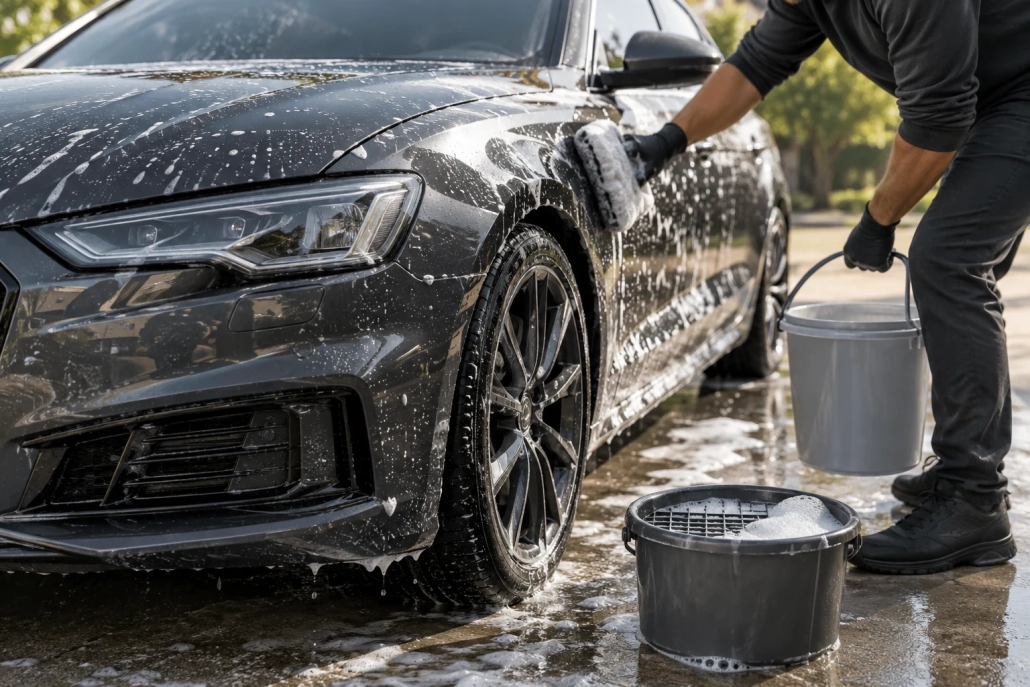
Build a gentle wash routine that removes loose grit before contact, keeps wheel tools separate and ends with careful rinsing and drying.
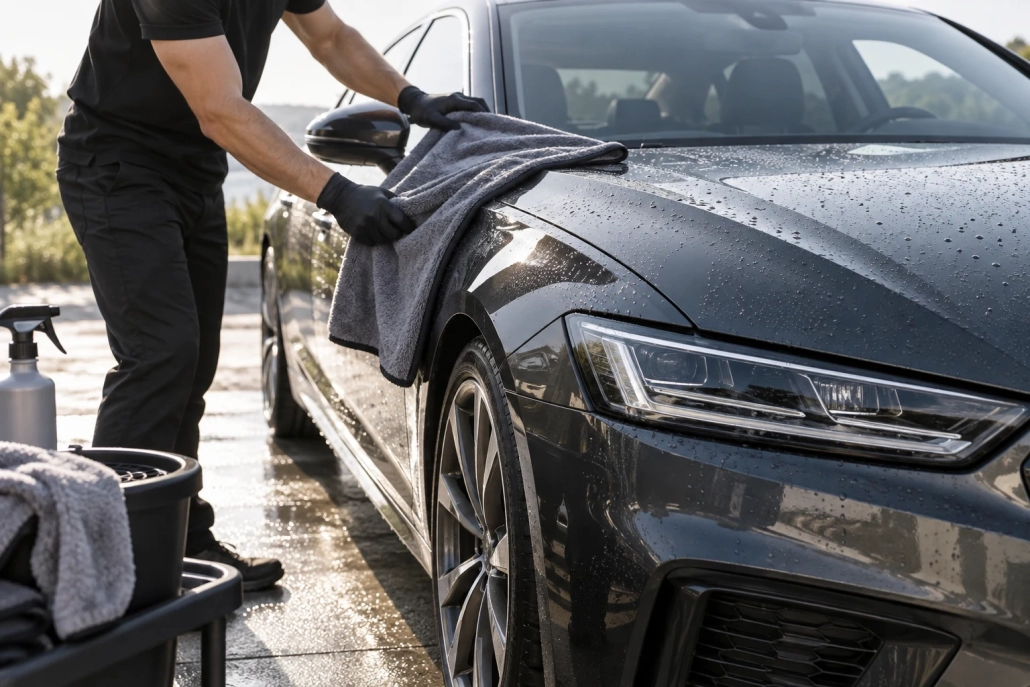
Prepare enough water and a workable stop plan before a maintenance wash, and respond carefully if the rinse supply fails.
Plan outdoor drying around unequal sun exposure and surface conditions so the wash sequence reduces avoidable water drying on coated panels.
 Outdoor Drying Order for a Coated Vehicle with Unequal Sun Exposure