






A full polishing range.
From cutting and one-step correction to final finishing.
Specialist chemistry. Expert application.
 QUARTZ99 / CERAMIC BASE COAT
The foundation of your coating system.
A layerable quartz base coat designed for mechanical protection. Pair it with a suitable top coat to create the final finish.
For application by NANOLAB certified installers only.
Four formulas. Extended working time. Find the coating for your finish.
Explore the BEAST family of ceramic coatings.
Find the coating for each exterior surface.
 PPF & VINYLGLOSSProtection for glossy films and wraps.Discover
 MATTE & SATINMATTEProtection that respects the finish.Discover
 GLASSWINDOWSExplore dedicated glass protection.Discover
 WHEEL PROTECTIONWHEELSA dedicated coating for your wheels.Discover
 TRIM PROTECTIONPLASTICProtection for plastic surfaces.Discover
Dedicated care for the surfaces inside.
 LEATHER SURFACESLEATHERDiscover NANOLAB leather protection.Discover PLASTIC SURFACESPLASTICProtection for interior plastic surfaces.Discover TEXTILE SURFACESFABRICExplore the latest fabric formulation.Discover
Spray protection, maintenance and upcoming wash products.
 MAINTENANCEBEAST 365Explore the BEAST maintenance range.Discover
Next in washing, cleaning & care.
Ceramic protection for boats and yachts.
An easy-to-apply ceramic coating with an established track record on boats and yachts around the world.
Results vary with surface preparation, exposure and maintenance.
Read 50 MARINE guides →Explore MARINEProtection for the surfaces you live with.
A look at what we’re developing.
From cutting and one-step correction to final finishing.
A wider range for professional vehicle care.
Taking shape alongside BEAST & MATRIX.
Practical guidance for your next coating project.
Explore all guides →
Calculate shampoo concentration after bucket top-ups from the liquid actually remaining, and recognise when contamination makes calculation alone unhelpful.
Updated · NANOLAB Knowledge
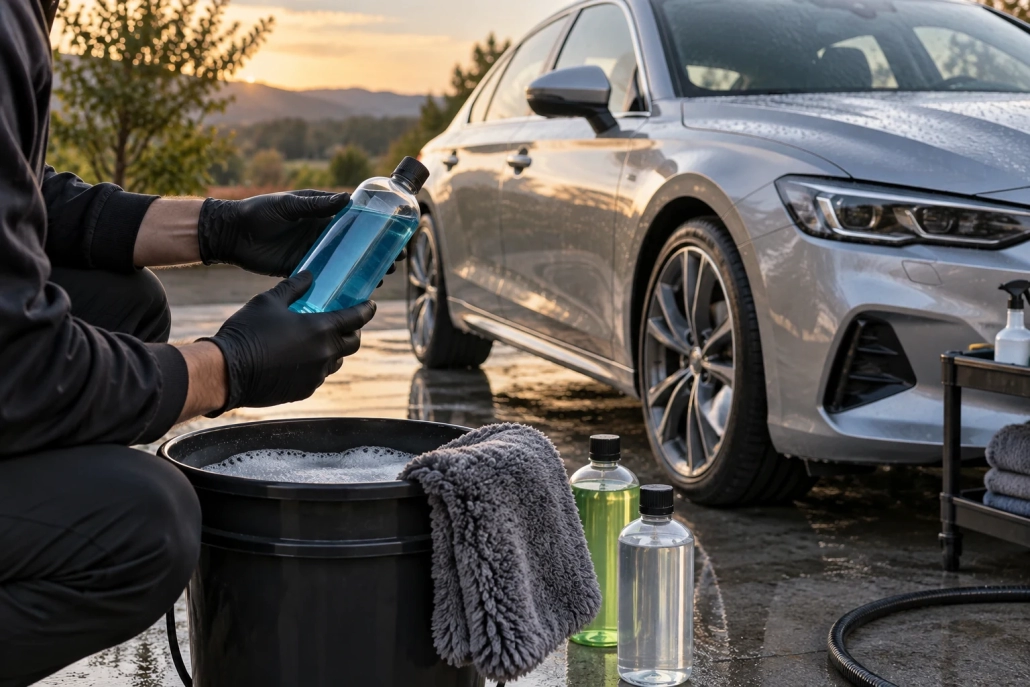
Topping up a wash bucket changes more than its fill level. The remaining liquid may contain shampoo, soil and water transferred from the wash process. A fresh-water addition does not automatically restore the original working mixture.
Record whether the product instruction refers to concentrate added to water or a final mixture volume. Follow that instruction consistently. Do not convert between ratios casually when comparing recipes.
If a clean, well-mixed solution contains 20 mL of concentrate in 10 litres of final mixture, its nominal volume fraction is 0.2%. If five litres remain with the same composition, they contain approximately 10 mL of concentrate. Adding five litres of plain water produces approximately 0.1%.
This example assumes no selective loss, contamination or change in composition. A real used wash bucket often fails those assumptions, so the arithmetic does not certify that it is suitable for continued use.
| Question | Required judgement |
|---|---|
| What is the nominal dose? | Known quantities and dilution basis |
| Is the solution still suitable? | Soil loading and the supported wash procedure |
Follow the validated routine for replacing contaminated solution rather than repeatedly adding concentrate to an unknown mixture. Keep clean-water replenishment and dirty-water disposal organised.
A predictable fresh mixture is often easier to control than a mathematically reconstructed bucket whose composition is no longer known. The objective is consistent cleaning and surface care, not merely maintaining a visible foam level.
Ask NANOLAB about your surface and intended use. For application and care, use the current instructions for the exact product.
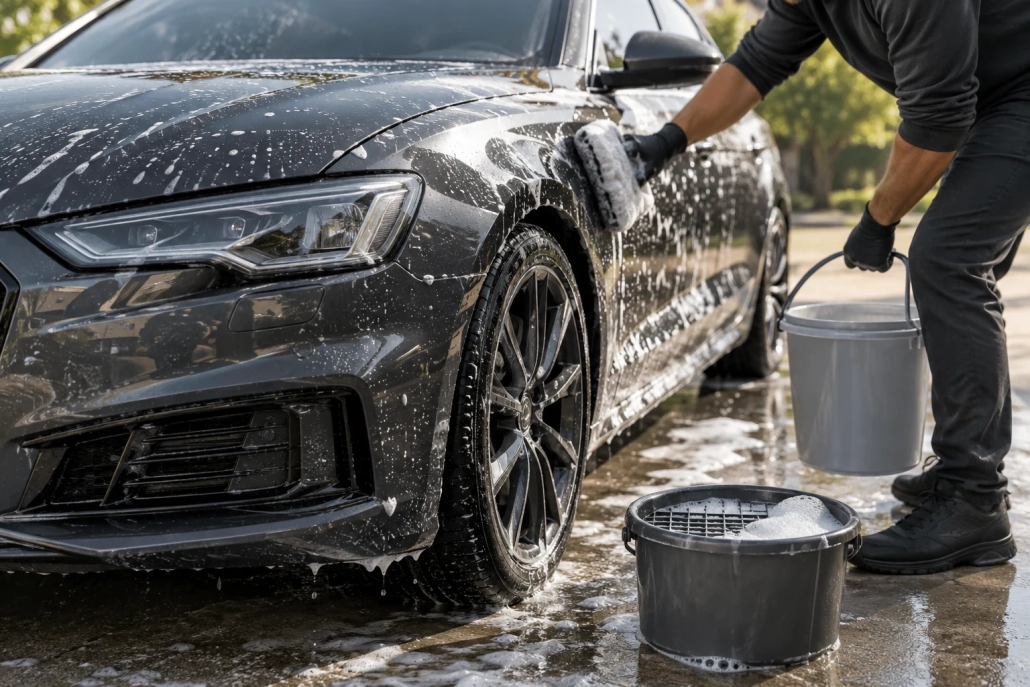
Build a gentle wash routine that removes loose grit before contact, keeps wheel tools separate and ends with careful rinsing and drying.
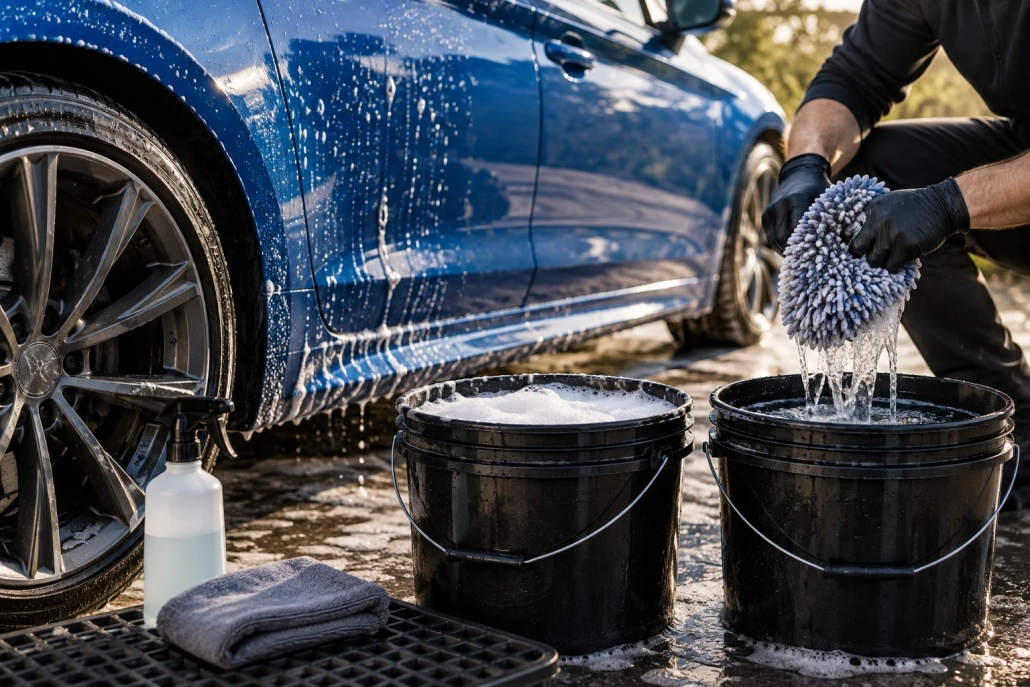
Use a two-bucket wash routine with ceramic shampoo while preserving correct dosing, wash-media cleanliness and the product’s specific rinse requirements.
Build a maintenance-product history before judging the underlying ceramic coating when several toppers, drying aids or wash products have been used.
 Layered Maintenance Products: Build a Removal History before Diagnosing the...