






A full polishing range.
From cutting and one-step correction to final finishing.
Specialist chemistry. Expert application.
 QUARTZ99 / CERAMIC BASE COAT
The foundation of your coating system.
A layerable quartz base coat designed for mechanical protection. Pair it with a suitable top coat to create the final finish.
For application by NANOLAB certified installers only.
Four formulas. Extended working time. Find the coating for your finish.
Explore the BEAST family of ceramic coatings.
Find the coating for each exterior surface.
 PPF & VINYLGLOSSProtection for glossy films and wraps.Discover
 MATTE & SATINMATTEProtection that respects the finish.Discover
 GLASSWINDOWSExplore dedicated glass protection.Discover
 WHEEL PROTECTIONWHEELSA dedicated coating for your wheels.Discover
 TRIM PROTECTIONPLASTICProtection for plastic surfaces.Discover
Dedicated care for the surfaces inside.
 LEATHER SURFACESLEATHERDiscover NANOLAB leather protection.Discover PLASTIC SURFACESPLASTICProtection for interior plastic surfaces.Discover TEXTILE SURFACESFABRICExplore the latest fabric formulation.Discover
Spray protection, maintenance and upcoming wash products.
 MAINTENANCEBEAST 365Explore the BEAST maintenance range.Discover
Next in washing, cleaning & care.
Ceramic protection for boats and yachts.
An easy-to-apply ceramic coating with an established track record on boats and yachts around the world.
Results vary with surface preparation, exposure and maintenance.
Read 50 MARINE guides →Explore MARINEProtection for the surfaces you live with.
A look at what we’re developing.
From cutting and one-step correction to final finishing.
A wider range for professional vehicle care.
Taking shape alongside BEAST & MATRIX.
Practical guidance for your next coating project.
Explore all guides →
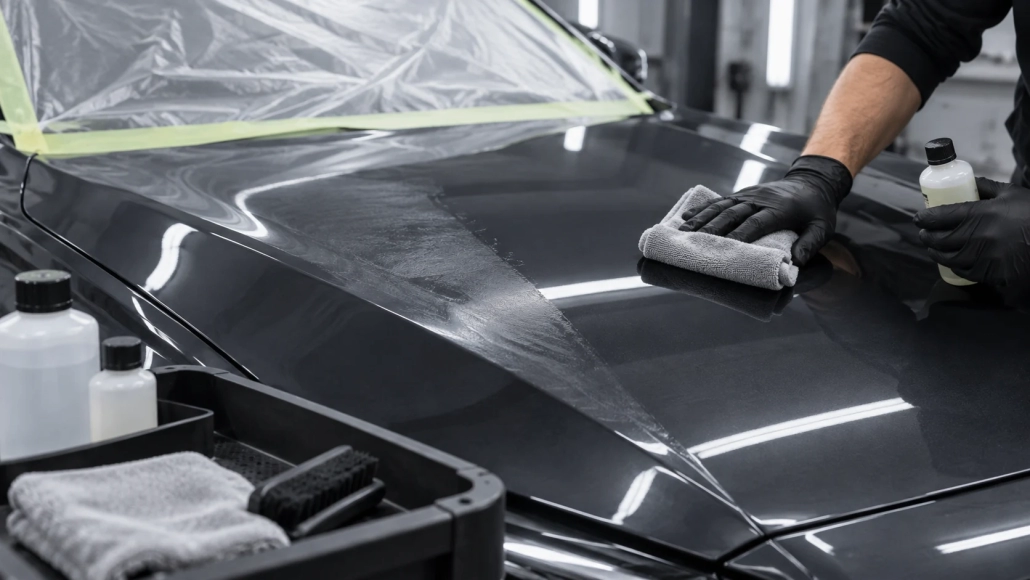
Measure panel-wipe usage as a process input while recognising that dispensed liquid, towel retention and surface contact are different quantities.
Updated · NANOLAB Knowledge

Counting how much panel wipe leaves a bottle helps manage a preparation process, but it does not measure how much solvent contacted the paint. Some remains in the towel, evaporates or is lost during dispensing.
Record whether the quantity is bottle consumption, towel loading or a validated surface-transfer measurement. Use suitable equipment and the product’s handling requirements. Avoid open weighing arrangements that create unnecessary exposure or unreliable evaporation losses.
Evaluate the complete supported preparation task on comparable surfaces. Record area, towel type, dispensing method and the accepted finish. A lower bottle-use figure is not an improvement if residue remains or the operator has to repeat the work.
| Quantity | Interpretation |
|---|---|
| Bottle mass or volume used | Inventory and process consumption |
| Liquid retained by towel | Part of the transfer pathway |
| Prepared area accepted | Useful completed output |
Two approved dispensing methods can be compared using the same towel system and area. Include spills, repeat wiping and time. If one method consumes less product but produces inconsistent preparation, the apparent saving is incomplete.
A target number of millilitres cannot prove that an unknown surface is properly prepared. Follow the exact coating system’s preparation requirements and inspect the actual surface.
Use consumption data to identify unusual variation and improve a validated routine. Keep technical acceptance separate from cost accounting so the workshop does not optimise a cheap preparation step that creates expensive coating rework later.
Ask NANOLAB about your surface and intended use. For application and care, use the current instructions for the exact product.
Use clear checkpoints before application, after levelling and at handover to make coating work consistent and traceable.
Control tyre and trim dressing transfer during preparation so clean paint, towels and applicators remain ready for coating.
Recheck actual surface conditions after preparation wiping when evaporation or a changing environment may alter the coating application window.
 Surface Cooling during Prep Wiping: Recheck Conditions before Coating