






A full polishing range.
From cutting and one-step correction to final finishing.
Specialist chemistry. Expert application.
 QUARTZ99 / CERAMIC BASE COAT
The foundation of your coating system.
A layerable quartz base coat designed for mechanical protection. Pair it with a suitable top coat to create the final finish.
For application by NANOLAB certified installers only.
Four formulas. Extended working time. Find the coating for your finish.
Explore the BEAST family of ceramic coatings.
Find the coating for each exterior surface.
 PPF & VINYLGLOSSProtection for glossy films and wraps.Discover
 MATTE & SATINMATTEProtection that respects the finish.Discover
 GLASSWINDOWSExplore dedicated glass protection.Discover
 WHEEL PROTECTIONWHEELSA dedicated coating for your wheels.Discover
 TRIM PROTECTIONPLASTICProtection for plastic surfaces.Discover
Dedicated care for the surfaces inside.
 LEATHER SURFACESLEATHERDiscover NANOLAB leather protection.Discover PLASTIC SURFACESPLASTICProtection for interior plastic surfaces.Discover TEXTILE SURFACESFABRICExplore the latest fabric formulation.Discover
Spray protection, maintenance and upcoming wash products.
 MAINTENANCEBEAST 365Explore the BEAST maintenance range.Discover
Next in washing, cleaning & care.
Ceramic protection for boats and yachts.
An easy-to-apply ceramic coating with an established track record on boats and yachts around the world.
Results vary with surface preparation, exposure and maintenance.
Read 50 MARINE guides →Explore MARINEProtection for the surfaces you live with.
A look at what we’re developing.
From cutting and one-step correction to final finishing.
A wider range for professional vehicle care.
Taking shape alongside BEAST & MATRIX.
Practical guidance for your next coating project.
Explore all guides →
Protect coated shower glass during renovation and assess paint mist carefully before choosing a removal method that may alter the surface.
Updated · NANOLAB Knowledge
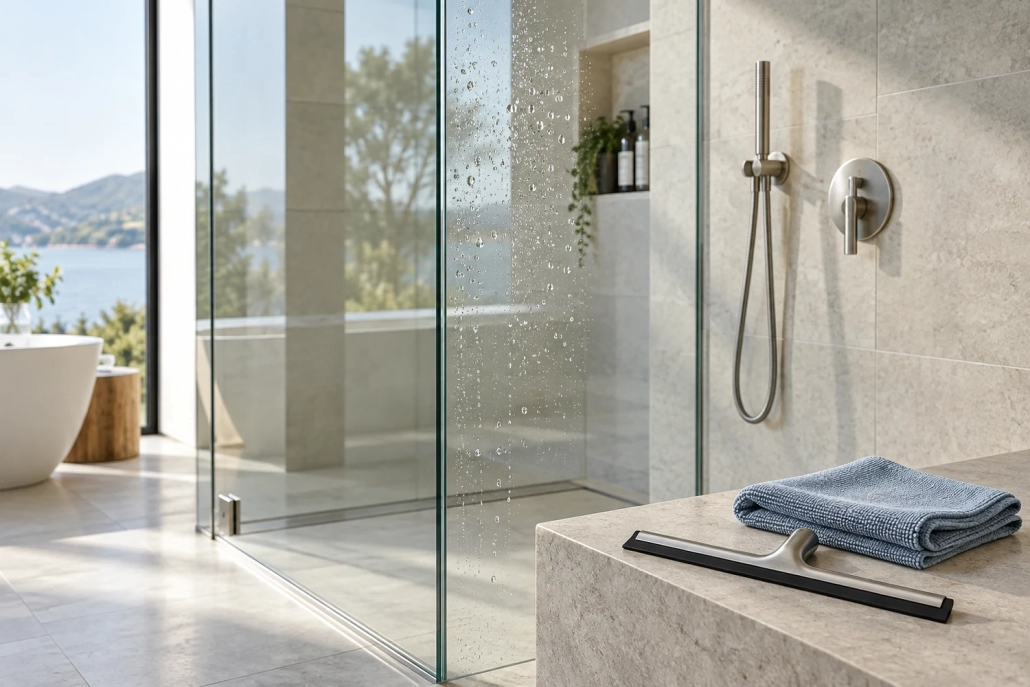
Bathroom decorating can leave fine paint mist on glass that was previously easy to maintain. The new contamination is not evidence that the coating spontaneously failed. Document the renovation work and identify the material before attempting removal.
Coordinate protection with the contractor using materials and attachment methods suitable for the glass, coating and surrounding finishes. Keep protective covers from abrading the surface. Do not place an untested adhesive directly on a critical treated area.
Record the paint or coating used nearby, application method and time since exposure. Photograph the broad pattern and a detail. Fine overspray can be confused with mineral residue or haze when viewed only in a close-up.
| Question | Why it matters |
|---|---|
| What was sprayed? | Determines the relevant removal guidance |
| What surface is underneath? | Sets compatibility limits |
| What has already been tried? | Reveals possible secondary effects |
Do not default to scraping, abrasive pads or strong solvents. Obtain advice appropriate to the glass and existing treatment, then assess a limited area and inspect it dry.
If the supported removal process alters or removes the protective treatment, record that outcome and agree any restoration step. A clean-looking area does not establish that its original protection remains unchanged.
After the renovation, update the surface record and care instructions. The useful result is a known, accepted finish rather than a series of escalating cleanup attempts whose effect on the coating can no longer be reconstructed.
Discuss a shower-glass coating project. For application and care, use the current instructions for the exact product.
A test patch should represent the actual enclosure, including its existing finish and maintenance needs.
A renovation can leave some glazing in place while replacing other panels or hardware. Keep each surface’s history separate when planning nano coating.
Separate shower leakage, retained water and drying marks before deciding whether a glass coating or another part of the enclosure needs attention.

 Cluster-Randomised Hotel Coating Trials: Allocate by Housekeeping Team