






A full polishing range.
From cutting and one-step correction to final finishing.
Specialist chemistry. Expert application.
 QUARTZ99 / CERAMIC BASE COAT
The foundation of your coating system.
A layerable quartz base coat designed for mechanical protection. Pair it with a suitable top coat to create the final finish.
For application by NANOLAB certified installers only.
Four formulas. Extended working time. Find the coating for your finish.
Explore the BEAST family of ceramic coatings.
Find the coating for each exterior surface.
 PPF & VINYLGLOSSProtection for glossy films and wraps.Discover
 MATTE & SATINMATTEProtection that respects the finish.Discover
 GLASSWINDOWSExplore dedicated glass protection.Discover
 WHEEL PROTECTIONWHEELSA dedicated coating for your wheels.Discover
 TRIM PROTECTIONPLASTICProtection for plastic surfaces.Discover
Dedicated care for the surfaces inside.
 LEATHER SURFACESLEATHERDiscover NANOLAB leather protection.Discover PLASTIC SURFACESPLASTICProtection for interior plastic surfaces.Discover TEXTILE SURFACESFABRICExplore the latest fabric formulation.Discover
Spray protection, maintenance and upcoming wash products.
 MAINTENANCEBEAST 365Explore the BEAST maintenance range.Discover
Next in washing, cleaning & care.
Ceramic protection for boats and yachts.
An easy-to-apply ceramic coating with an established track record on boats and yachts around the world.
Results vary with surface preparation, exposure and maintenance.
Read 50 MARINE guides →Explore MARINEProtection for the surfaces you live with.
A look at what we’re developing.
From cutting and one-step correction to final finishing.
A wider range for professional vehicle care.
Taking shape alongside BEAST & MATRIX.
Practical guidance for your next coating project.
Explore all guides →
Locate marks on glass by inspecting both faces in transmission and reflection before attributing a defect to the nano coating.
Updated · NANOLAB Knowledge
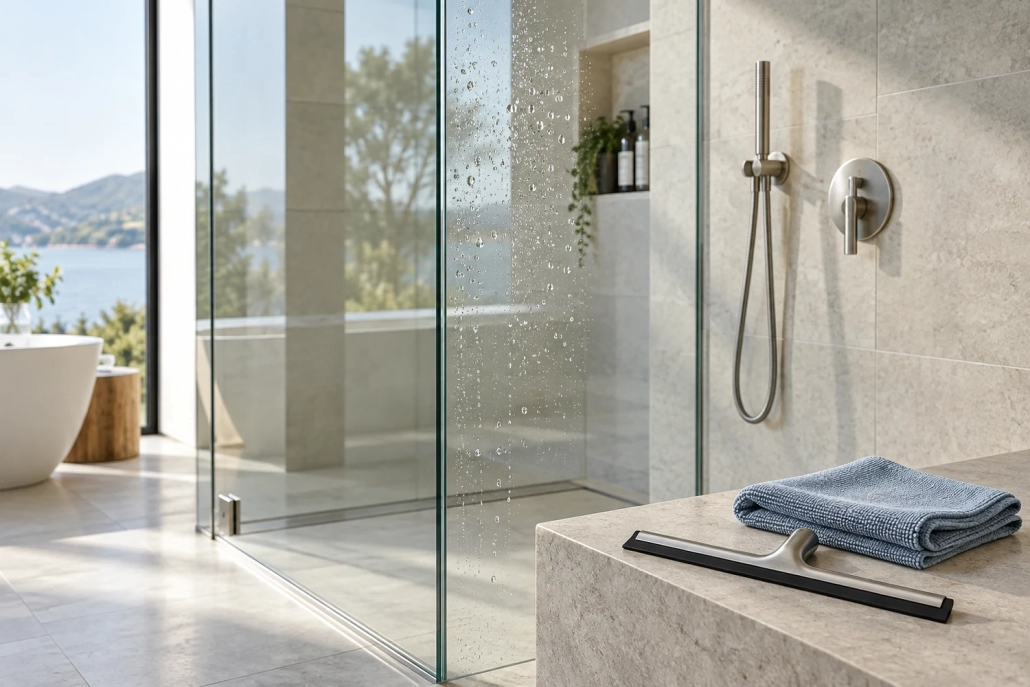
A mark visible through glass may sit on the treated face, the opposite face or within the glazing construction. Treating the wrong face wastes time and can introduce damage. A four-view inspection helps locate the problem before any corrective chemistry is chosen.
Identify face A and face B using the job record and a suitable external marker. For installed glass, note which face is accessible and which is believed to be treated. Do not infer the coated side solely from a casual water test, especially when cleaning residues or prior treatments are present.
| View | Inspection purpose |
|---|---|
| Through A toward a target | Locate the visible mark in the overall pane |
| Reflection from A | Look for surface residue on A |
| Through B, where accessible | Check the same location from the reverse side |
| Reflection from B | Look for surface residue on B |
Use a photograph and a diagram referenced to an edge or fitting. Avoid writing directly on the evaluated surface. Change viewing position and focus deliberately, and compare the mark with a nearby clear area.
A shower door looks cloudy from the room side after coating. Inspection from the reverse side reveals a cleaning streak on the untreated face. Appropriate cleaning of that face resolves the visible problem. Reworking the coating would have addressed the wrong layer.
Another pane may show a persistent feature that cannot be located confidently on either accessible face. That is a reason to involve the glazing supplier, not proof that the defect lies inside the glass. Optical appearance alone may not establish the construction or cause.
Use a small, suitable cleaning check only after confirming material and product compatibility. Record the result when dry. If the mark remains, retain the four-view record for technical support rather than escalating through increasingly aggressive cleaners.
This method is a location aid. It does not replace specialist assessment of scratches, etched surfaces, laminated glass defects or factory coatings.
Discuss a shower-glass coating project. For application and care, use the current instructions for the exact product.

Use clear checkpoints before application, after levelling and at handover to make coating work consistent and traceable.
The inside and outside of a shower panel may have different exposure and existing treatments.
Track the same water-spot locations before and after each cleaning stage so photographs show changes rather than changing conditions.
 A Photo Protocol for Tracking Water Spots Through Cleaning Stages