






A full polishing range.
From cutting and one-step correction to final finishing.
Specialist chemistry. Expert application.
 QUARTZ99 / CERAMIC BASE COAT
The foundation of your coating system.
A layerable quartz base coat designed for mechanical protection. Pair it with a suitable top coat to create the final finish.
For application by NANOLAB certified installers only.
Four formulas. Extended working time. Find the coating for your finish.
Explore the BEAST family of ceramic coatings.
Find the coating for each exterior surface.
 PPF & VINYLGLOSSProtection for glossy films and wraps.Discover
 MATTE & SATINMATTEProtection that respects the finish.Discover
 GLASSWINDOWSExplore dedicated glass protection.Discover
 WHEEL PROTECTIONWHEELSA dedicated coating for your wheels.Discover
 TRIM PROTECTIONPLASTICProtection for plastic surfaces.Discover
Dedicated care for the surfaces inside.
 LEATHER SURFACESLEATHERDiscover NANOLAB leather protection.Discover PLASTIC SURFACESPLASTICProtection for interior plastic surfaces.Discover TEXTILE SURFACESFABRICExplore the latest fabric formulation.Discover
Spray protection, maintenance and upcoming wash products.
 MAINTENANCEBEAST 365Explore the BEAST maintenance range.Discover
Next in washing, cleaning & care.
Ceramic protection for boats and yachts.
An easy-to-apply ceramic coating with an established track record on boats and yachts around the world.
Results vary with surface preparation, exposure and maintenance.
Read 50 MARINE guides →Explore MARINEProtection for the surfaces you live with.
A look at what we’re developing.
From cutting and one-step correction to final finishing.
A wider range for professional vehicle care.
Taking shape alongside BEAST & MATRIX.
Practical guidance for your next coating project.
Explore all guides →
Map gloss readings across a coated bonnet to distinguish overall improvement from local variation hidden by a single average.
Updated · NANOLAB Knowledge
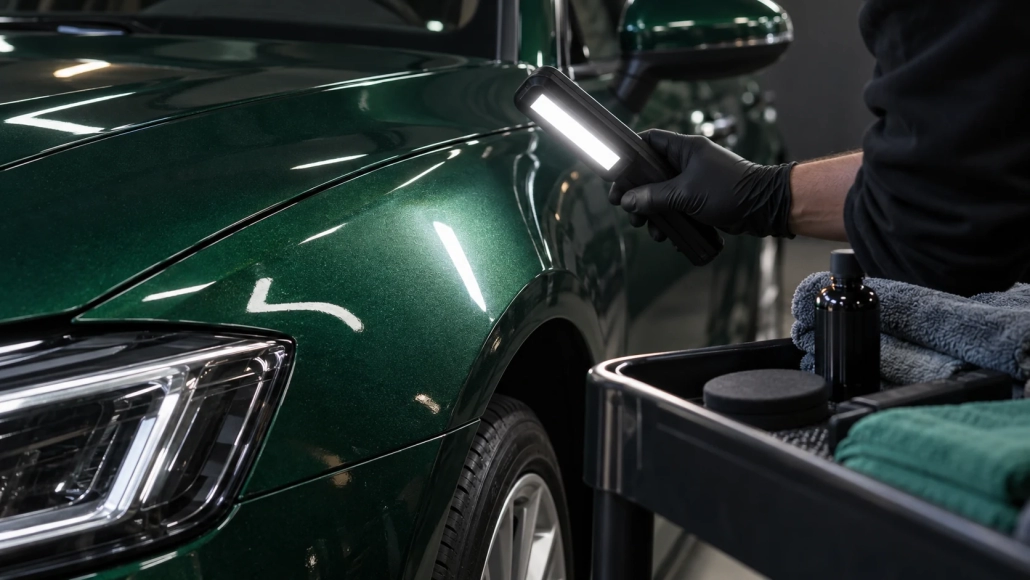
A bonnet with one exceptionally glossy spot and several uneven areas can produce an attractive average. A location map preserves the pattern that an average removes. It also makes later inspections easier to compare.
Select accessible positions suitable for the instrument’s measurement geometry. Keep away from edges, sharp curvature and locations where the instrument cannot sit correctly. Mark positions on a diagram or external reference, not by placing unsuitable adhesive on a fresh coating.
Use the same instrument settings, orientation and surface condition for baseline and later measurements. Verify the instrument according to its instructions. Record repeated readings at each location separately from variation between locations.
| Pattern | Useful next check |
|---|---|
| One isolated low location | Positioning, local residue and substrate history |
| A consistent edge-to-centre change | Geometry and application pattern |
| All locations shift similarly | Overall treatment or measurement condition |
For illustration, readings of 88, 88, 88, 88 and 68 have an average of 84. A second surface with five readings of 84 has the same average but a different spatial profile. Whether the first surface is unacceptable depends on the agreed criteria and whether the low reading is valid.
A low reading does not prove missing coating. Curvature, paint texture, contamination and measurement placement can affect the result. Inspect the location, repeat the reading appropriately and compare with its own baseline before deciding on rework.
Record photographs and observer notes alongside the map. If the instrument reports a difference that cannot be reproduced, investigate the method rather than polishing the panel to chase a number.
A useful report includes the location values, average, range and measurement conditions. It should also state which areas could not be measured reliably. That is a stronger basis for a coating decision than selecting the highest value from a bonnet and presenting it as the whole finish.
The sources below support the stated concepts or describe their own methods. The worked scenarios are editorial examples, not NANOLAB test results.
Ask NANOLAB about your surface and intended use. For application and care, use the current instructions for the exact product.

Use clear checkpoints before application, after levelling and at handover to make coating work consistent and traceable.
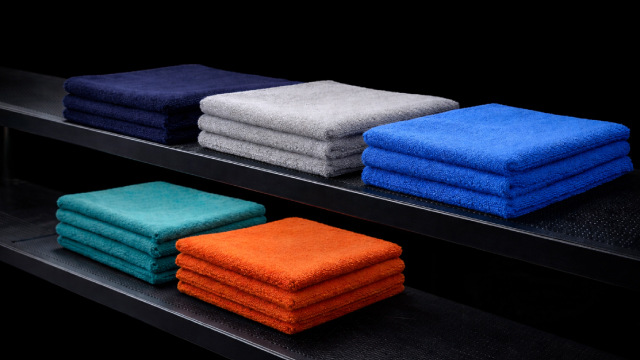
Directional texture can make appearance measurements dependent on instrument orientation. A comparison should state how the measurement direction relates to the surface pattern.
Use flat witness panels to support coating work on curved surfaces while recognising which installation risks they cannot reproduce.

 Curved Coating Surfaces: Use a Flat Witness Panel Without Overclaiming