






A full polishing range.
From cutting and one-step correction to final finishing.
Specialist chemistry. Expert application.
 QUARTZ99 / CERAMIC BASE COAT
The foundation of your coating system.
A layerable quartz base coat designed for mechanical protection. Pair it with a suitable top coat to create the final finish.
For application by NANOLAB certified installers only.
Four formulas. Extended working time. Find the coating for your finish.
Explore the BEAST family of ceramic coatings.
Find the coating for each exterior surface.
 PPF & VINYLGLOSSProtection for glossy films and wraps.Discover
 MATTE & SATINMATTEProtection that respects the finish.Discover
 GLASSWINDOWSExplore dedicated glass protection.Discover
 WHEEL PROTECTIONWHEELSA dedicated coating for your wheels.Discover
 TRIM PROTECTIONPLASTICProtection for plastic surfaces.Discover
Dedicated care for the surfaces inside.
 LEATHER SURFACESLEATHERDiscover NANOLAB leather protection.Discover PLASTIC SURFACESPLASTICProtection for interior plastic surfaces.Discover TEXTILE SURFACESFABRICExplore the latest fabric formulation.Discover
Spray protection, maintenance and upcoming wash products.
 MAINTENANCEBEAST 365Explore the BEAST maintenance range.Discover
Next in washing, cleaning & care.
Ceramic protection for boats and yachts.
An easy-to-apply ceramic coating with an established track record on boats and yachts around the world.
Results vary with surface preparation, exposure and maintenance.
Read 50 MARINE guides →Explore MARINEProtection for the surfaces you live with.
A look at what we’re developing.
From cutting and one-step correction to final finishing.
A wider range for professional vehicle care.
Taking shape alongside BEAST & MATRIX.
Practical guidance for your next coating project.
Explore all guides →
Keep a coating comparison interpretable when a panel breaks, disappears or becomes unusable, with clear exclusion and replacement rules.
Updated · NANOLAB Knowledge

A lost test panel creates a missing observation, not a convenient opportunity to improve the dataset. How the loss happened determines whether the remaining comparison is still credible. Document it before recalculating averages or preparing a presentation.
Distinguish accidental breakage, an identification error, an unreadable measurement and a product-related failure. If a coating became too hazy to measure by the planned optical method, removing that panel as “invalid” can erase the very failure the study was meant to detect. Record the appearance outcome even when a numerical result is unavailable.
| Situation | Appropriate record |
|---|---|
| Panel dropped during unrelated handling | Time, cause and last valid result |
| Sample identity lost | Identity uncertain; do not assign by appearance |
| Product prevents planned measurement | Failure observation and measurement limitation |
| Instrument malfunction | Affected readings, verification and recovery plan |
In a paired design, each A panel may have a matched B panel from the same substrate group. Losing one member affects that pair. Do not silently pair the remaining panel with a convenient sample from another day. Show complete pairs separately and explain any additional analysis using unmatched observations.
For illustration, a trial starts with six matched pairs and ends with five complete pairs plus one unmatched B panel. Report both counts. Presenting twelve planned panels as twelve completed tests would be inaccurate, even if the laboratory performed twelve application steps.
A replacement made later may have a different cure age, operator or exposure history. It can provide supporting information, but it does not automatically recreate the original trial. Where feasible, repeat the whole affected block and label it as a separate run.
Set exclusion rules before the next trial, including who approves them and how reasons are preserved. Review whether the conclusion changes under reasonable interpretations of the missing result. If it does, the correct next step is more evidence, not a more confident headline.
Ask NANOLAB about your surface and intended use. For application and care, use the current instructions for the exact product.
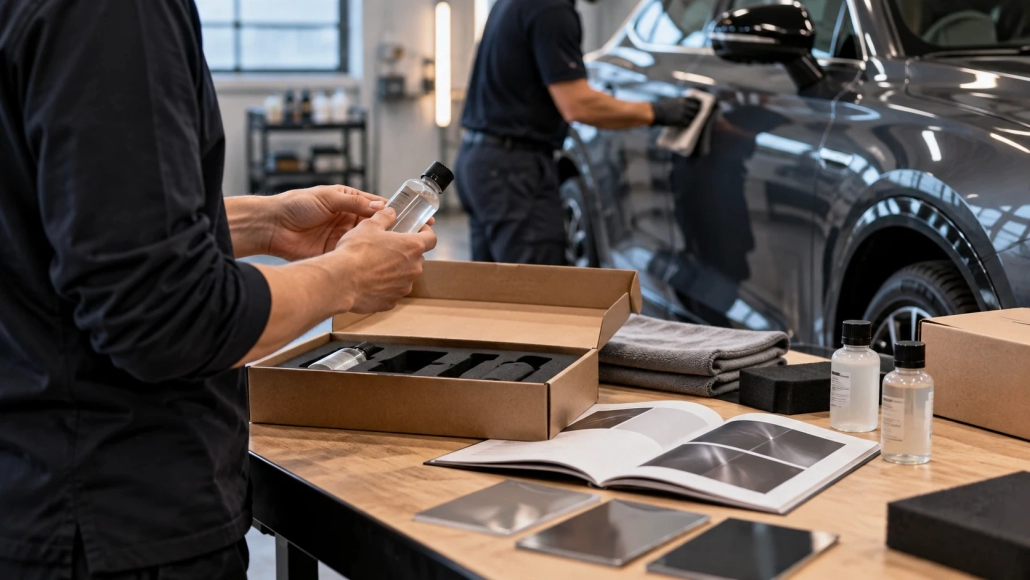
Design a coating field trial with recorded vehicles, use patterns, care routines and inspection points that produce interpretable feedback.
One excellent coating test panel and one poor panel signal a need to investigate variation before calculating a simple average.
Define the smallest coating performance improvement that matters in practice before interpreting small measured differences.
 A Practical Minimum Difference for Ceramic Coating Comparisons