






A full polishing range.
From cutting and one-step correction to final finishing.
Specialist chemistry. Expert application.
 QUARTZ99 / CERAMIC BASE COAT
The foundation of your coating system.
A layerable quartz base coat designed for mechanical protection. Pair it with a suitable top coat to create the final finish.
For application by NANOLAB certified installers only.
Four formulas. Extended working time. Find the coating for your finish.
Explore the BEAST family of ceramic coatings.
Find the coating for each exterior surface.
 PPF & VINYLGLOSSProtection for glossy films and wraps.Discover
 MATTE & SATINMATTEProtection that respects the finish.Discover
 GLASSWINDOWSExplore dedicated glass protection.Discover
 WHEEL PROTECTIONWHEELSA dedicated coating for your wheels.Discover
 TRIM PROTECTIONPLASTICProtection for plastic surfaces.Discover
Dedicated care for the surfaces inside.
 LEATHER SURFACESLEATHERDiscover NANOLAB leather protection.Discover PLASTIC SURFACESPLASTICProtection for interior plastic surfaces.Discover TEXTILE SURFACESFABRICExplore the latest fabric formulation.Discover
Spray protection, maintenance and upcoming wash products.
 MAINTENANCEBEAST 365Explore the BEAST maintenance range.Discover
Next in washing, cleaning & care.
Ceramic protection for boats and yachts.
An easy-to-apply ceramic coating with an established track record on boats and yachts around the world.
Results vary with surface preparation, exposure and maintenance.
Read 50 MARINE guides →Explore MARINEProtection for the surfaces you live with.
A look at what we’re developing.
From cutting and one-step correction to final finishing.
A wider range for professional vehicle care.
Taking shape alongside BEAST & MATRIX.
Practical guidance for your next coating project.
Explore all guides →
Resolve conflicting coating tests by comparing substrates, application, exposure and endpoints before deciding which result applies.
Updated · NANOLAB Knowledge

One installer calls a coating excellent while another reports poor performance. Neither statement is useful enough to accept or dismiss by itself. Build a reconciliation table that exposes what was actually tested and which differences could explain the disagreement.
“Water remained on the lower door after rinsing” is an observation. “The coating failed because of the shampoo” is an explanation requiring evidence. Ask each tester for the original observations, photographs and procedure before discussing causes. Preserve negative results as carefully as positive ones.
| Field | Record for both trials | Why it matters |
|---|---|---|
| Substrate | Finish, repair history, existing protection | The coating may contact different surfaces |
| Application | Preparation, batch, timing, conditions | The installed systems may differ |
| Exposure | Use, cleaning, storage, inspection age | The challenges may differ |
| Endpoint | Appearance, wetting, cleanability or damage | Success may have different meanings |
Tester A judges initial gloss on freshly polished paint. Tester B judges ease of cleaning after several weeks near a construction site. These are not opposing measurements of one outcome. First define whether the business decision concerns appearance, maintenance or durability. Then arrange a comparison that measures that outcome under relevant conditions.
If both testers measured the same outcome, identify the largest unresolved difference. For example, one may have used a maintenance spray before inspection. A fresh protective layer changes what is being observed, so request a separate record of that treatment rather than interpreting the result as the base coating alone.
Repeat the comparison with the disputed variable controlled and other details documented. Avoid changing cleaner, application method and substrate together; that creates another unexplained result. Use representative panels rather than risking an entire customer’s vehicle to investigate a hypothesis.
Close the review with three statements: what the evidence establishes, what remains unresolved, and which next check could change the decision. Agreement is valuable, but an honest explanation of disagreement is often more useful than a forced average.
Ask NANOLAB about your surface and intended use. For application and care, use the current instructions for the exact product.
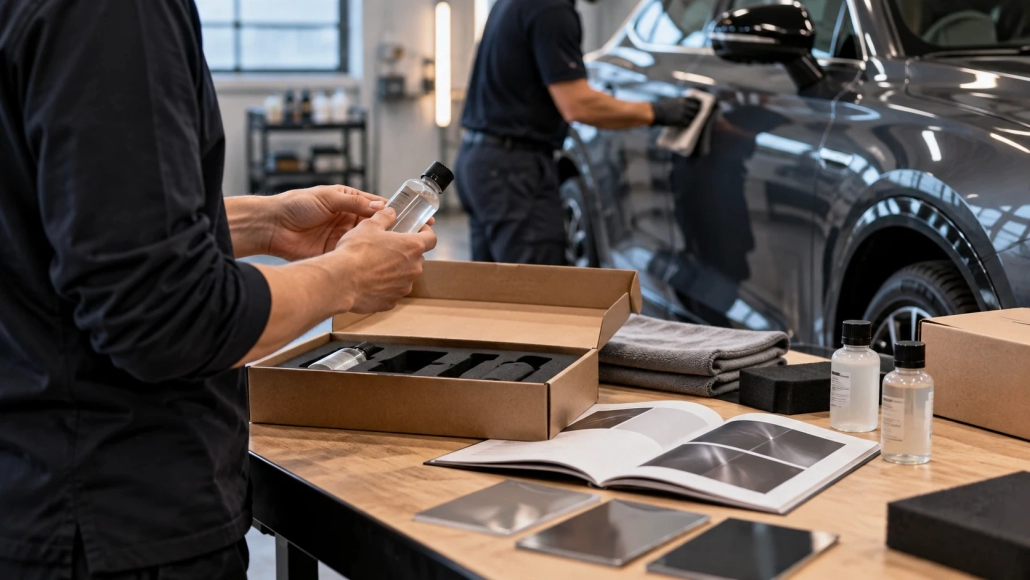
Design a coating field trial with recorded vehicles, use patterns, care routines and inspection points that produce interpretable feedback.
Understand 1K and 2K coating formats, mixing requirements and workflow costs without assuming that component count determines product quality.
Keep a coating comparison interpretable when a panel breaks, disappears or becomes unusable, with clear exclusion and replacement rules.
 How to Compare Coatings When One Test Panel Is Lost