






A full polishing range.
From cutting and one-step correction to final finishing.
Specialist chemistry. Expert application.
 QUARTZ99 / CERAMIC BASE COAT
The foundation of your coating system.
A layerable quartz base coat designed for mechanical protection. Pair it with a suitable top coat to create the final finish.
For application by NANOLAB certified installers only.
Four formulas. Extended working time. Find the coating for your finish.
Explore the BEAST family of ceramic coatings.
Find the coating for each exterior surface.
 PPF & VINYLGLOSSProtection for glossy films and wraps.Discover
 MATTE & SATINMATTEProtection that respects the finish.Discover
 GLASSWINDOWSExplore dedicated glass protection.Discover
 WHEEL PROTECTIONWHEELSA dedicated coating for your wheels.Discover
 TRIM PROTECTIONPLASTICProtection for plastic surfaces.Discover
Dedicated care for the surfaces inside.
 LEATHER SURFACESLEATHERDiscover NANOLAB leather protection.Discover PLASTIC SURFACESPLASTICProtection for interior plastic surfaces.Discover TEXTILE SURFACESFABRICExplore the latest fabric formulation.Discover
Spray protection, maintenance and upcoming wash products.
 MAINTENANCEBEAST 365Explore the BEAST maintenance range.Discover
Next in washing, cleaning & care.
Ceramic protection for boats and yachts.
An easy-to-apply ceramic coating with an established track record on boats and yachts around the world.
Results vary with surface preparation, exposure and maintenance.
Read 50 MARINE guides →Explore MARINEProtection for the surfaces you live with.
A look at what we’re developing.
From cutting and one-step correction to final finishing.
A wider range for professional vehicle care.
Taking shape alongside BEAST & MATRIX.
Practical guidance for your next coating project.
Explore all guides →
Dates such as 03/04 can mean different days in different markets. Use an unambiguous date representation in coating-trial records and preserve the original context when importing older files.
Updated · NANOLAB Knowledge
A date error can shift exposure duration, sample age or follow-up timing without changing any measured value. The team should define its date convention before combining distributor or laboratory records. Where time of day matters, include the relevant time zone rather than assuming every participant uses the same local clock.
Illustrative example: one distributor records day first and another records month first. A spreadsheet imports both automatically and creates incorrect follow-up intervals for some samples. The analysis may then suggest unusual durability patterns caused entirely by date interpretation.
Do not guess ambiguous dates from the result you expect to see. This guide does not require a particular software platform. The useful requirement is that every recorded date has one clear meaning and that conversions remain traceable to the original record when timing affects the conclusion.
Ask NANOLAB about the exact product and intended use. Use the current product documentation for formulation-specific instructions.

Environmental records help interpret a job, but they do not automatically prove the cause of a defect. They should accompany surface and process observations.
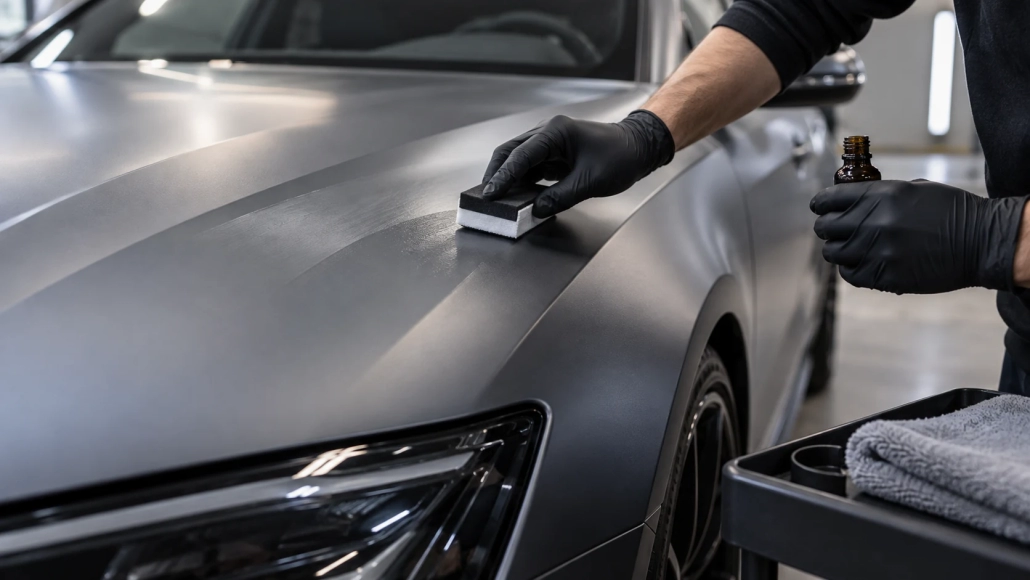
Plan a colour-change assessment for nano coatings with matched samples, consistent lighting and a clear distinction between visual observation and instrument data.
A repeated row may be an accidental duplicate or a legitimate repeat measurement. Use sample, time and measurement identifiers to distinguish the two before cleaning a coating-trial dataset.