






A full polishing range.
From cutting and one-step correction to final finishing.
Specialist chemistry. Expert application.
 QUARTZ99 / CERAMIC BASE COAT
The foundation of your coating system.
A layerable quartz base coat designed for mechanical protection. Pair it with a suitable top coat to create the final finish.
For application by NANOLAB certified installers only.
Four formulas. Extended working time. Find the coating for your finish.
Explore the BEAST family of ceramic coatings.
Find the coating for each exterior surface.
 PPF & VINYLGLOSSProtection for glossy films and wraps.Discover
 MATTE & SATINMATTEProtection that respects the finish.Discover
 GLASSWINDOWSExplore dedicated glass protection.Discover
 WHEEL PROTECTIONWHEELSA dedicated coating for your wheels.Discover
 TRIM PROTECTIONPLASTICProtection for plastic surfaces.Discover
Dedicated care for the surfaces inside.
 LEATHER SURFACESLEATHERDiscover NANOLAB leather protection.Discover PLASTIC SURFACESPLASTICProtection for interior plastic surfaces.Discover TEXTILE SURFACESFABRICExplore the latest fabric formulation.Discover
Spray protection, maintenance and upcoming wash products.
 MAINTENANCEBEAST 365Explore the BEAST maintenance range.Discover
Next in washing, cleaning & care.
Ceramic protection for boats and yachts.
An easy-to-apply ceramic coating with an established track record on boats and yachts around the world.
Results vary with surface preparation, exposure and maintenance.
Read 50 MARINE guides →Explore MARINEProtection for the surfaces you live with.
A look at what we’re developing.
From cutting and one-step correction to final finishing.
A wider range for professional vehicle care.
Taking shape alongside BEAST & MATRIX.
Practical guidance for your next coating project.
Explore all guides →
If a detailing product has been left outside its stated storage conditions, appearance alone may not establish whether it remains suitable. Record what happened and ask the supplier for a product-specific disposition before returning uncertain stock to normal use.
Updated · NANOLAB Knowledge
Useful information includes the product identity, batch, container condition, whether it was opened and the approximate exposure period. Ambient weather data may help describe the event, but it is not necessarily the temperature reached by the liquid inside a vehicle or container. Keep known facts separate from estimates.
Illustrative example: a bottle remains in a parked service vehicle over a hot weekend. The local forecast provides context but does not prove the bottle's internal temperature. A clear exposure record is more useful to technical support than the statement that the product still looks normal.
Do not restore an unknown product by adding water, solvent or fresh stock. A successful test spot cannot by itself establish storage stability or safety. Use the exact product's documentation and supplier advice to resolve the uncertainty.
Ask NANOLAB about the exact product and intended use. Use the current product documentation for formulation-specific instructions.
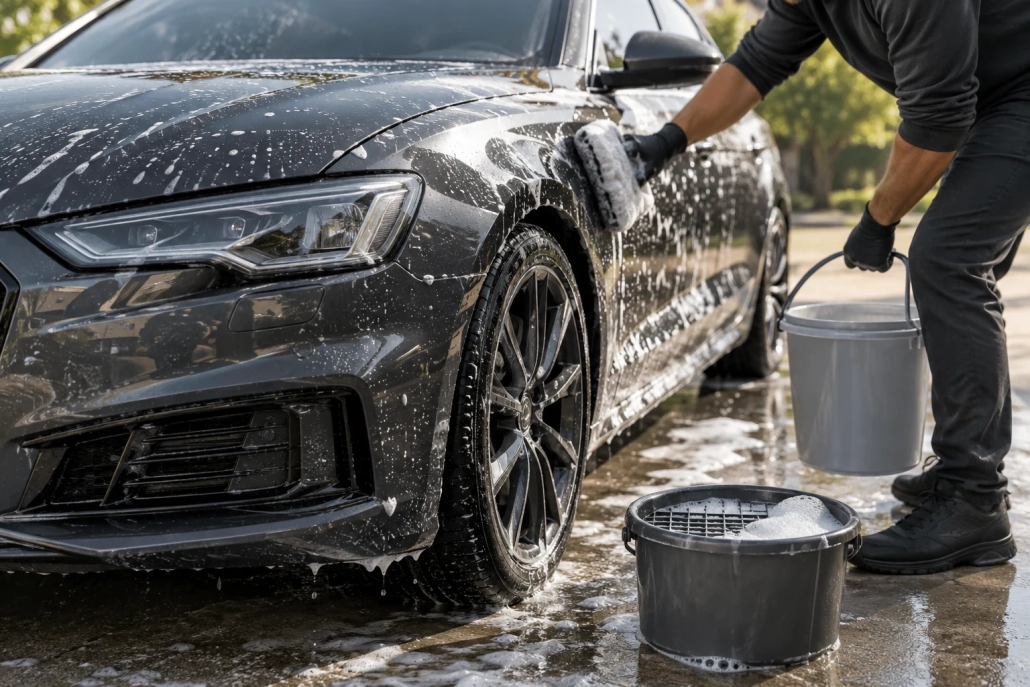
Build a gentle wash routine that removes loose grit before contact, keeps wheel tools separate and ends with careful rinsing and drying.
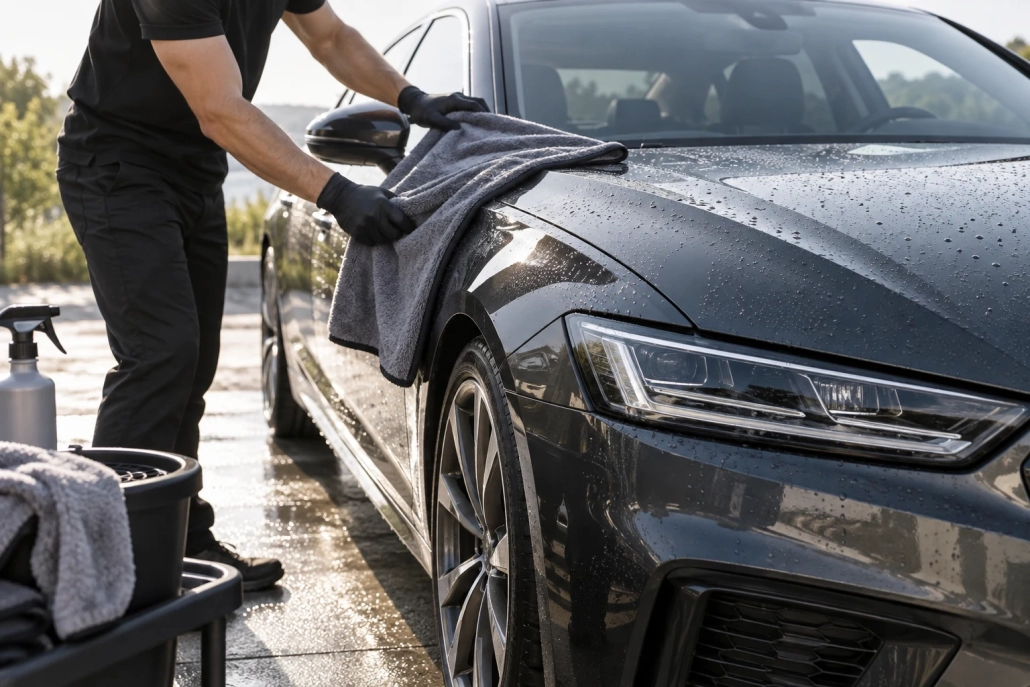
Assess stored rainwater, sediment and final rinsing before using collected water to wash a ceramic-coated vehicle.
A surface that looks better immediately after cleaning may still carry product residue that changes its appearance. Inspect the finished result under the appropriate dry conditions before concluding that the original defect or contamination has been removed.