






A full polishing range.
From cutting and one-step correction to final finishing.
Specialist chemistry. Expert application.
 QUARTZ99 / CERAMIC BASE COAT
The foundation of your coating system.
A layerable quartz base coat designed for mechanical protection. Pair it with a suitable top coat to create the final finish.
For application by NANOLAB certified installers only.
Four formulas. Extended working time. Find the coating for your finish.
Explore the BEAST family of ceramic coatings.
Find the coating for each exterior surface.
 PPF & VINYLGLOSSProtection for glossy films and wraps.Discover
 MATTE & SATINMATTEProtection that respects the finish.Discover
 GLASSWINDOWSExplore dedicated glass protection.Discover
 WHEEL PROTECTIONWHEELSA dedicated coating for your wheels.Discover
 TRIM PROTECTIONPLASTICProtection for plastic surfaces.Discover
Dedicated care for the surfaces inside.
 LEATHER SURFACESLEATHERDiscover NANOLAB leather protection.Discover PLASTIC SURFACESPLASTICProtection for interior plastic surfaces.Discover TEXTILE SURFACESFABRICExplore the latest fabric formulation.Discover
Spray protection, maintenance and upcoming wash products.
 MAINTENANCEBEAST 365Explore the BEAST maintenance range.Discover
Next in washing, cleaning & care.
Ceramic protection for boats and yachts.
An easy-to-apply ceramic coating with an established track record on boats and yachts around the world.
Results vary with surface preparation, exposure and maintenance.
Read 50 MARINE guides →Explore MARINEProtection for the surfaces you live with.
A look at what we’re developing.
From cutting and one-step correction to final finishing.
A wider range for professional vehicle care.
Taking shape alongside BEAST & MATRIX.
Practical guidance for your next coating project.
Explore all guides →
Plan a small factorial coating study to examine temperature and humidity together within approved conditions and an appropriate test design.
Updated · NANOLAB Knowledge
A factorial design examines combinations of selected factors rather than changing only one factor in isolation. For coating application research, this can reveal whether the effect of one condition depends on another. All chosen conditions must remain within the product's permitted application range unless a qualified laboratory is conducting a separately controlled study.
An illustrative two-by-two study could compare two permitted temperatures and two permitted humidity levels. That creates four combinations. Use appropriate independent replicates, consistent substrates and a predefined outcome such as application time or a defined appearance score.
The values should represent the actual question, not convenient extremes selected to make one sample fail. Record the achieved conditions rather than only the chamber settings.
If increasing temperature has a small effect at one humidity but a larger effect at another, the factors may interact. A single statement such as “warmer is faster” may hide that relationship. The analysis should match the design and account for relevant variation.
Do not run all of one condition with one operator and all of another with a different operator unless that structure is deliberately accounted for. Otherwise, operator differences become entangled with the environmental comparison.
A small design can guide a larger investigation or clarify practical workflow, but it does not justify extrapolating outside the tested conditions. Nor does a good appearance score immediately after application establish long-term performance.
For routine installation, follow the manufacturer's instructions. Use factorial studies for controlled process development with suitable measurement and statistical support. Their value is identifying combinations and interactions that a simplistic one-variable demonstration might miss, while keeping product approval and performance claims tied to actual evidence.
Technical references: NIST: Factorial experiments and two-way ANOVA.
For product-specific application instructions, consult NANOLAB technical documentation or ask about your surface and intended use.
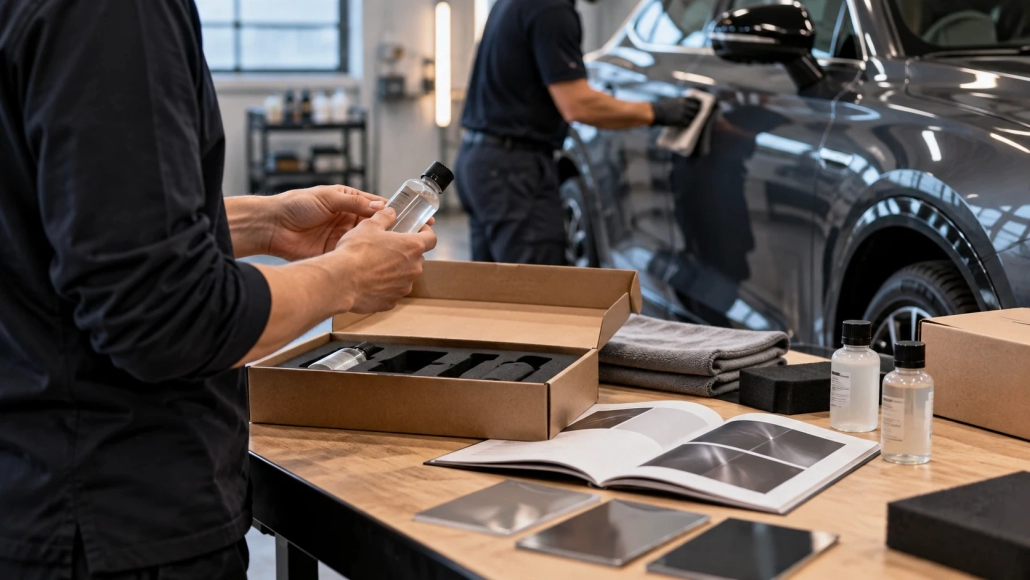
Design a coating field trial with recorded vehicles, use patterns, care routines and inspection points that produce interpretable feedback.
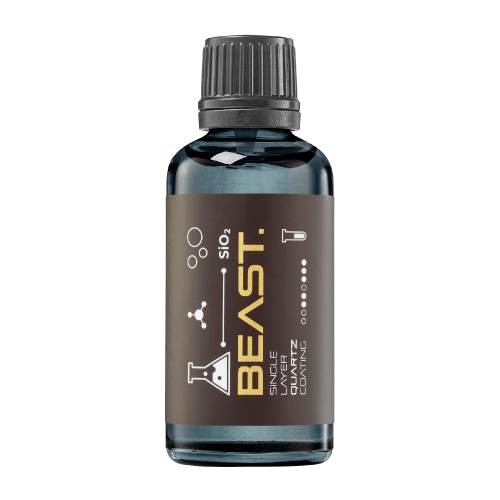
Several readings from one coated patch are not the same as several independently prepared test patches. Keep those two forms of repetition separate.

Use operator or day blocks to reduce confounding in a coating trial and preserve the block structure when analysing results.