






A full polishing range.
From cutting and one-step correction to final finishing.
Specialist chemistry. Expert application.
 QUARTZ99 / CERAMIC BASE COAT
The foundation of your coating system.
A layerable quartz base coat designed for mechanical protection. Pair it with a suitable top coat to create the final finish.
For application by NANOLAB certified installers only.
Four formulas. Extended working time. Find the coating for your finish.
Explore the BEAST family of ceramic coatings.
Find the coating for each exterior surface.
 PPF & VINYLGLOSSProtection for glossy films and wraps.Discover
 MATTE & SATINMATTEProtection that respects the finish.Discover
 GLASSWINDOWSExplore dedicated glass protection.Discover
 WHEEL PROTECTIONWHEELSA dedicated coating for your wheels.Discover
 TRIM PROTECTIONPLASTICProtection for plastic surfaces.Discover
Dedicated care for the surfaces inside.
 LEATHER SURFACESLEATHERDiscover NANOLAB leather protection.Discover PLASTIC SURFACESPLASTICProtection for interior plastic surfaces.Discover TEXTILE SURFACESFABRICExplore the latest fabric formulation.Discover
Spray protection, maintenance and upcoming wash products.
 MAINTENANCEBEAST 365Explore the BEAST maintenance range.Discover
Next in washing, cleaning & care.
Ceramic protection for boats and yachts.
An easy-to-apply ceramic coating with an established track record on boats and yachts around the world.
Results vary with surface preparation, exposure and maintenance.
Read 50 MARINE guides →Explore MARINEProtection for the surfaces you live with.
A look at what we’re developing.
From cutting and one-step correction to final finishing.
A wider range for professional vehicle care.
Taking shape alongside BEAST & MATRIX.
Practical guidance for your next coating project.
Explore all guides →
Use a sample-container blank to investigate unexpected water readings before replacing treatment equipment or blaming a coating.
Updated · NANOLAB Knowledge
A water-quality reading includes the effects of the sample and anything introduced during collection. A cup carrying dried detergent or mineral residue can make suitable water appear contaminated. A simple container check can prevent unnecessary equipment changes.
A container blank uses appropriate reference water handled through the collection container and procedure. Its purpose is to reveal contamination introduced by that process. It does not prove that every possible contaminant is absent, and the reference water must itself be suitable for the intended measurement.
For a practical conductivity investigation, compare the reference water directly with the same water after contact with the sample cup, using the instrument's procedure. A difference larger than the method's normal variation deserves investigation before interpreting customer-site samples.
Use dedicated, suitable containers. Avoid cups previously used for shampoo, panel wipe or workshop drinks. Handle closures and probes so that fingers or residues do not contaminate the sample. Follow the instrument and sampling guidance for rinsing and storage.
In an illustrative case, two operators obtain different outlet-water results because one uses a clean dedicated cup and the other a reused chemical-measuring jug. Replacing the treatment cartridge would not solve the underlying sampling problem.
If a suspect reading triggers a container or probe cleanup, retain both the original and repeat results with a note explaining the change. Do not quietly delete the inconvenient value. The history helps the team recognize the same error later.
For important acceptance testing, use the formal sampling protocol required by the project or laboratory. A workshop blank is a useful diagnostic control, not a substitute for a validated analytical method. Its value is in checking an easily overlooked source of error before making a costly water-treatment or coating-performance diagnosis.
For product-specific application instructions, consult NANOLAB technical documentation or ask about your surface and intended use.
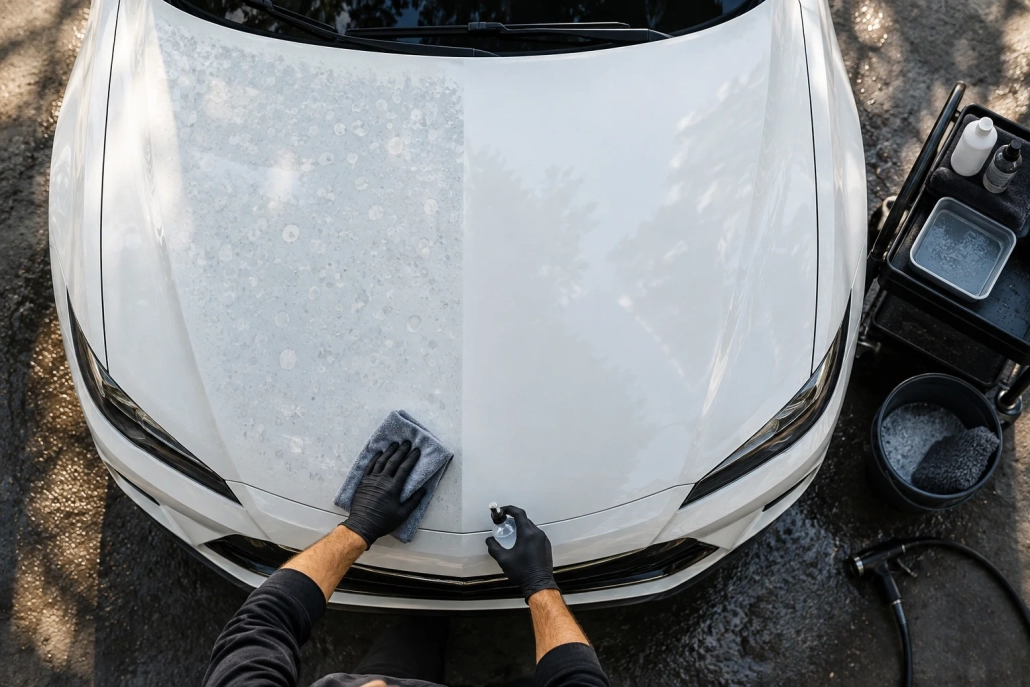
Understand why softened water and deionised rinse water are different when planning washing and drying for a ceramic-coated car.
A TDS display can help monitor a water-treatment system, but it does not describe every contaminant or guarantee that drying will leave no marks.
Choose suitable pH calibration buffers, define the cleaner sample correctly, and keep calibration separate from compatibility assessment.