






A full polishing range.
From cutting and one-step correction to final finishing.
Specialist chemistry. Expert application.
 QUARTZ99 / CERAMIC BASE COAT
The foundation of your coating system.
A layerable quartz base coat designed for mechanical protection. Pair it with a suitable top coat to create the final finish.
For application by NANOLAB certified installers only.
Four formulas. Extended working time. Find the coating for your finish.
Explore the BEAST family of ceramic coatings.
Find the coating for each exterior surface.
 PPF & VINYLGLOSSProtection for glossy films and wraps.Discover
 MATTE & SATINMATTEProtection that respects the finish.Discover
 GLASSWINDOWSExplore dedicated glass protection.Discover
 WHEEL PROTECTIONWHEELSA dedicated coating for your wheels.Discover
 TRIM PROTECTIONPLASTICProtection for plastic surfaces.Discover
Dedicated care for the surfaces inside.
 LEATHER SURFACESLEATHERDiscover NANOLAB leather protection.Discover PLASTIC SURFACESPLASTICProtection for interior plastic surfaces.Discover TEXTILE SURFACESFABRICExplore the latest fabric formulation.Discover
Spray protection, maintenance and upcoming wash products.
 MAINTENANCEBEAST 365Explore the BEAST maintenance range.Discover
Next in washing, cleaning & care.
Ceramic protection for boats and yachts.
An easy-to-apply ceramic coating with an established track record on boats and yachts around the world.
Results vary with surface preparation, exposure and maintenance.
Read 50 MARINE guides →Explore MARINEProtection for the surfaces you live with.
A look at what we’re developing.
From cutting and one-step correction to final finishing.
A wider range for professional vehicle care.
Taking shape alongside BEAST & MATRIX.
Practical guidance for your next coating project.
Explore all guides →
Compare first-draw and flushed water samples to investigate contamination in tanks, hoses and downstream rinse equipment.
Updated · NANOLAB Knowledge
Water taken immediately from a hose can differ from water collected after the line has been flushed. Comparing these samples helps locate a problem in stored water, downstream equipment or the incoming supply. The samples must be labelled by how they were collected.
A first-draw sample represents water that has remained in the line. A stabilized outlet sample represents the supply under the defined operating procedure. Neither is automatically the correct sample for every investigation.
If the first rinse on each morning's car causes concern, the first-draw condition is relevant. If the question is whether a treatment unit meets its continuous operating requirement, follow its specified flushing and sampling method.
Collect samples in clean suitable containers and identify the location, elapsed flow or flushed volume, and measurement conditions. Keep incoming supply, treatment outlet and hose-end results separate. Avoid carrying residue from one sample into the next through a dirty probe or cup.
An illustrative pattern is a high initial hose-end reading that falls after flushing, while the treatment outlet remains stable. That suggests investigating the downstream section. It does not, by itself, identify the contaminant or prove a particular hose material is responsible.
Review tank cleanliness, hose condition, connections and the equipment's commissioning instructions. If a change is made, repeat the same sampling sequence to see whether the pattern changes. Do not compare a new flushed sample only with an old first-draw result and call that proof of improvement.
Keep any flushing instruction tied to observed conditions and supplier guidance rather than inventing a universal duration. The goal is representative water at the point of use and a repeatable start-of-job procedure that staff can actually follow.
Technical references: USGS: Specific electrical conductance.
For product-specific application instructions, consult NANOLAB technical documentation or ask about your surface and intended use.
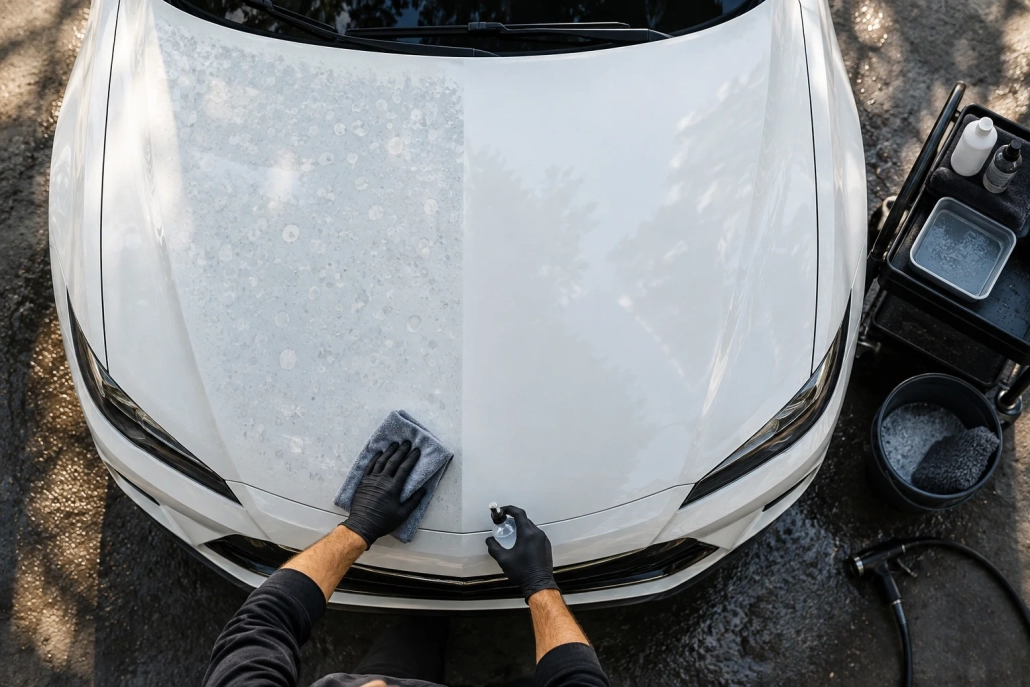
Understand why softened water and deionised rinse water are different when planning washing and drying for a ceramic-coated car.
A TDS display can help monitor a water-treatment system, but it does not describe every contaminant or guarantee that drying will leave no marks.
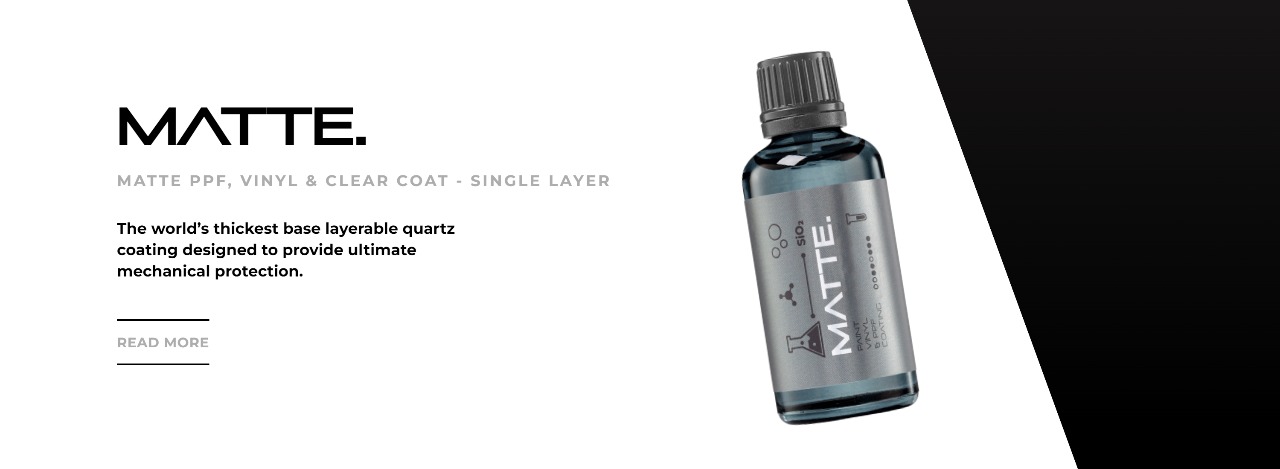
Choose hardness or TDS measurements for the actual washing problem and distinguish water softening from low-ion final-rinse treatment.