






A full polishing range.
From cutting and one-step correction to final finishing.
Specialist chemistry. Expert application.
 QUARTZ99 / CERAMIC BASE COAT
The foundation of your coating system.
A layerable quartz base coat designed for mechanical protection. Pair it with a suitable top coat to create the final finish.
For application by NANOLAB certified installers only.
Four formulas. Extended working time. Find the coating for your finish.
Explore the BEAST family of ceramic coatings.
Find the coating for each exterior surface.
 PPF & VINYLGLOSSProtection for glossy films and wraps.Discover
 MATTE & SATINMATTEProtection that respects the finish.Discover
 GLASSWINDOWSExplore dedicated glass protection.Discover
 WHEEL PROTECTIONWHEELSA dedicated coating for your wheels.Discover
 TRIM PROTECTIONPLASTICProtection for plastic surfaces.Discover
Dedicated care for the surfaces inside.
 LEATHER SURFACESLEATHERDiscover NANOLAB leather protection.Discover PLASTIC SURFACESPLASTICProtection for interior plastic surfaces.Discover TEXTILE SURFACESFABRICExplore the latest fabric formulation.Discover
Spray protection, maintenance and upcoming wash products.
 MAINTENANCEBEAST 365Explore the BEAST maintenance range.Discover
Next in washing, cleaning & care.
Ceramic protection for boats and yachts.
An easy-to-apply ceramic coating with an established track record on boats and yachts around the world.
Results vary with surface preparation, exposure and maintenance.
Read 50 MARINE guides →Explore MARINEProtection for the surfaces you live with.
A look at what we’re developing.
From cutting and one-step correction to final finishing.
A wider range for professional vehicle care.
Taking shape alongside BEAST & MATRIX.
Practical guidance for your next coating project.
Explore all guides →
Compare coating viscosity at consistent sample temperatures and distinguish ordinary flow changes from possible storage damage.
Updated · NANOLAB Knowledge
A viscosity comparison is incomplete without sample temperature. If one bottle arrives from a cold van and another has been stored in the workshop, a difference in flow may reflect temperature rather than an altered formulation.
Choose the supplier's documented test condition and suitable instrument method. Record the sample temperature at measurement, not only the room thermostat setting. A liquid can remain warmer or colder than the surrounding air for some time.
Keep sample handling, instrument configuration and measurement sequence consistent. Where the method requires a spindle, speed or defined equilibration procedure, record those details. A value stripped of its method cannot reliably diagnose a batch difference.
A reversible flow change within normal handling conditions is a different question from a sample that has been exposed outside its storage limits. Bringing a damaged product back to room temperature does not prove that its original properties have returned.
If a bottle experienced an unknown transport temperature, retain that history and ask the supplier for guidance. Do not heat or cool it aggressively to force a preferred result, and do not use an altered sample on a customer vehicle as a diagnostic experiment.
An illustrative record could contain sample identity, temperature, method, result, replicate readings and appearance notes. If the two samples were measured at different temperatures, label the comparison as uncontrolled rather than calculating a percentage improvement.
For application planning, also observe spread and levelling within the product's approved conditions. Instrument viscosity and practical application behaviour answer related but different questions. The aim is to establish a repeatable process, not to select whichever bottle looks thickest or flows fastest in an informal pouring demonstration.
Technical references: BYK-Gardner: Guide to Viscosity Measurement.
For product-specific application instructions, consult NANOLAB technical documentation or ask about your surface and intended use.
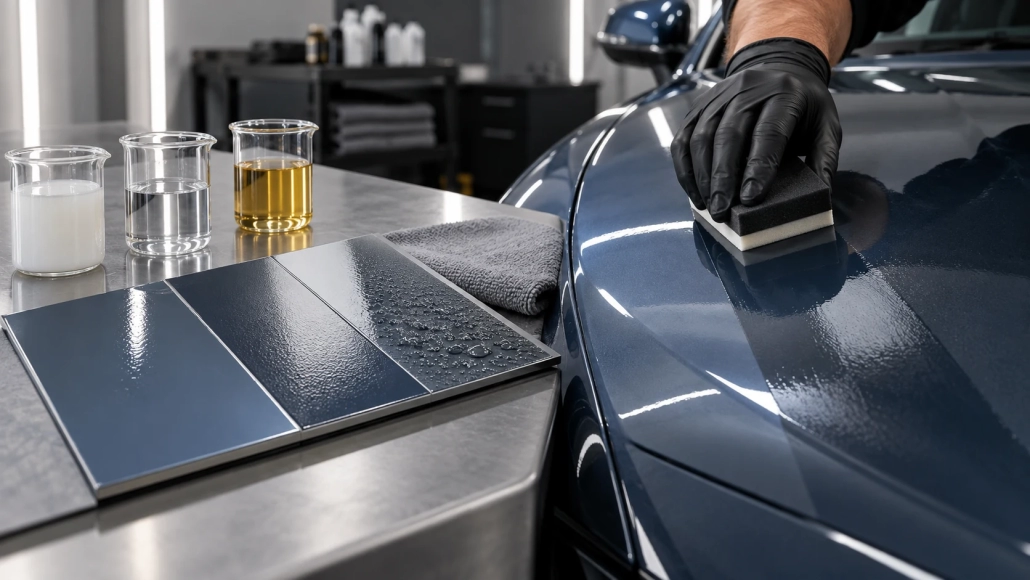
Read coating solids figures alongside application method, finish compatibility and documented performance rather than using one number alone.
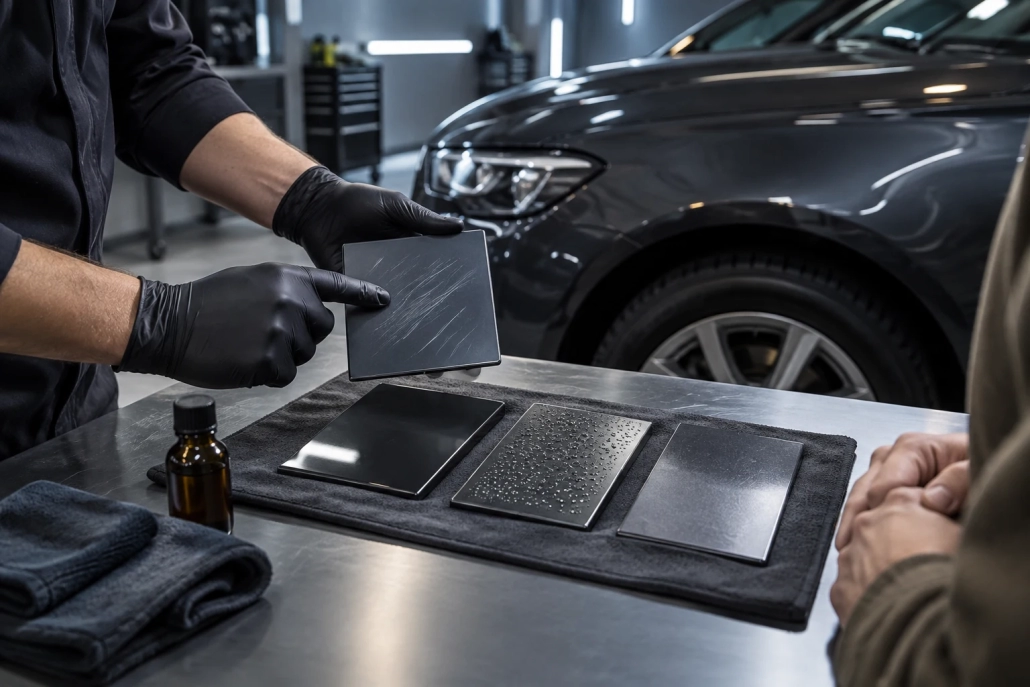
Check whether a laboratory report actually supports a nano coating claim by reviewing sample identity, method, scope, results and the connection to the sold product.
Learn why a clear mixture does not establish coating compatibility and how to prevent unintended mixing through tools and application methods.