






A full polishing range.
From cutting and one-step correction to final finishing.
Specialist chemistry. Expert application.
 QUARTZ99 / CERAMIC BASE COAT
The foundation of your coating system.
A layerable quartz base coat designed for mechanical protection. Pair it with a suitable top coat to create the final finish.
For application by NANOLAB certified installers only.
Four formulas. Extended working time. Find the coating for your finish.
Explore the BEAST family of ceramic coatings.
Find the coating for each exterior surface.
 PPF & VINYLGLOSSProtection for glossy films and wraps.Discover
 MATTE & SATINMATTEProtection that respects the finish.Discover
 GLASSWINDOWSExplore dedicated glass protection.Discover
 WHEEL PROTECTIONWHEELSA dedicated coating for your wheels.Discover
 TRIM PROTECTIONPLASTICProtection for plastic surfaces.Discover
Dedicated care for the surfaces inside.
 LEATHER SURFACESLEATHERDiscover NANOLAB leather protection.Discover PLASTIC SURFACESPLASTICProtection for interior plastic surfaces.Discover TEXTILE SURFACESFABRICExplore the latest fabric formulation.Discover
Spray protection, maintenance and upcoming wash products.
 MAINTENANCEBEAST 365Explore the BEAST maintenance range.Discover
Next in washing, cleaning & care.
Ceramic protection for boats and yachts.
An easy-to-apply ceramic coating with an established track record on boats and yachts around the world.
Results vary with surface preparation, exposure and maintenance.
Read 50 MARINE guides →Explore MARINEProtection for the surfaces you live with.
A look at what we’re developing.
From cutting and one-step correction to final finishing.
A wider range for professional vehicle care.
Taking shape alongside BEAST & MATRIX.
Practical guidance for your next coating project.
Explore all guides →
Distinguish flash point, boiling point and approved application temperature when reading coating safety and technical documentation.
Updated · NANOLAB Knowledge
A coating's flash point, boiling point and recommended application range describe different properties. None should be substituted for another. A product being below its flash point does not, by itself, establish that a work area or handling method is safe.
Flash point concerns ignitable vapour under a specified test. Boiling information concerns a phase change and may be a range for a mixture. Application temperature concerns the conditions in which the manufacturer expects the product to be installed successfully.
Use the current safety data sheet for hazard and handling information, and the technical instructions for application conditions. If a field is not applicable or is not provided, do not create a value by borrowing from a listed ingredient.
A product that spreads better at a warmer temperature is not automatically approved for heating. A faster apparent flash-off also does not prove a faster complete cure. Follow the manufacturer's storage, ventilation, ignition-control and equipment requirements.
For a workshop planning exercise, separate three checks: whether the product is stored appropriately, whether the work environment satisfies its handling requirements, and whether the substrate and air are within the application limits. Passing one check does not replace the others.
Avoid statements such as “safe up to the flash point” or “the boiling point is the maximum panel temperature.” They turn a test property into a permission it does not provide. Similarly, low odour is not a substitute for reading the safety documentation.
When a specification is unclear, send the supplier the exact product name and the planned condition, such as a hot transported vehicle arriving in the bay. Ask for the approved procedure. Allow the job plan to follow that answer rather than improvising a temperature limit from unrelated data.
Technical references: OSHA: Safety data sheet information, including physical properties.
For product-specific application instructions, consult NANOLAB technical documentation or ask about your surface and intended use.
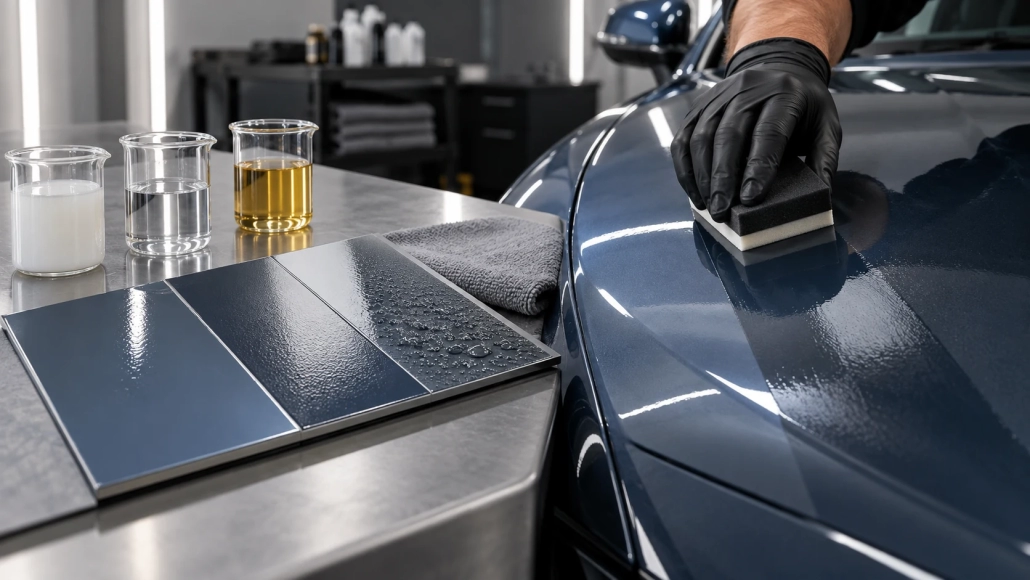
Read coating solids figures alongside application method, finish compatibility and documented performance rather than using one number alone.
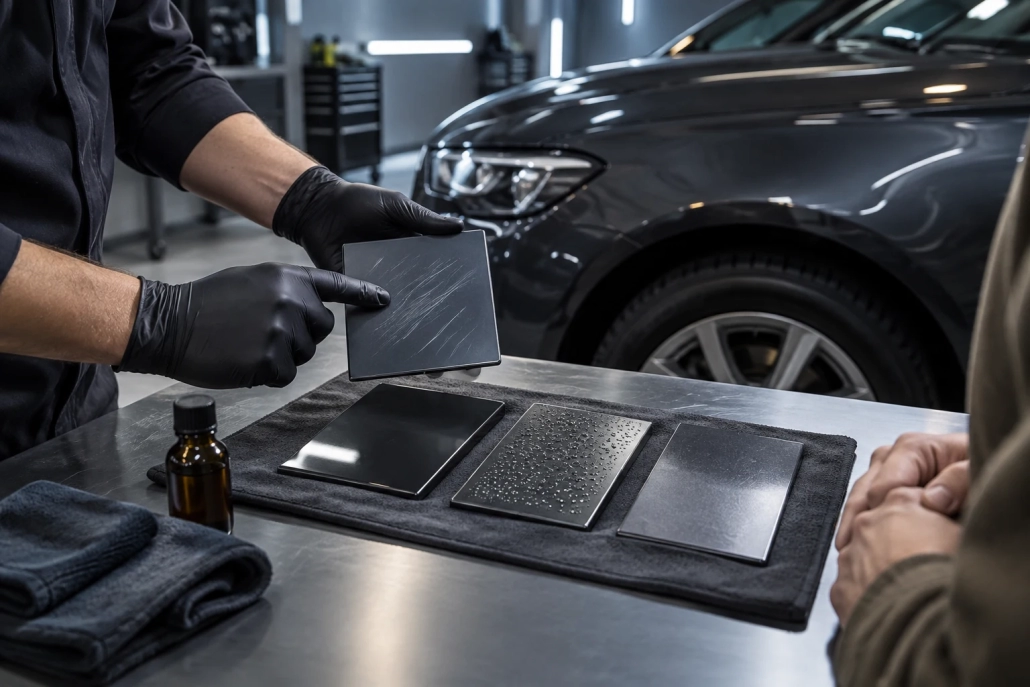
Check whether a laboratory report actually supports a nano coating claim by reviewing sample identity, method, scope, results and the connection to the sold product.
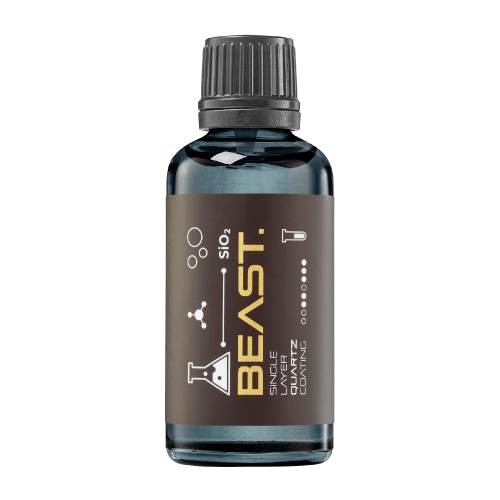
Understand missing or method-specific pH values in nonaqueous coatings and avoid treating an unspecified value as proof of neutrality.