






A full polishing range.
From cutting and one-step correction to final finishing.
Specialist chemistry. Expert application.
 QUARTZ99 / CERAMIC BASE COAT
The foundation of your coating system.
A layerable quartz base coat designed for mechanical protection. Pair it with a suitable top coat to create the final finish.
For application by NANOLAB certified installers only.
Four formulas. Extended working time. Find the coating for your finish.
Explore the BEAST family of ceramic coatings.
Find the coating for each exterior surface.
 PPF & VINYLGLOSSProtection for glossy films and wraps.Discover
 MATTE & SATINMATTEProtection that respects the finish.Discover
 GLASSWINDOWSExplore dedicated glass protection.Discover
 WHEEL PROTECTIONWHEELSA dedicated coating for your wheels.Discover
 TRIM PROTECTIONPLASTICProtection for plastic surfaces.Discover
Dedicated care for the surfaces inside.
 LEATHER SURFACESLEATHERDiscover NANOLAB leather protection.Discover PLASTIC SURFACESPLASTICProtection for interior plastic surfaces.Discover TEXTILE SURFACESFABRICExplore the latest fabric formulation.Discover
Spray protection, maintenance and upcoming wash products.
 MAINTENANCEBEAST 365Explore the BEAST maintenance range.Discover
Next in washing, cleaning & care.
Ceramic protection for boats and yachts.
An easy-to-apply ceramic coating with an established track record on boats and yachts around the world.
Results vary with surface preparation, exposure and maintenance.
Read 50 MARINE guides →Explore MARINEProtection for the surfaces you live with.
A look at what we’re developing.
From cutting and one-step correction to final finishing.
A wider range for professional vehicle care.
Taking shape alongside BEAST & MATRIX.
Practical guidance for your next coating project.
Explore all guides →
Understand 1K and 2K coating formats, mixing requirements and workflow costs without assuming that component count determines product quality.
Updated · NANOLAB Knowledge
One-component and two-component describe how a coating is supplied and prepared for use. They do not create a universal ranking of quality. A well-specified one-component product can be suitable for a task where a two-component system would add unnecessary complexity, and the reverse can also be true.
A 1K product is normally supplied as a ready system without a separately added reactive component at the point of use. A 2K system requires its specified components to be combined. Exact mixing ratios, induction periods, application limits and disposal requirements depend on that product.
A base coat and a separately applied topcoat are not automatically a 2K mixture. If the instructions describe sequential layers, combining those bottles in a cup may ruin the system. Packaging count alone is not a reliable guide to chemistry.
For a workshop, a two-component system may introduce measuring, mixing and usable-life controls. Small jobs can leave unused mixed material. A one-component bottle may instead require particular attention to opening, closure and storage. Neither format removes the need for the current technical and safety documents.
An illustrative purchasing comparison should list preparation time, application time, minimum practical batch, unused material and the permitted working window. Compare those costs alongside evidence for the actual substrate and exposure. Do not infer years of service from the number of components.
Use only the manufacturer's specified component pair and ratio. A ratio by weight is not automatically the same as a ratio by volume. Do not add solvent or an extra hardener to compensate for slow application unless the instructions explicitly require it.
When discussing a NANOLAB project, identify the exact product and application sequence before deciding how it fits the workflow. The meaningful question is whether the documented system meets the job requirements and can be applied consistently by the intended team.
For product-specific application instructions, consult NANOLAB technical documentation or ask about your surface and intended use.
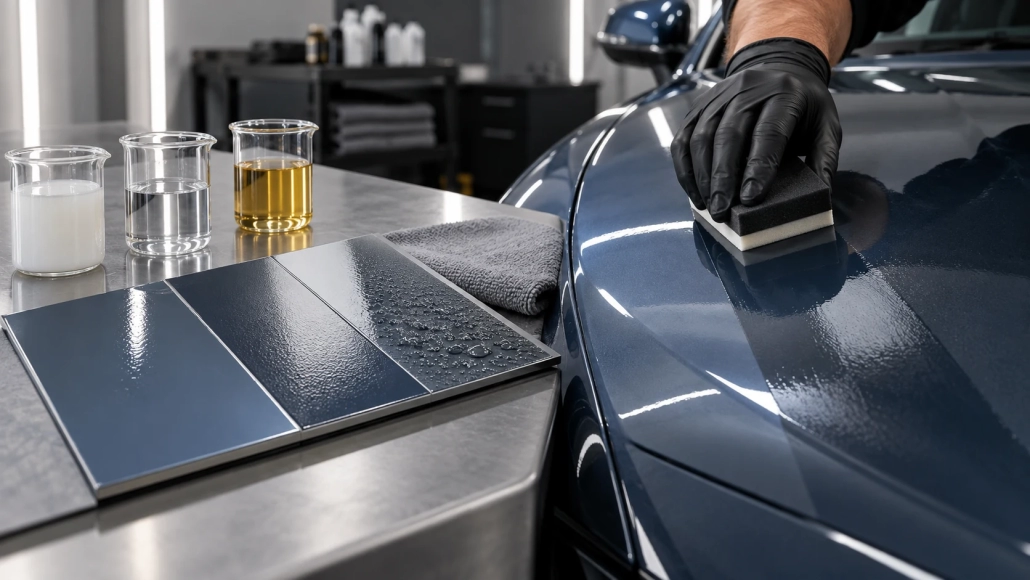
Read coating solids figures alongside application method, finish compatibility and documented performance rather than using one number alone.
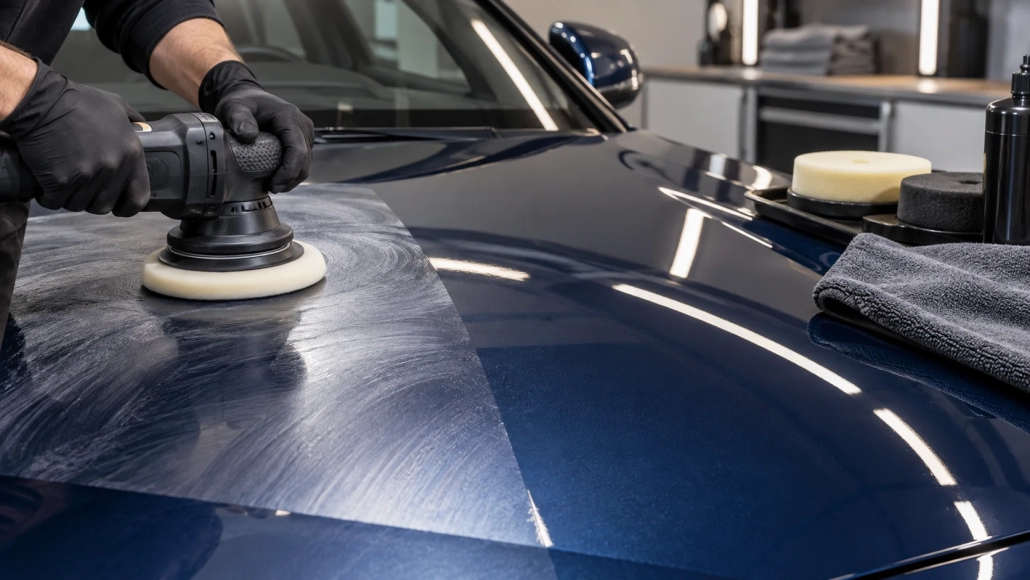
Understand heavy cut compound, fine cut and finishing polish, then choose a paint correction process that fits your paint, machine and intended result.

Track where wipe-on coating material goes, distinguish bottle consumption from retained film, and identify avoidable application waste.