






A full polishing range.
From cutting and one-step correction to final finishing.
Specialist chemistry. Expert application.
 QUARTZ99 / CERAMIC BASE COAT
The foundation of your coating system.
A layerable quartz base coat designed for mechanical protection. Pair it with a suitable top coat to create the final finish.
For application by NANOLAB certified installers only.
Four formulas. Extended working time. Find the coating for your finish.
Explore the BEAST family of ceramic coatings.
Find the coating for each exterior surface.
 PPF & VINYLGLOSSProtection for glossy films and wraps.Discover
 MATTE & SATINMATTEProtection that respects the finish.Discover
 GLASSWINDOWSExplore dedicated glass protection.Discover
 WHEEL PROTECTIONWHEELSA dedicated coating for your wheels.Discover
 TRIM PROTECTIONPLASTICProtection for plastic surfaces.Discover
Dedicated care for the surfaces inside.
 LEATHER SURFACESLEATHERDiscover NANOLAB leather protection.Discover PLASTIC SURFACESPLASTICProtection for interior plastic surfaces.Discover TEXTILE SURFACESFABRICExplore the latest fabric formulation.Discover
Spray protection, maintenance and upcoming wash products.
 MAINTENANCEBEAST 365Explore the BEAST maintenance range.Discover
Next in washing, cleaning & care.
Ceramic protection for boats and yachts.
An easy-to-apply ceramic coating with an established track record on boats and yachts around the world.
Results vary with surface preparation, exposure and maintenance.
Read 50 MARINE guides →Explore MARINEProtection for the surfaces you live with.
A look at what we’re developing.
From cutting and one-step correction to final finishing.
A wider range for professional vehicle care.
Taking shape alongside BEAST & MATRIX.
Practical guidance for your next coating project.
Explore all guides →
Separate pot life, working time and open time, identify when each clock starts, and record coating application timing correctly.
Updated · NANOLAB Knowledge
Timing terms in coating instructions refer to different events. Confusing the usable life of a prepared mixture with the levelling window on a panel can lead to using material that is no longer suitable or leaving a section too long before finishing.
Pot life usually concerns the usable period after a specified preparation event, commonly mixing components. Working time describes the practical period for applying or manipulating material under stated conditions. Open time may describe the interval during which a layer remains receptive to a particular next operation. Manufacturers do not always use these terms identically.
Write the actual action beside each time: mixed at, application started, section levelled, next layer permitted and vehicle released. A bare entry such as “30 minutes” is not enough to guide an installer.
A time reported at one temperature, humidity or batch size may not transfer unchanged to another setting. Follow the product's conditions and restrictions. Do not assume that a mixture is usable merely because it still pours, or that a surface is ready because it no longer feels tacky.
For an illustrative system with a 45-minute permitted mixture life and a much shorter section-levelling window, the 45 minutes does not authorize leaving each panel unlevelled for that period. The clocks answer different questions.
Record product identity, document revision, preparation time and the environment specified by the instructions. If the procedure is interrupted, check which clock has continued running. Restarting a timer does not restart the chemistry.
Before scaling a new product to a full vehicle, use a compatible test area to establish the practical section size within its documented limits. When a timing term is ambiguous, ask the supplier what event starts it and what observable or documented requirement ends it. That clarification is more useful than applying a generic ceramic-coating timetable.
For product-specific application instructions, consult NANOLAB technical documentation or ask about your surface and intended use.
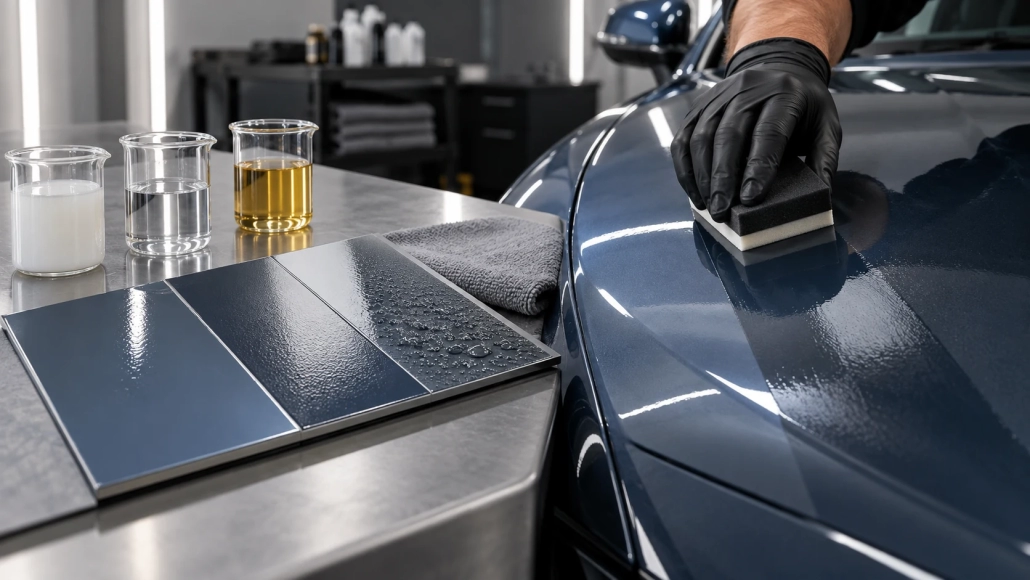
Read coating solids figures alongside application method, finish compatibility and documented performance rather than using one number alone.
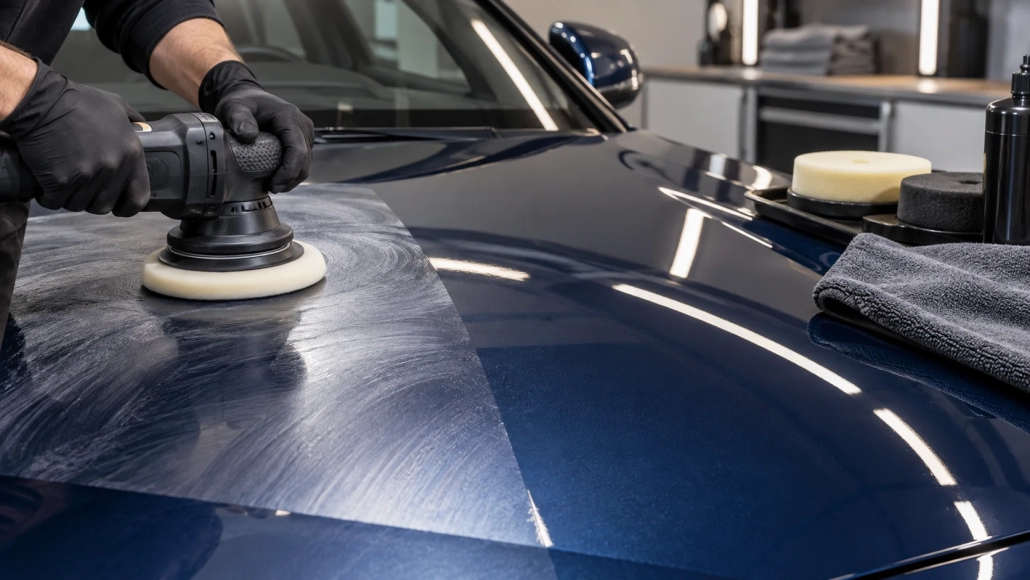
Understand heavy cut compound, fine cut and finishing polish, then choose a paint correction process that fits your paint, machine and intended result.
Understand what coating viscosity reveals about application, which test conditions matter, and why liquid thickness does not prove film protection.