






A full polishing range.
From cutting and one-step correction to final finishing.
Specialist chemistry. Expert application.
 QUARTZ99 / CERAMIC BASE COAT
The foundation of your coating system.
A layerable quartz base coat designed for mechanical protection. Pair it with a suitable top coat to create the final finish.
For application by NANOLAB certified installers only.
Four formulas. Extended working time. Find the coating for your finish.
Explore the BEAST family of ceramic coatings.
Find the coating for each exterior surface.
 PPF & VINYLGLOSSProtection for glossy films and wraps.Discover
 MATTE & SATINMATTEProtection that respects the finish.Discover
 GLASSWINDOWSExplore dedicated glass protection.Discover
 WHEEL PROTECTIONWHEELSA dedicated coating for your wheels.Discover
 TRIM PROTECTIONPLASTICProtection for plastic surfaces.Discover
Dedicated care for the surfaces inside.
 LEATHER SURFACESLEATHERDiscover NANOLAB leather protection.Discover PLASTIC SURFACESPLASTICProtection for interior plastic surfaces.Discover TEXTILE SURFACESFABRICExplore the latest fabric formulation.Discover
Spray protection, maintenance and upcoming wash products.
 MAINTENANCEBEAST 365Explore the BEAST maintenance range.Discover
Next in washing, cleaning & care.
Ceramic protection for boats and yachts.
An easy-to-apply ceramic coating with an established track record on boats and yachts around the world.
Results vary with surface preparation, exposure and maintenance.
Read 50 MARINE guides →Explore MARINEProtection for the surfaces you live with.
A look at what we’re developing.
From cutting and one-step correction to final finishing.
A wider range for professional vehicle care.
Taking shape alongside BEAST & MATRIX.
Practical guidance for your next coating project.
Explore all guides →
Plan polishing sections, pad rotation and inspection pauses to keep heat and tool control within the limits of the surface and equipment.
Updated · NANOLAB Knowledge
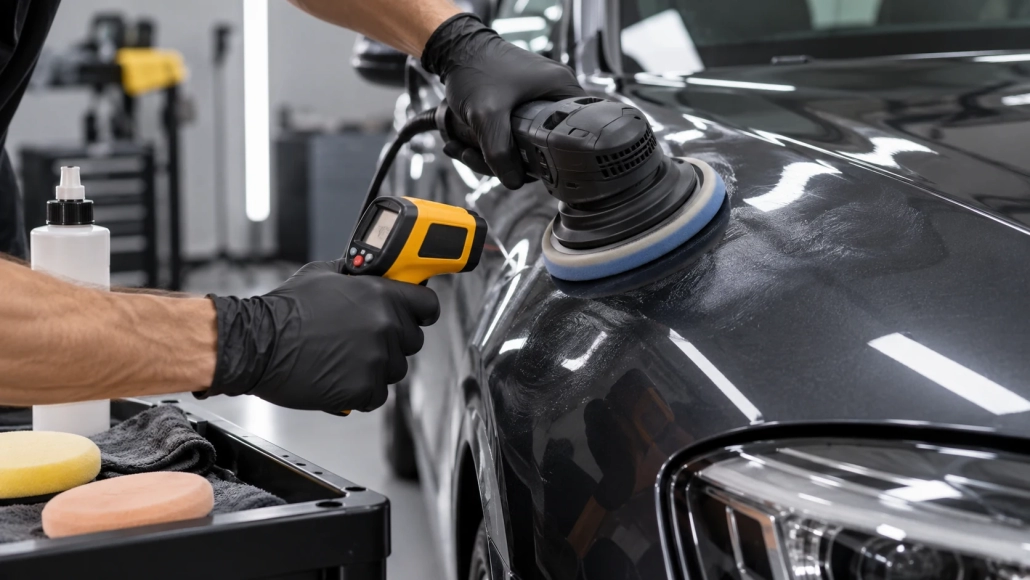
Heat management is part of controlled paint correction. A surface may become warmer through the working cycle, but temperature is not a target to maximise. Paint, plastic components, pads and tools can all have different limits.
Work on a surface appropriate for the polishing system and avoid beginning with a panel heated by direct sun. Identify plastic parts, repaired areas and sharp contours that require additional care. Follow the equipment and product instructions rather than using a universal speed or temperature rule.
Ensure lighting and access allow a stable working posture. Poor reach can lead to tilted contact and repeated work in one area.
Use an appropriate working area and controlled movement. Do not hold a running pad stationary to chase a defect. Inspect pad loading and rotate pads as required by the process.
If heat, smell, tool behaviour or paint response becomes abnormal, stop and assess. A quick touch is not a complete measurement of the temperature within every material. Do not immediately resume the same aggressive approach after a brief pause.
Remove residue appropriately and assess the actual finish. Record whether a less intensive method can achieve the accepted result. Preserving the substrate takes priority over removing every visible mark.
Combine pad rotation with edge and body-line planning. Before applying NANOLAB protection, allow the panel to reach conditions suitable for the exact preparation and coating instructions.
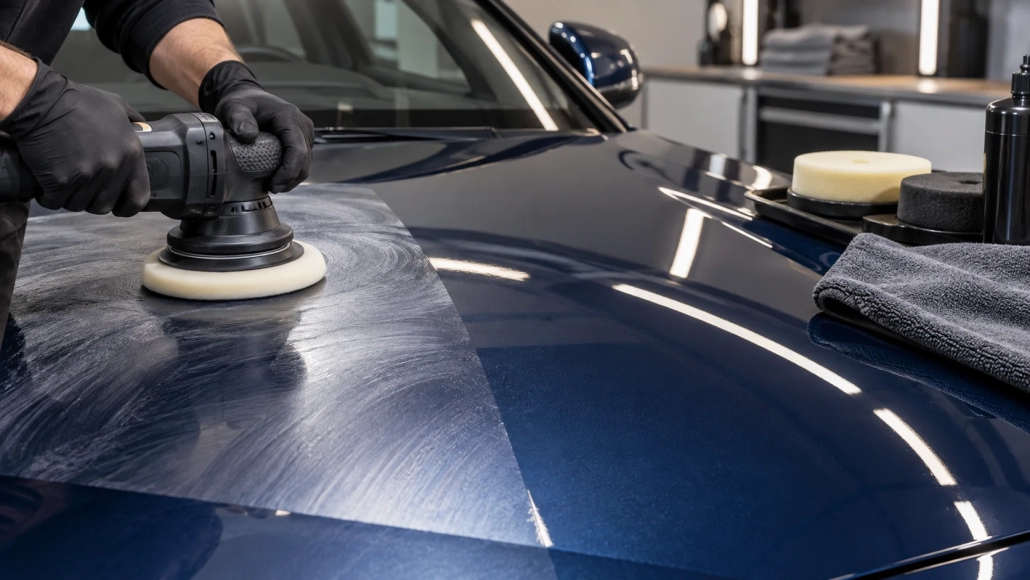
Choose a polishing process by testing defect removal, finishing quality and clear-coat preservation rather than counting steps alone.
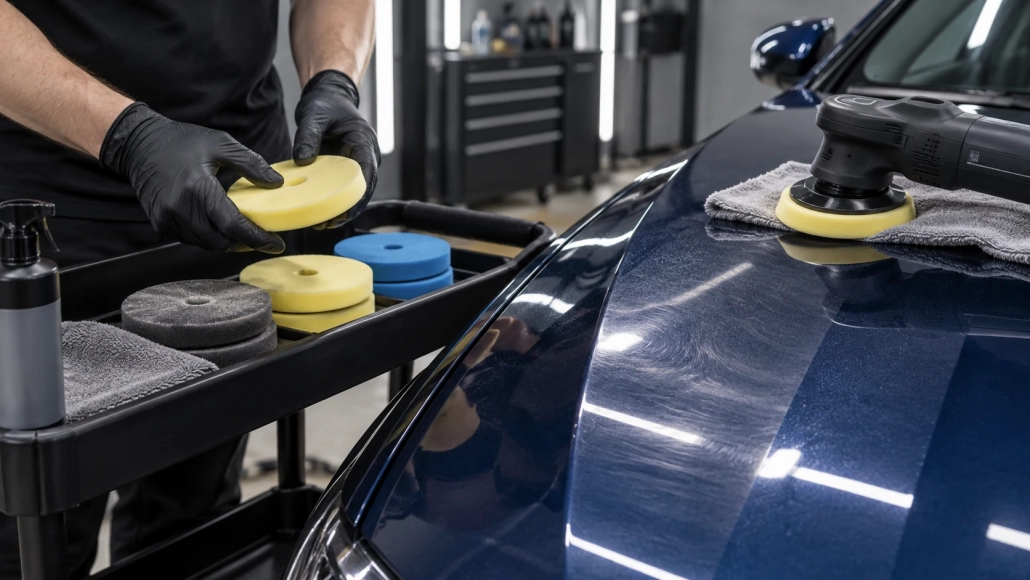
Keep polishing results consistent by rotating clean pads, separating correction stages and recognising when a pad should be retired.
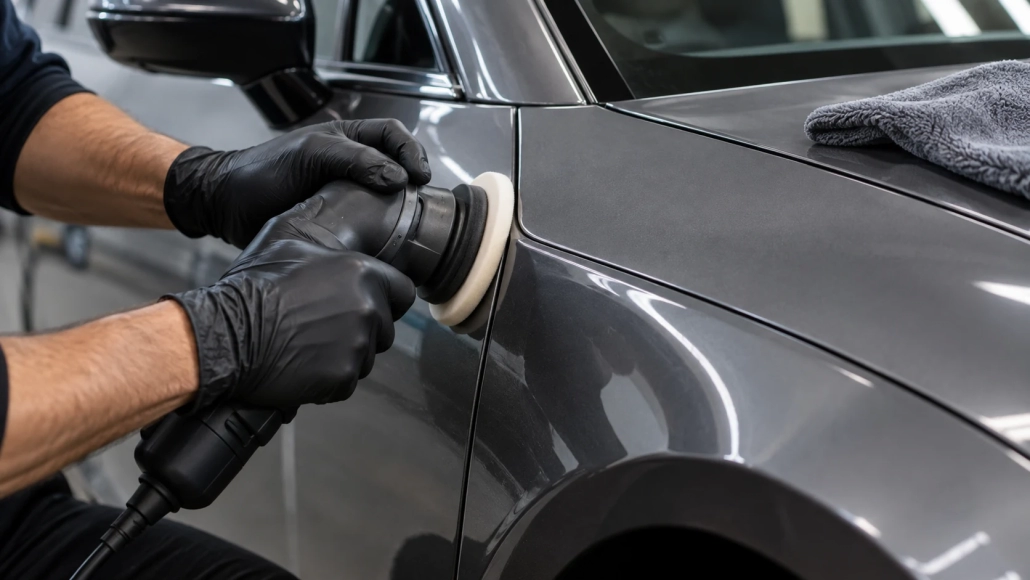
Plan paint correction around panel edges, sharp body lines and adjacent trim to reduce unnecessary abrasion and tool contact.
Recheck the finish under consistent conditions after polishing so heat, residue and lighting do not distort the final correction assessment.

 Cleaning Compound Dust Before Ceramic Coating