






A full polishing range.
From cutting and one-step correction to final finishing.
Specialist chemistry. Expert application.
 QUARTZ99 / CERAMIC BASE COAT
The foundation of your coating system.
A layerable quartz base coat designed for mechanical protection. Pair it with a suitable top coat to create the final finish.
For application by NANOLAB certified installers only.
Four formulas. Extended working time. Find the coating for your finish.
Explore the BEAST family of ceramic coatings.
Find the coating for each exterior surface.
 PPF & VINYLGLOSSProtection for glossy films and wraps.Discover
 MATTE & SATINMATTEProtection that respects the finish.Discover
 GLASSWINDOWSExplore dedicated glass protection.Discover
 WHEEL PROTECTIONWHEELSA dedicated coating for your wheels.Discover
 TRIM PROTECTIONPLASTICProtection for plastic surfaces.Discover
Dedicated care for the surfaces inside.
 LEATHER SURFACESLEATHERDiscover NANOLAB leather protection.Discover PLASTIC SURFACESPLASTICProtection for interior plastic surfaces.Discover TEXTILE SURFACESFABRICExplore the latest fabric formulation.Discover
Spray protection, maintenance and upcoming wash products.
 MAINTENANCEBEAST 365Explore the BEAST maintenance range.Discover
Next in washing, cleaning & care.
Ceramic protection for boats and yachts.
An easy-to-apply ceramic coating with an established track record on boats and yachts around the world.
Results vary with surface preparation, exposure and maintenance.
Read 50 MARINE guides →Explore MARINEProtection for the surfaces you live with.
A look at what we’re developing.
From cutting and one-step correction to final finishing.
A wider range for professional vehicle care.
Taking shape alongside BEAST & MATRIX.
Practical guidance for your next coating project.
Explore all guides →
Rain on a fresh ceramic coating? Check the curing stage, record the exposure and follow product-specific aftercare before washing or treating marks.
Updated · NANOLAB Knowledge
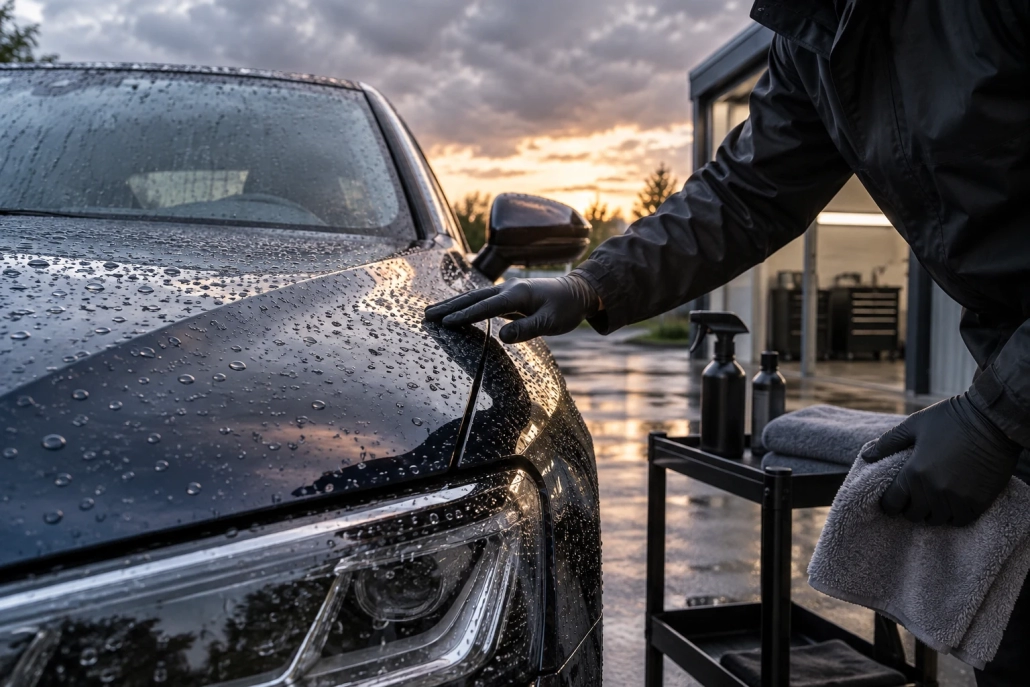
Rain on a fresh ceramic coating does not automatically mean the coating has failed. The appropriate response depends on the exact product, time since application, curing conditions and type of exposure. Contact the installer promptly and use the product’s aftercare instructions before washing, wiping or applying chemicals.
A vehicle-release time is not the same as a first-wash date or full-cure time. Read the ceramic coating cure-time guide for the difference between these stages.
Give the installer enough information to recommend a specific response:
Take clear photos of any marks. Distinguishing rain exposure from dirty road spray or water that has dried on a hot panel is more useful than treating every incident as identical.
Ask what is permitted at the coating’s current stage: whether to move the car under suitable shelter, how to address standing water or contamination, and whether inspection is needed. Avoid dry rubbing a dirty panel or using a water-spot remover, solvent, polish or extra coating without product-specific guidance.
Neither “wash immediately” nor “leave everything untouched for days” is a universal rule. Early contamination may need attention, but the method must suit the fresh coating. If the installer is unavailable, consult the exact NANOLAB product instructions and contact NANOLAB for technical guidance.
As a product-specific example, the MATRIX PRO curing table lists a typical vehicle release after 2 hours, initial cure after 24 hours, first wash after 14 days and full cure after 30 days. These are separate milestones under the product’s instructions; they are not a universal schedule for every ceramic coating or a guarantee against every kind of early exposure.
Follow the application conditions and any installer-specific handover instructions. Do not assume that surface slickness, dryness or water beading proves the coating is fully cured.
Once the recommended care has been completed, check for remaining residue, rings, streaks or changes in appearance. Persistent marks need assessment before choosing a remedy. An early rain event alone is not evidence that the whole coating must be polished off and reapplied.
For subsequent care, follow the permitted first-wash procedure and choose a compatible shampoo. Overnight condensation is covered separately in the morning-dew care guide.
Not automatically. Establish the product, timing, exposure and condition of the surface before deciding whether any corrective work is needed.
Ask the installer which drying method is permitted at this stage. Do not dry-rub road dirt across a freshly coated surface.
Vehicle release and first-wash timing are different instructions. Use the first-wash date for the exact coating, even if driving is already permitted.
Do not invent a new curing schedule from the weather event alone. Ask the installer whether the exposure changes the aftercare plan or calls for inspection.
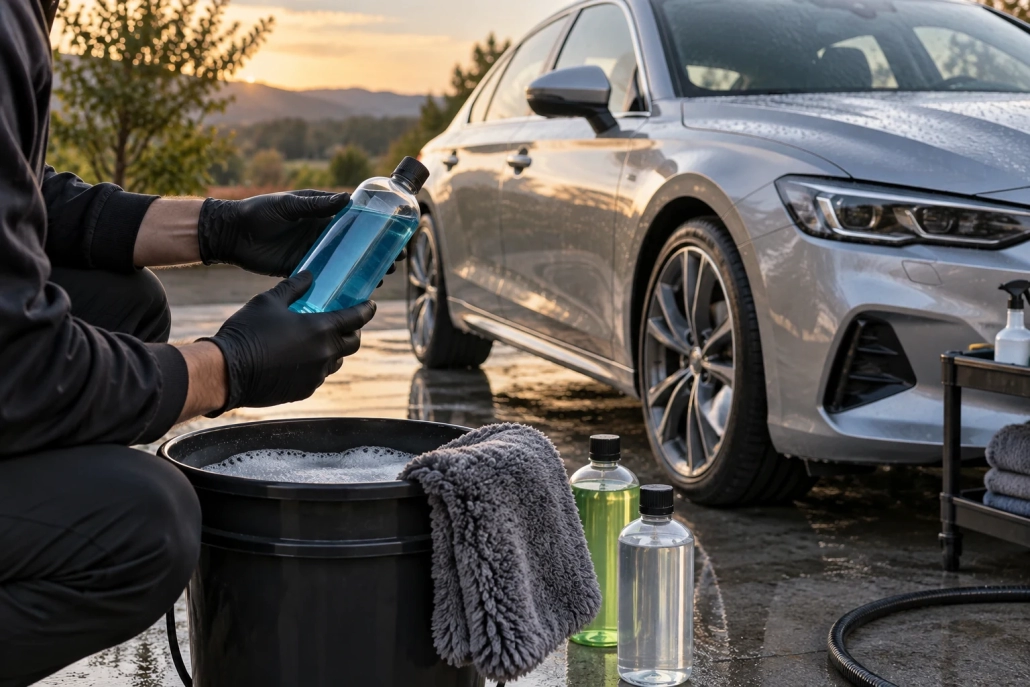
Choose a compatible wash product, use its dilution correctly and avoid judging cleaning suitability from a ceramic label or foam thickness alone.
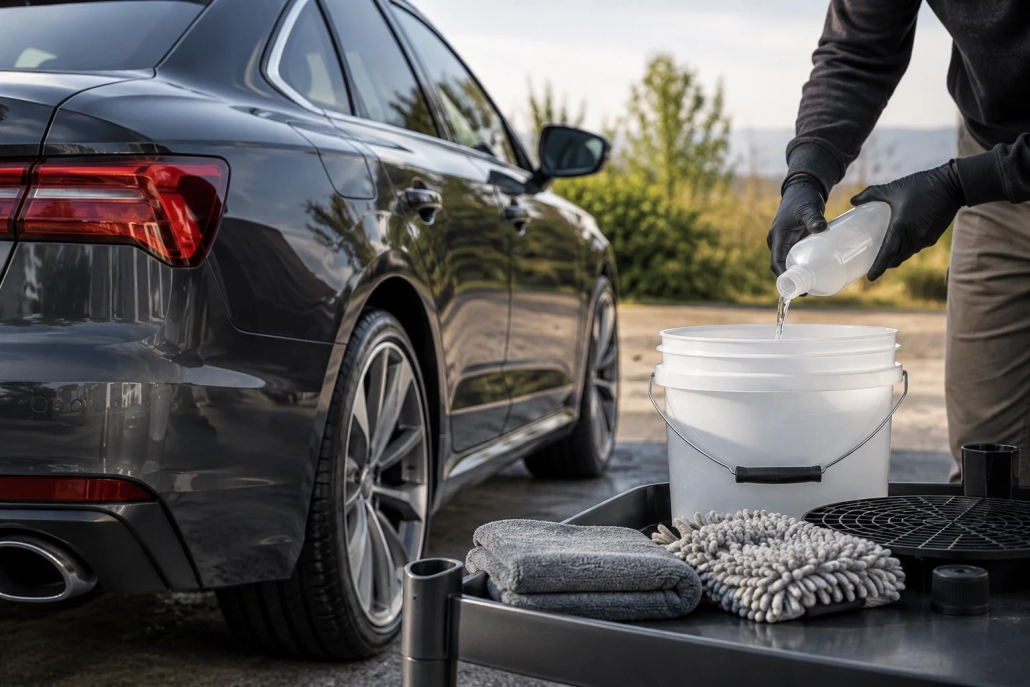
Use the installation's actual first-wash date and a gentle cleaning process without confusing wash readiness with full cure.
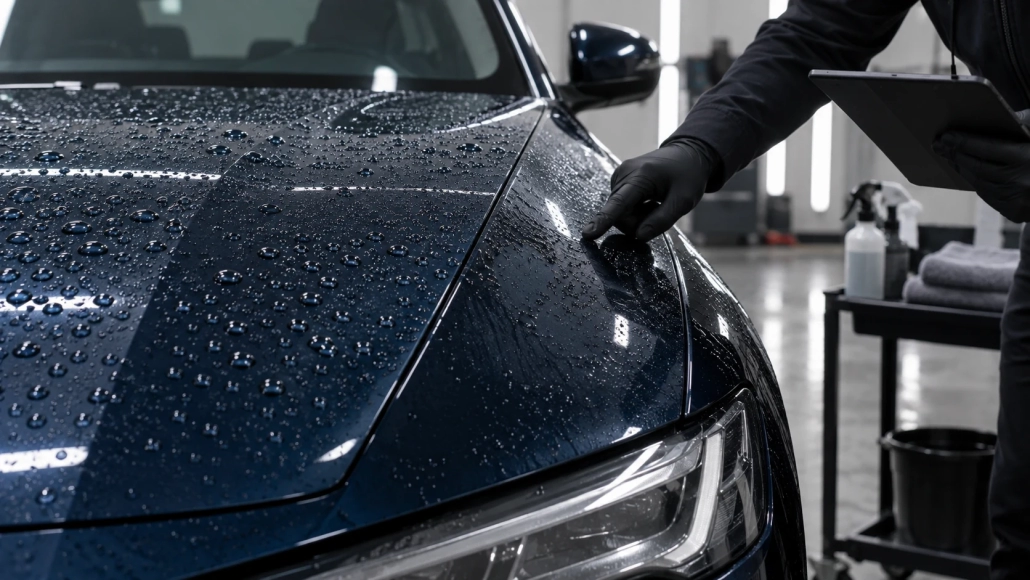
Compare panel angle, contamination and treatment history before deciding that differences in beading indicate an installation defect.
Consider coating age, surface dirt and repeated moisture exposure before wiping morning dew from a parked vehicle.

 Protective Coating for Leather Seats: Compatibility and Care