






A full polishing range.
From cutting and one-step correction to final finishing.
Specialist chemistry. Expert application.
 QUARTZ99 / CERAMIC BASE COAT
The foundation of your coating system.
A layerable quartz base coat designed for mechanical protection. Pair it with a suitable top coat to create the final finish.
For application by NANOLAB certified installers only.
Four formulas. Extended working time. Find the coating for your finish.
Explore the BEAST family of ceramic coatings.
Find the coating for each exterior surface.
 PPF & VINYLGLOSSProtection for glossy films and wraps.Discover
 MATTE & SATINMATTEProtection that respects the finish.Discover
 GLASSWINDOWSExplore dedicated glass protection.Discover
 WHEEL PROTECTIONWHEELSA dedicated coating for your wheels.Discover
 TRIM PROTECTIONPLASTICProtection for plastic surfaces.Discover
Dedicated care for the surfaces inside.
 LEATHER SURFACESLEATHERDiscover NANOLAB leather protection.Discover PLASTIC SURFACESPLASTICProtection for interior plastic surfaces.Discover TEXTILE SURFACESFABRICExplore the latest fabric formulation.Discover
Spray protection, maintenance and upcoming wash products.
 MAINTENANCEBEAST 365Explore the BEAST maintenance range.Discover
Next in washing, cleaning & care.
Ceramic protection for boats and yachts.
An easy-to-apply ceramic coating with an established track record on boats and yachts around the world.
Results vary with surface preparation, exposure and maintenance.
Read 50 MARINE guides →Explore MARINEProtection for the surfaces you live with.
A look at what we’re developing.
From cutting and one-step correction to final finishing.
A wider range for professional vehicle care.
Taking shape alongside BEAST & MATRIX.
Practical guidance for your next coating project.
Explore all guides →
Price inspection and treatment scope by surface zones rather than one undifferentiated vehicle.
Updated · NANOLAB Knowledge
A vehicle with several finish types needs an estimate that reflects those differences. One overall price can still be presented to the customer, but the workshop's working estimate should show how the scope was built. This improves product selection and job planning.
Identify paint, film, matte areas, trim, glass and relevant accessories. Record known repairs or existing treatments. Mark uncertain zones for assessment. Do not classify every glossy surface as paint or assume every dark trim component has the same material.
Connect each zone to its assessed condition, intended result and approved product route. Include inspection or technical consultation where needed. For example, a partially wrapped panel may require a different scope discussion from an untreated painted panel beside it.
Describe included surfaces and exclusions in plain language. Keep technical details in the job record where they support execution. If an unknown finish changes the recommendation after inspection, revise the estimate through an agreed process. The aim is not to create a complicated invoice for every small component. It is to ensure that the quoted work can be traced to the actual vehicle, rather than a standard package that silently assumes all surfaces can receive the same preparation and treatment.
Separate glossy paint, matte finish, PPF, glass, wheels and trim where those areas are included. Record the selected product or pending recommendation for each and the preparation assumptions behind the labour estimate.
A vehicle-level price can still be simple, but the internal estimate should show the work that creates it. If a customer later adds a film-covered roof or changes the requested wheel treatment, the team can identify the affected line instead of rebuilding the whole proposal from memory. Keep unsupported surfaces excluded until confirmed. This prevents a mixed-finish vehicle from being priced and scheduled as though every panel requires the same material and process.
Send your project surface and scope to NANOLAB. For supporting information, review the current product documentation and the related coating guides.
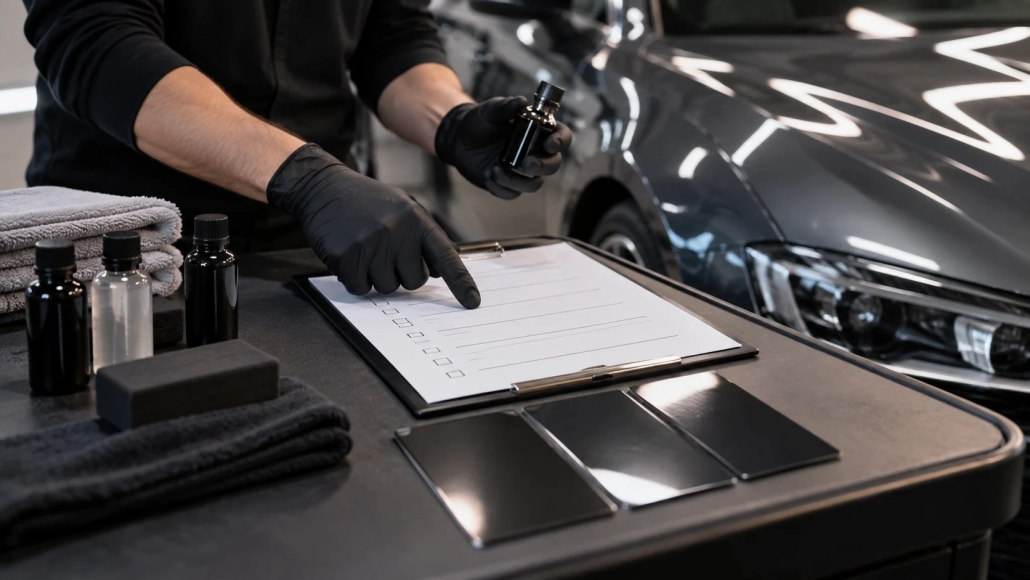
Use this checklist to compare preparation, product choice, treated surfaces and aftercare across ceramic coating proposals.
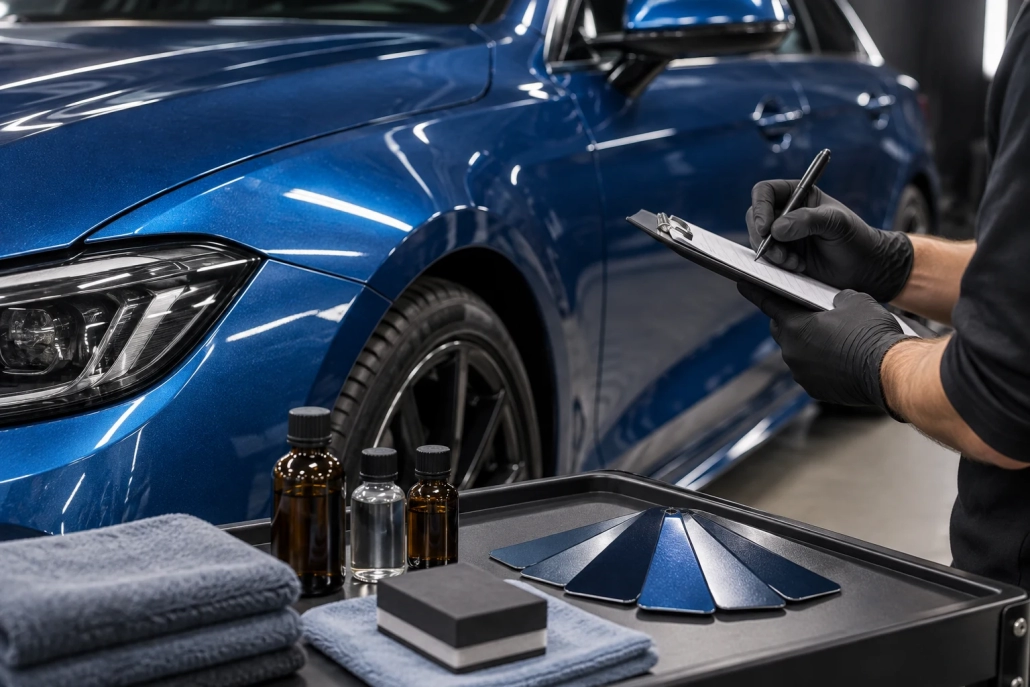
Estimate labour, materials and workshop occupancy from the actual scope, then compare planned and completed work to improve future quotes.

Agree observable finish and documentation requirements without making unsupported performance guarantees.