






A full polishing range.
From cutting and one-step correction to final finishing.
Specialist chemistry. Expert application.
 QUARTZ99 / CERAMIC BASE COAT
The foundation of your coating system.
A layerable quartz base coat designed for mechanical protection. Pair it with a suitable top coat to create the final finish.
For application by NANOLAB certified installers only.
Four formulas. Extended working time. Find the coating for your finish.
Explore the BEAST family of ceramic coatings.
Find the coating for each exterior surface.
 PPF & VINYLGLOSSProtection for glossy films and wraps.Discover
 MATTE & SATINMATTEProtection that respects the finish.Discover
 GLASSWINDOWSExplore dedicated glass protection.Discover
 WHEEL PROTECTIONWHEELSA dedicated coating for your wheels.Discover
 TRIM PROTECTIONPLASTICProtection for plastic surfaces.Discover
Dedicated care for the surfaces inside.
 LEATHER SURFACESLEATHERDiscover NANOLAB leather protection.Discover PLASTIC SURFACESPLASTICProtection for interior plastic surfaces.Discover TEXTILE SURFACESFABRICExplore the latest fabric formulation.Discover
Spray protection, maintenance and upcoming wash products.
 MAINTENANCEBEAST 365Explore the BEAST maintenance range.Discover
Next in washing, cleaning & care.
Ceramic protection for boats and yachts.
An easy-to-apply ceramic coating with an established track record on boats and yachts around the world.
Results vary with surface preparation, exposure and maintenance.
Read 50 MARINE guides →Explore MARINEProtection for the surfaces you live with.
A look at what we’re developing.
From cutting and one-step correction to final finishing.
A wider range for professional vehicle care.
Taking shape alongside BEAST & MATRIX.
Practical guidance for your next coating project.
Explore all guides →
Capture relevant condition and surface history with a repeatable shot list.
Updated · NANOLAB Knowledge
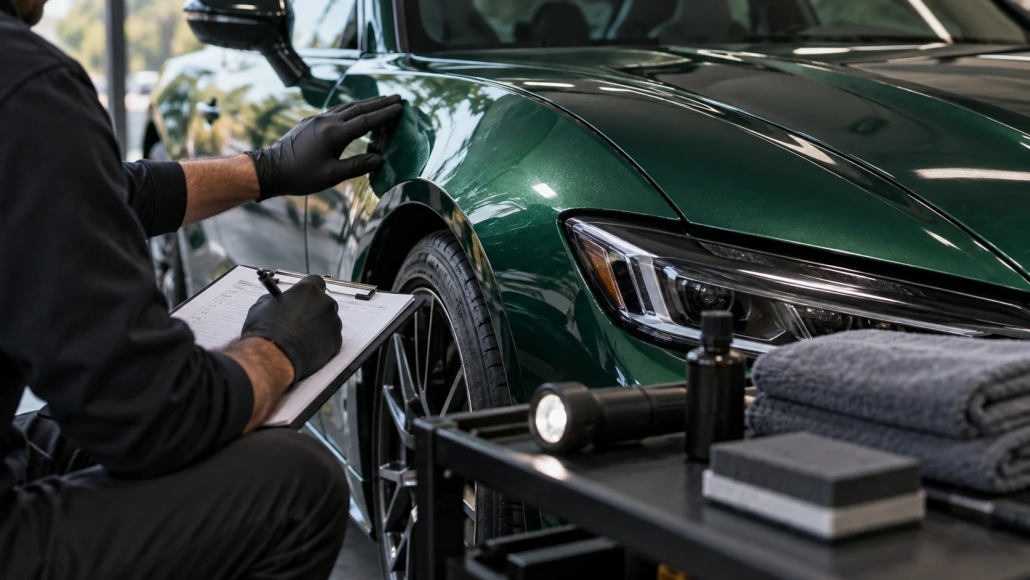
Intake photographs help document the vehicle's condition and guide the initial conversation. They are most useful when they show where an observation belongs on the vehicle. A collection of close-ups without orientation can be difficult to interpret later.
Capture enough overall views to establish the vehicle and relevant sides. Then photograph specific areas of concern with a wider reference image and a closer view. Use consistent labels for panels or zones. Avoid collecting unrelated personal information visible inside the vehicle when it is not needed for the job record.
Note visible marks, finish differences, film edges and accessories relevant to the scope. Ask about known repairs or treatments. A photograph may show a condition clearly while still being insufficient to establish its depth, cause or suitable corrective process.
For example, a customer pointing to a damaged trim area should be able to see that the workshop recorded it separately from the agreed paint work. Confirm relevant observations together and note what still requires inspection. Keep the photographs linked to the job and surface map. The aim is a shared, traceable understanding before work begins, not a promise that every photographed issue will be removed or improved by the selected coating service.
Capture overall vehicle views, each relevant panel, existing damage and close-ups of issues discussed with the customer. Include a wider context image for every detail so the location can be identified later. Record repaired areas and film boundaries where visible or reported.
Avoid relying only on dramatic close-ups under a single light. A small mark without location or scale may be difficult to interpret after the job. Store the photos with the date and job identifier, and handle registration plates and other personal details appropriately. Intake images support the agreed scope and condition record; they are not a substitute for inspection or proof of the cause of every later observation.
Send NANOLAB your workshop application details. For supporting information, review the current product documentation and the professional coating guides.
Collect the surface history, owner priorities and practical care information needed to build an accurate coating proposal.

Use clear checkpoints before application, after levelling and at handover to make coating work consistent and traceable.

Use a short handoff check for surface identity, readiness and selected product instructions.