






A full polishing range.
From cutting and one-step correction to final finishing.
Specialist chemistry. Expert application.
 QUARTZ99 / CERAMIC BASE COAT
The foundation of your coating system.
A layerable quartz base coat designed for mechanical protection. Pair it with a suitable top coat to create the final finish.
For application by NANOLAB certified installers only.
Four formulas. Extended working time. Find the coating for your finish.
Explore the BEAST family of ceramic coatings.
Find the coating for each exterior surface.
 PPF & VINYLGLOSSProtection for glossy films and wraps.Discover
 MATTE & SATINMATTEProtection that respects the finish.Discover
 GLASSWINDOWSExplore dedicated glass protection.Discover
 WHEEL PROTECTIONWHEELSA dedicated coating for your wheels.Discover
 TRIM PROTECTIONPLASTICProtection for plastic surfaces.Discover
Dedicated care for the surfaces inside.
 LEATHER SURFACESLEATHERDiscover NANOLAB leather protection.Discover PLASTIC SURFACESPLASTICProtection for interior plastic surfaces.Discover TEXTILE SURFACESFABRICExplore the latest fabric formulation.Discover
Spray protection, maintenance and upcoming wash products.
 MAINTENANCEBEAST 365Explore the BEAST maintenance range.Discover
Next in washing, cleaning & care.
Ceramic protection for boats and yachts.
An easy-to-apply ceramic coating with an established track record on boats and yachts around the world.
Results vary with surface preparation, exposure and maintenance.
Read 50 MARINE guides →Explore MARINEProtection for the surfaces you live with.
A look at what we’re developing.
From cutting and one-step correction to final finishing.
A wider range for professional vehicle care.
Taking shape alongside BEAST & MATRIX.
Practical guidance for your next coating project.
Explore all guides →
Clarify which sample features represent the final offer and which are provisional.
Updated · NANOLAB Knowledge
Sample packaging and retail packaging may serve different purposes. A buyer needs to know which features of a sample represent the final offer and which are temporary. Otherwise an evaluation of the liquid can be mistaken for approval of the complete commercial pack.
Identify changes in bottle, closure, label, pack size or included accessories. State the exact product identity and provide current instructions independently of temporary artwork. Do not assume the buyer will recognize a provisional label or understand which components are final.
Evaluate the product for its intended application and review the final pack through an appropriate separate process. For example, a sample may be supplied in a convenient evaluation bottle while the retail offer uses a different dispensing arrangement. That difference should be considered before approving production packaging.
Record what the buyer accepted and what remains to be reviewed. Link the final packaging proof to the selected product and commercial order. If the intended offer changes after sampling, explain the change rather than relying on the original approval. The result should leave both buyer and supplier with the same understanding of what the sample demonstrated. Clear boundaries reduce avoidable disappointment when the first production delivery looks or handles differently from the evaluation pack.
Record whether the sample bottle, label and instructions represent the final retail product or are evaluation-only components. Make the sample's product identity clear even when the packaging is temporary. Explain which parts of the experience the buyer should evaluate.
For example, a plain sample can support a liquid evaluation without approving the final carton dimensions or label finish. Conversely, a polished mock-up does not establish that the enclosed formula is the approved production version. Connect both tracks before launch. This prevents an attractive sample kit from creating expectations about accessories, packaging or retail readiness that have not actually been confirmed for the first commercial order.
Discuss a NANOLAB private-label project. For supporting information, review the current product documentation and the private-label guides.
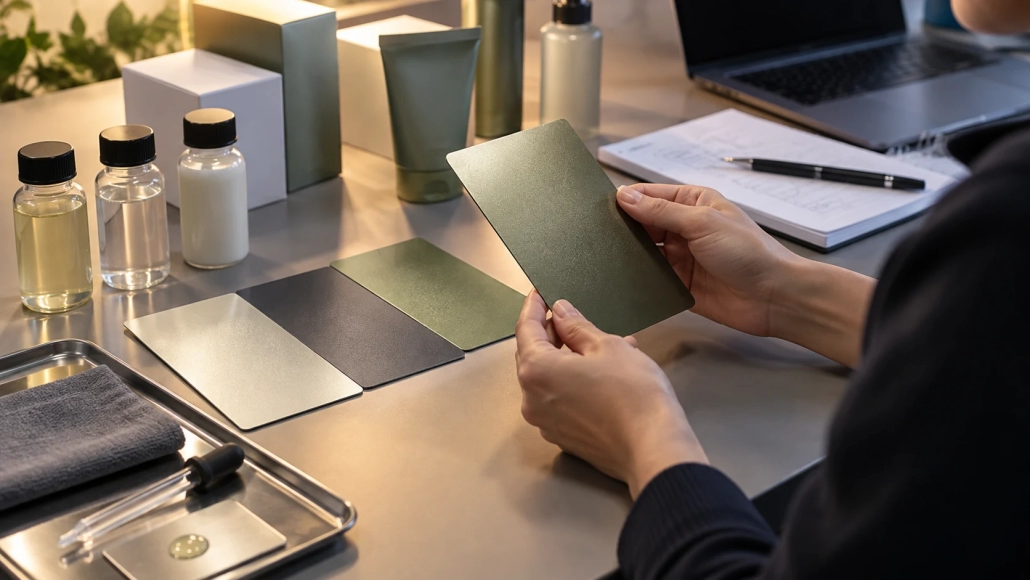
Create a clear private label sample approval record linking the selected coating, test conditions, packaging and unresolved questions.
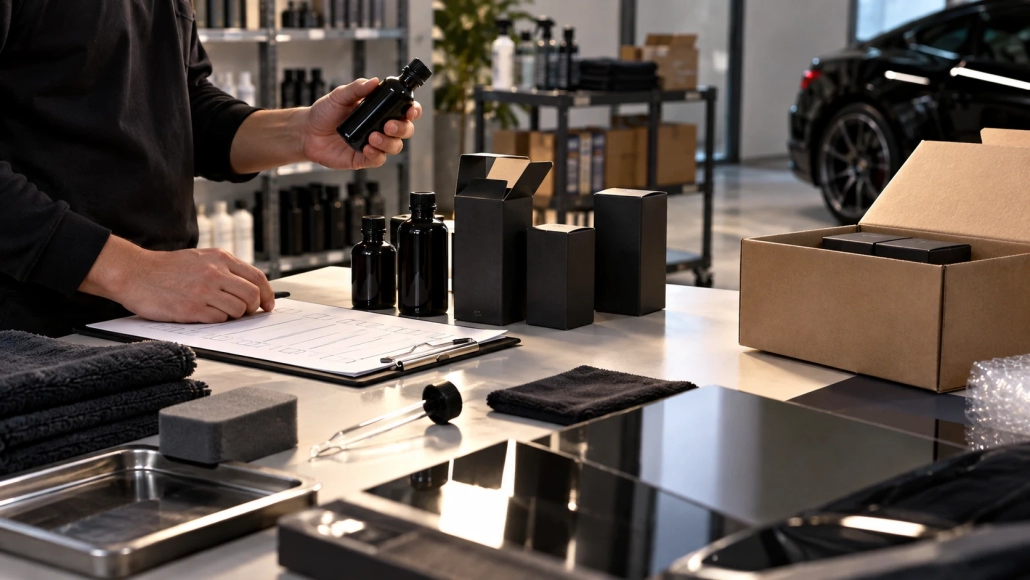
Check product approval, packaging, instructions, stock readiness and support before launching a private label ceramic coating range.

Verify product roles and limitations before releasing a comparative article or brochure.