






A full polishing range.
From cutting and one-step correction to final finishing.
Specialist chemistry. Expert application.
 QUARTZ99 / CERAMIC BASE COAT
The foundation of your coating system.
A layerable quartz base coat designed for mechanical protection. Pair it with a suitable top coat to create the final finish.
For application by NANOLAB certified installers only.
Four formulas. Extended working time. Find the coating for your finish.
Explore the BEAST family of ceramic coatings.
Find the coating for each exterior surface.
 PPF & VINYLGLOSSProtection for glossy films and wraps.Discover
 MATTE & SATINMATTEProtection that respects the finish.Discover
 GLASSWINDOWSExplore dedicated glass protection.Discover
 WHEEL PROTECTIONWHEELSA dedicated coating for your wheels.Discover
 TRIM PROTECTIONPLASTICProtection for plastic surfaces.Discover
Dedicated care for the surfaces inside.
 LEATHER SURFACESLEATHERDiscover NANOLAB leather protection.Discover PLASTIC SURFACESPLASTICProtection for interior plastic surfaces.Discover TEXTILE SURFACESFABRICExplore the latest fabric formulation.Discover
Spray protection, maintenance and upcoming wash products.
 MAINTENANCEBEAST 365Explore the BEAST maintenance range.Discover
Next in washing, cleaning & care.
Ceramic protection for boats and yachts.
An easy-to-apply ceramic coating with an established track record on boats and yachts around the world.
Results vary with surface preparation, exposure and maintenance.
Read 50 MARINE guides →Explore MARINEProtection for the surfaces you live with.
A look at what we’re developing.
From cutting and one-step correction to final finishing.
A wider range for professional vehicle care.
Taking shape alongside BEAST & MATRIX.
Practical guidance for your next coating project.
Explore all guides →
Track approved sample identity and history so later comparisons have a meaningful reference.
Updated · NANOLAB Knowledge
A reference sample is useful only if the team knows what it represents. An unlabelled bottle kept in a cupboard may look like a comparison standard while lacking the history needed for a meaningful evaluation. A small register preserves that context.
Record product name, supplier, batch reference where available, received date and the approval or trial it relates to. Identify whether the sample represents a selected formulation, packaging arrangement or finished appearance. Those are different reference purposes and may require different supporting records.
Follow the exact product's storage instructions and note relevant opening or handling events. Do not assume that a retained sample remains suitable for every future comparison indefinitely. If its condition or history is uncertain, ask the manufacturer whether a fresh reference is needed.
For example, a sample approved during a packaging review may demonstrate label placement but not the current liquid's condition. State that limitation in the register. When a new approval supersedes an old one, keep the relationship visible rather than silently replacing the label. The register should let another employee answer what the sample is, why it is retained and what decisions it can legitimately support. That is more valuable than collecting many bottles without a clear reference purpose.
Record sample identifier, product identity, batch where provided, receipt date, packaging condition, storage instructions and the decision it supports. Note whether the sample is unopened, used for evaluation or retained for comparison.
Do not assume that a retained liquid remains suitable for testing indefinitely. Follow product-specific storage and shelf-life guidance and record any uncertainty. When comparing a later sample, document relevant differences in age, handling and test conditions. The retained sample is a reference with a history, not an automatic truth standard. A clear register helps the team decide whether a comparison is meaningful and prevents an old, poorly stored bottle from becoming the sole basis for a supplier complaint.
Discuss a NANOLAB private-label project. For supporting information, review the current product documentation and the private-label guides.
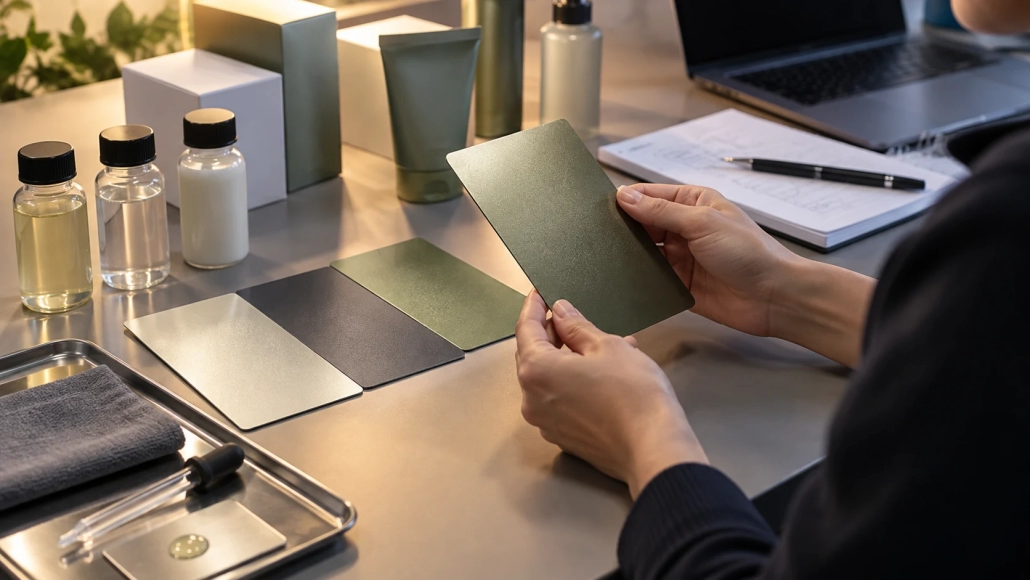
Create a clear private label sample approval record linking the selected coating, test conditions, packaging and unresolved questions.
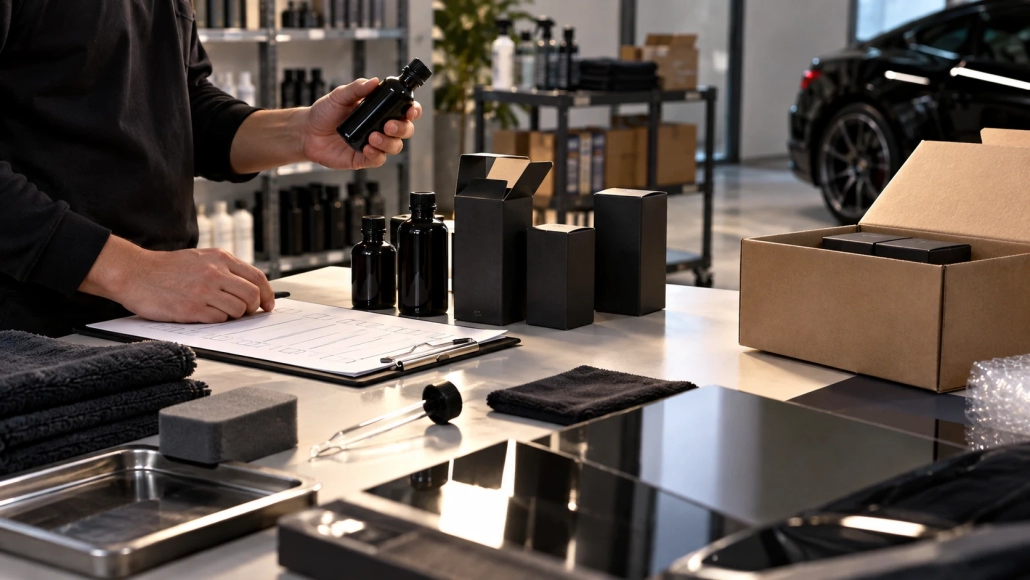
Check product approval, packaging, instructions, stock readiness and support before launching a private label ceramic coating range.

Give designers a content hierarchy built around surfaces, application, documentation and contact intent.