






A full polishing range.
From cutting and one-step correction to final finishing.
Specialist chemistry. Expert application.
 QUARTZ99 / CERAMIC BASE COAT
The foundation of your coating system.
A layerable quartz base coat designed for mechanical protection. Pair it with a suitable top coat to create the final finish.
For application by NANOLAB certified installers only.
Four formulas. Extended working time. Find the coating for your finish.
Explore the BEAST family of ceramic coatings.
Find the coating for each exterior surface.
 PPF & VINYLGLOSSProtection for glossy films and wraps.Discover
 MATTE & SATINMATTEProtection that respects the finish.Discover
 GLASSWINDOWSExplore dedicated glass protection.Discover
 WHEEL PROTECTIONWHEELSA dedicated coating for your wheels.Discover
 TRIM PROTECTIONPLASTICProtection for plastic surfaces.Discover
Dedicated care for the surfaces inside.
 LEATHER SURFACESLEATHERDiscover NANOLAB leather protection.Discover PLASTIC SURFACESPLASTICProtection for interior plastic surfaces.Discover TEXTILE SURFACESFABRICExplore the latest fabric formulation.Discover
Spray protection, maintenance and upcoming wash products.
 MAINTENANCEBEAST 365Explore the BEAST maintenance range.Discover
Next in washing, cleaning & care.
Ceramic protection for boats and yachts.
An easy-to-apply ceramic coating with an established track record on boats and yachts around the world.
Results vary with surface preparation, exposure and maintenance.
Read 50 MARINE guides →Explore MARINEProtection for the surfaces you live with.
A look at what we’re developing.
From cutting and one-step correction to final finishing.
A wider range for professional vehicle care.
Taking shape alongside BEAST & MATRIX.
Practical guidance for your next coating project.
Explore all guides →
Teach staff to recognize the customer's surface and refer technical uncertainty correctly.
Updated · NANOLAB Knowledge
Nontechnical sales staff can provide valuable coating guidance when they understand product roles and know where their authority ends. Training should help them qualify the customer's need, locate approved information and refer uncertainty correctly. It should not encourage confident guesses about materials or application problems.
Start with the surface, finish, intended user and purpose of the enquiry. Let staff record unknown information without feeling they have failed. Explain why a product name alone may be insufficient when the customer is asking about a mixed-material object or a previously treated surface.
Use realistic scenarios: a buyer asking for the strongest coating, a customer with an unidentified wrap or a workshop reporting a change after cleaning. Ask which questions staff can answer from current documents and which require technical review. Reward accurate referral rather than improvisation.
Provide a concise product-role chart, current document links and an escalation contact. Review the material when the range changes. For example, a new variant should not be added to sales conversations before its identity and intended use are clear. The desired outcome is consistent, understandable guidance that helps the customer move forward. Sales staff do not need to become formulation specialists to provide reliable service, but they do need to recognize when the available evidence is insufficient.
Use three exercises: identify the customer's surface, locate the relevant product information and decide whether the question needs technical review. Give staff a current reference sheet and realistic examples of missing information.
A salesperson should be comfortable saying that compatibility has not yet been confirmed. They should not invent application timing to avoid a pause in the conversation. Assess training by asking participants to handle an unfamiliar enquiry, not merely repeat product names. Keep the escalation route short and usable during an actual call. Good sales training helps staff ask a better next question while preserving the manufacturer's stated boundaries, which is more valuable than memorizing impressive but context-free product claims.
Discuss your distribution requirements. For supporting information, review the current product documentation and the local distributor information.
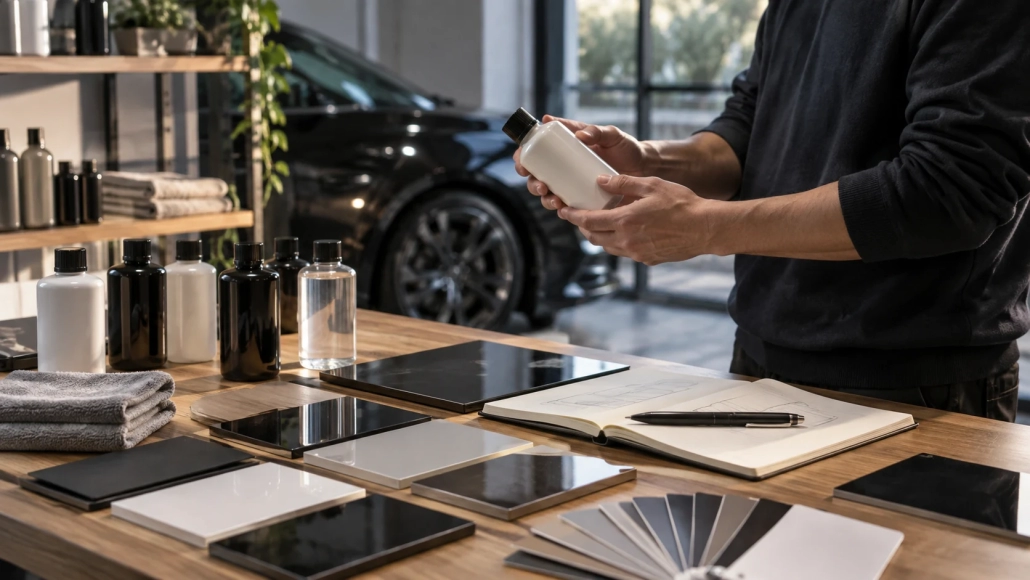
Give distributors a focused sample kit with defined products, evaluation questions and a simple route for technical feedback.

Collect useful private label coating feedback from distributors without confusing application issues, packaging faults and product expectations.

Give a new salesperson one controlled source for product roles, enquiries and escalation.