






A full polishing range.
From cutting and one-step correction to final finishing.
Specialist chemistry. Expert application.
 QUARTZ99 / CERAMIC BASE COAT
The foundation of your coating system.
A layerable quartz base coat designed for mechanical protection. Pair it with a suitable top coat to create the final finish.
For application by NANOLAB certified installers only.
Four formulas. Extended working time. Find the coating for your finish.
Explore the BEAST family of ceramic coatings.
Find the coating for each exterior surface.
 PPF & VINYLGLOSSProtection for glossy films and wraps.Discover
 MATTE & SATINMATTEProtection that respects the finish.Discover
 GLASSWINDOWSExplore dedicated glass protection.Discover
 WHEEL PROTECTIONWHEELSA dedicated coating for your wheels.Discover
 TRIM PROTECTIONPLASTICProtection for plastic surfaces.Discover
Dedicated care for the surfaces inside.
 LEATHER SURFACESLEATHERDiscover NANOLAB leather protection.Discover PLASTIC SURFACESPLASTICProtection for interior plastic surfaces.Discover TEXTILE SURFACESFABRICExplore the latest fabric formulation.Discover
Spray protection, maintenance and upcoming wash products.
 MAINTENANCEBEAST 365Explore the BEAST maintenance range.Discover
Next in washing, cleaning & care.
Ceramic protection for boats and yachts.
An easy-to-apply ceramic coating with an established track record on boats and yachts around the world.
Results vary with surface preparation, exposure and maintenance.
Read 50 MARINE guides →Explore MARINEProtection for the surfaces you live with.
A look at what we’re developing.
From cutting and one-step correction to final finishing.
A wider range for professional vehicle care.
Taking shape alongside BEAST & MATRIX.
Practical guidance for your next coating project.
Explore all guides →
Compare total operating effort rather than dividing bulk price by nominal bottle volume.
Updated · NANOLAB Knowledge
A bulk coating offer and a filled-kit offer transfer different amounts of work to the buyer. Comparing the liquid price alone misses that distinction. The useful question is what the business must do to turn each offer into the product or service its customers expect.
List the exact bottle size, label, closure, box and accessories required. Identify which components are included in each quotation. Then describe the buyer's responsibilities for handling, filling, packing, stock control and documentation. Do not assume that a low bulk price includes the processes needed for a retail-ready kit.
Build separate lines for supplied materials, internal labour, required equipment or services and confirmed external charges. Keep uncertain figures unconfirmed rather than filling them with convenient estimates. Use the same intended quantity and currency when comparing options, and distinguish a one-time setup cost from a repeat-order cost.
For example, a brand with limited packing capacity may value filled bottles differently from a business with an established suitable filling operation. Neither choice is automatically better. Confirm the exact product's handling requirements and obtain an appropriate operating plan before choosing bulk supply. Document the assumptions behind the comparison so a later change in pack size, demand or production arrangement can trigger a fresh review rather than an unnoticed cost shift.
Compare the same usable output, such as 100 completed saleable kits. For bulk supply, list liquid, compatible containers, closures, labels, accessories, filling work, packing work and documented losses. For finished kits, list the supplied contents and any remaining work. Leave unquoted costs visible.
An invented example illustrates the method: a $300 saving on liquid disappears if additional confirmed packaging and handling costs total $350. That does not make bulk supply inherently unattractive; it shows why the liquid price is only one input. Also compare who is responsible for traceability and product handling. Use actual supplier guidance for filling and packaging rather than assuming any empty bottle is suitable.
Explore NANOLAB’s private-label options. For supporting information, review the current product documentation and the private-label guides.
| Cost or responsibility | Bulk route | Finished-kit route |
|---|---|---|
| Liquid | Quoted volume and product | Included volume and product |
| Packaging | Containers, closures and labels | Confirm supplied components |
| Labour | Filling, checking and packing | Record any work still required |
| Losses | Use measured or stated assumptions | Record receiving issues separately |
| Traceability | Define buyer and supplier roles | Confirm product and batch identification |
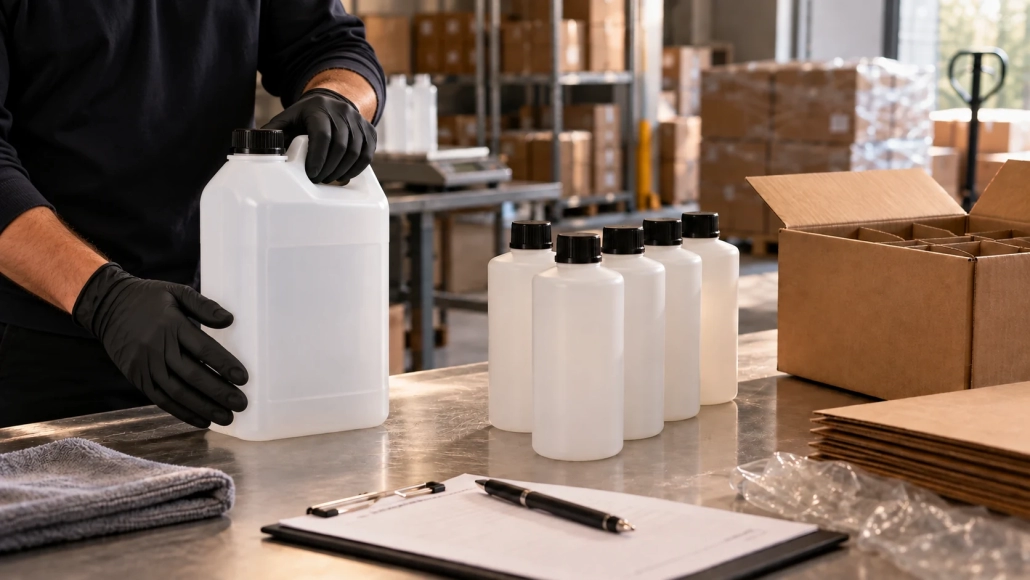
Compare bulk supply and filled private label coating bottles by handling, traceability, packaging work and operational responsibility.

Define the users, surfaces, application workflow and packaging requirements for a private label ceramic coating project with NANOLAB.

Define what evidence is sufficient to approve, reject or extend a supplier trial.