






A full polishing range.
From cutting and one-step correction to final finishing.
Specialist chemistry. Expert application.
 QUARTZ99 / CERAMIC BASE COAT
The foundation of your coating system.
A layerable quartz base coat designed for mechanical protection. Pair it with a suitable top coat to create the final finish.
For application by NANOLAB certified installers only.
Four formulas. Extended working time. Find the coating for your finish.
Explore the BEAST family of ceramic coatings.
Find the coating for each exterior surface.
 PPF & VINYLGLOSSProtection for glossy films and wraps.Discover
 MATTE & SATINMATTEProtection that respects the finish.Discover
 GLASSWINDOWSExplore dedicated glass protection.Discover
 WHEEL PROTECTIONWHEELSA dedicated coating for your wheels.Discover
 TRIM PROTECTIONPLASTICProtection for plastic surfaces.Discover
Dedicated care for the surfaces inside.
 LEATHER SURFACESLEATHERDiscover NANOLAB leather protection.Discover PLASTIC SURFACESPLASTICProtection for interior plastic surfaces.Discover TEXTILE SURFACESFABRICExplore the latest fabric formulation.Discover
Spray protection, maintenance and upcoming wash products.
 MAINTENANCEBEAST 365Explore the BEAST maintenance range.Discover
Next in washing, cleaning & care.
Ceramic protection for boats and yachts.
An easy-to-apply ceramic coating with an established track record on boats and yachts around the world.
Results vary with surface preparation, exposure and maintenance.
Read 50 MARINE guides →Explore MARINEProtection for the surfaces you live with.
A look at what we’re developing.
From cutting and one-step correction to final finishing.
A wider range for professional vehicle care.
Taking shape alongside BEAST & MATRIX.
Practical guidance for your next coating project.
Explore all guides →
Distinguish refinishing and detailing use cases by paint condition, defect origin and system requirements rather than treating the labels as quality grades.
Updated · NANOLAB Knowledge
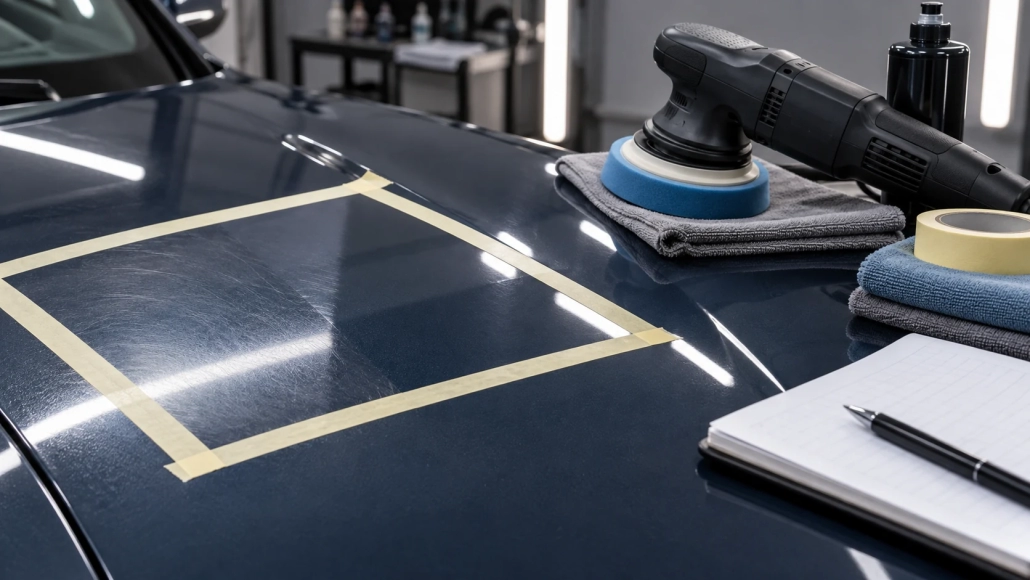
Bodyshop and detailing describe working contexts, not automatic levels of product quality. A bodyshop may be correcting a documented refinishing process, while a detailer often assesses an established finish with less certain history. The right liquid depends on that actual task.
A refinishing workflow may include controlled sanding and specified cure conditions. An older vehicle may carry varied repairs, contamination and previous correction.
Instructions developed for one starting point should not be transferred casually to the other. Identify the paint system and the intended defect-removal process.
Bodyshop-safe or silicone-free statements answer particular questions. They do not establish universal surface compatibility, absence of every residue or readiness for every coating.
Request the current technical and handling documentation. Check the facility’s own requirements as well as the product description.
Compare supported pads, machine movement, scratch refinement, compounding and final polishing. A compound’s strong sanding-mark capability is useful only within an appropriate process.
For detailing, a fine polish may achieve the intended enhancement without introducing a bodyshop-style aggressive correction sequence.
Test the liquid in the role it is intended to fill and inspect after suitable residue removal. Include finishing and cleanup in the evaluation.
Do not select a product merely because professional on the label sounds stronger than consumer. Nor should a familiar detailing product replace a paint-system requirement without support.
The useful distinction is the documented workflow: what surface is present, how the defects arose, which process is approved and what finish is required. That framework makes product selection more accurate than assuming every bodyshop compound is too harsh or every detailing polish is too mild.
Browse the complete car polish and compound guide.
These references illustrate named product systems. Use the current instructions for the exact product, pad and machine in your own process.
Compare polishing quotations through inspection, correction scope, finishing standard and protection rather than choosing only by stage count.
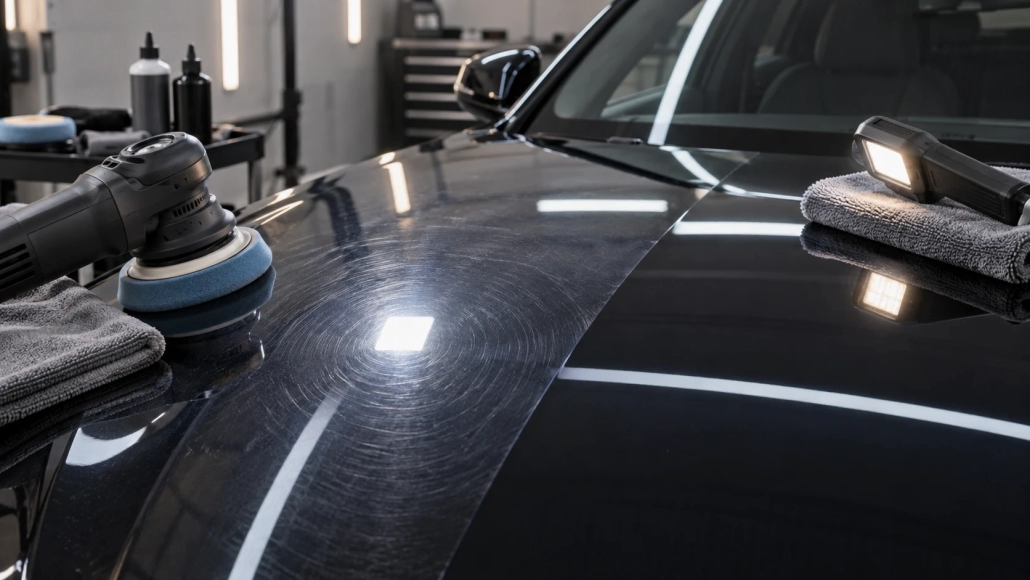
Check the finish, details and job record before protection or handover so a polishing service is accepted against a clear and repeatable standard.
Document pad, polish, machine, surface and inspection results so a successful polishing test can guide the rest of the vehicle.

 Paint Correction Quality Control: A Final Acceptance Checklist