






A full polishing range.
From cutting and one-step correction to final finishing.
Specialist chemistry. Expert application.
 QUARTZ99 / CERAMIC BASE COAT
The foundation of your coating system.
A layerable quartz base coat designed for mechanical protection. Pair it with a suitable top coat to create the final finish.
For application by NANOLAB certified installers only.
Four formulas. Extended working time. Find the coating for your finish.
Explore the BEAST family of ceramic coatings.
Find the coating for each exterior surface.
 PPF & VINYLGLOSSProtection for glossy films and wraps.Discover
 MATTE & SATINMATTEProtection that respects the finish.Discover
 GLASSWINDOWSExplore dedicated glass protection.Discover
 WHEEL PROTECTIONWHEELSA dedicated coating for your wheels.Discover
 TRIM PROTECTIONPLASTICProtection for plastic surfaces.Discover
Dedicated care for the surfaces inside.
 LEATHER SURFACESLEATHERDiscover NANOLAB leather protection.Discover PLASTIC SURFACESPLASTICProtection for interior plastic surfaces.Discover TEXTILE SURFACESFABRICExplore the latest fabric formulation.Discover
Spray protection, maintenance and upcoming wash products.
 MAINTENANCEBEAST 365Explore the BEAST maintenance range.Discover
Next in washing, cleaning & care.
Ceramic protection for boats and yachts.
An easy-to-apply ceramic coating with an established track record on boats and yachts around the world.
Results vary with surface preparation, exposure and maintenance.
Read 50 MARINE guides →Explore MARINEProtection for the surfaces you live with.
A look at what we’re developing.
From cutting and one-step correction to final finishing.
A wider range for professional vehicle care.
Taking shape alongside BEAST & MATRIX.
Practical guidance for your next coating project.
Explore all guides →
Build a polishing time estimate from a complete representative test while accounting for access, pad maintenance, cleanup and different paint responses.
Updated · NANOLAB Knowledge
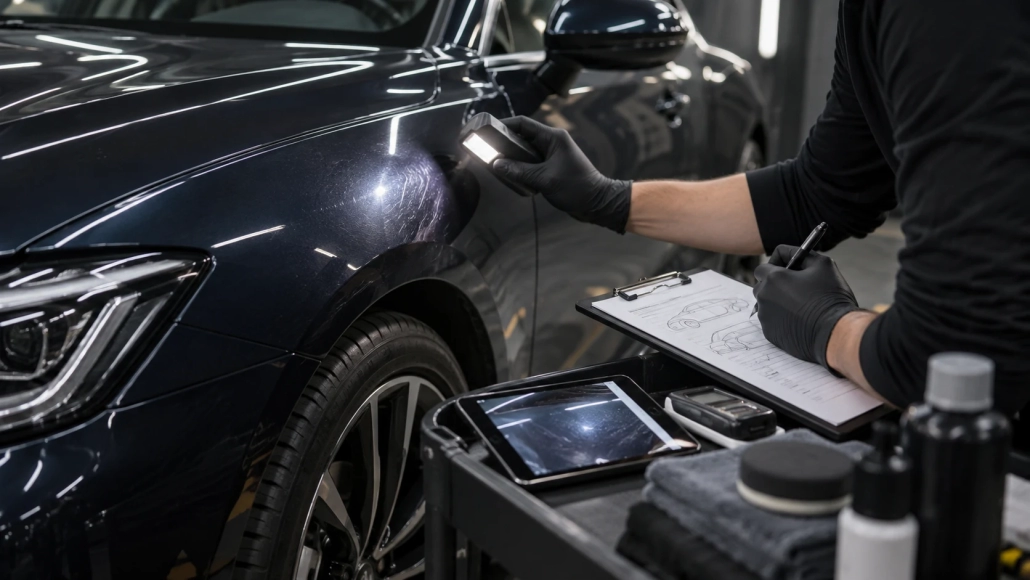
A test area helps estimate polishing time only if it includes the full route to the accepted finish. Timing the first cutting pass and multiplying by vehicle area overlooks refinement, awkward access and cleanup.
Include correction, residue removal, inspection and any finishing stage needed. Record pad maintenance and changes where they occur.
The useful unit is a completed representative section, not a brief demonstration that stops while residue still masks the surface.
Broad accessible panels differ from contours, narrow parts and local repairs. Map those zones instead of applying one average blindly to the whole vehicle.
A repaired panel that needs its own process should have its own allowance. Add time for transitions between tools and supported pad sizes.
Cleaning, necessary decontamination, masking, detail cleanup, final inspection and protection may form a substantial part of the service.
State which tasks are included in the estimate so two quotes can be compared meaningfully. Do not describe total appointment time as machine-polishing time.
A preliminary quote can be confirmed after inspection and test work. Explain that unexpected paint response or previously hidden damage may change the appropriate scope.
Avoid promising a fixed completion time that pressures technicians to skip inspection or overwork a pad. The accepted finish and preservation limits should govern the process.
After the job, compare the estimate with actual time by stage. That creates a more useful planning record for future vehicles than a generic claim that every two-stage correction takes the same number of hours.
A good estimate is bounded and explainable. It identifies the demonstrated rate, the areas where that rate does not apply and the additional work needed to deliver the complete service.
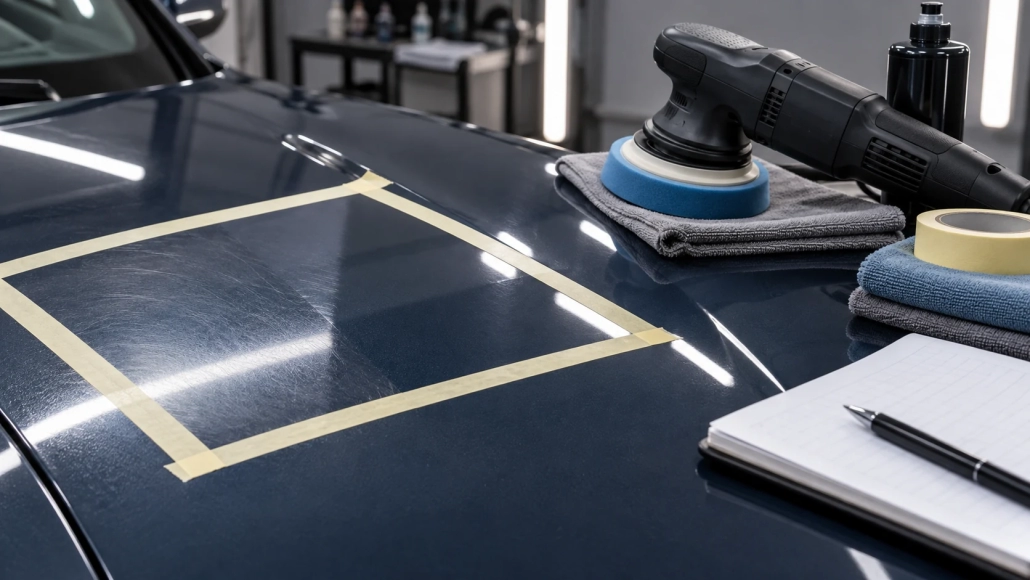
Compare polishing quotations through inspection, correction scope, finishing standard and protection rather than choosing only by stage count.
Evaluate polish samples with a consistent record of correction, finish, handling and total work, without turning an informal trial into a universal ranking.
Create a useful record of paint condition, repairs and agreed correction limits before preparation and coating begin.

 A Car Polish Sample Test Scorecard for Detailers