






A full polishing range.
From cutting and one-step correction to final finishing.
Specialist chemistry. Expert application.
 QUARTZ99 / CERAMIC BASE COAT
The foundation of your coating system.
A layerable quartz base coat designed for mechanical protection. Pair it with a suitable top coat to create the final finish.
For application by NANOLAB certified installers only.
Four formulas. Extended working time. Find the coating for your finish.
Explore the BEAST family of ceramic coatings.
Find the coating for each exterior surface.
 PPF & VINYLGLOSSProtection for glossy films and wraps.Discover
 MATTE & SATINMATTEProtection that respects the finish.Discover
 GLASSWINDOWSExplore dedicated glass protection.Discover
 WHEEL PROTECTIONWHEELSA dedicated coating for your wheels.Discover
 TRIM PROTECTIONPLASTICProtection for plastic surfaces.Discover
Dedicated care for the surfaces inside.
 LEATHER SURFACESLEATHERDiscover NANOLAB leather protection.Discover PLASTIC SURFACESPLASTICProtection for interior plastic surfaces.Discover TEXTILE SURFACESFABRICExplore the latest fabric formulation.Discover
Spray protection, maintenance and upcoming wash products.
 MAINTENANCEBEAST 365Explore the BEAST maintenance range.Discover
Next in washing, cleaning & care.
Ceramic protection for boats and yachts.
An easy-to-apply ceramic coating with an established track record on boats and yachts around the world.
Results vary with surface preparation, exposure and maintenance.
Read 50 MARINE guides →Explore MARINEProtection for the surfaces you live with.
A look at what we’re developing.
From cutting and one-step correction to final finishing.
A wider range for professional vehicle care.
Taking shape alongside BEAST & MATRIX.
Practical guidance for your next coating project.
Explore all guides →
Plan coating renewal around the surface condition and system instructions, without using water behaviour alone to prove complete removal.
Updated · NANOLAB Knowledge
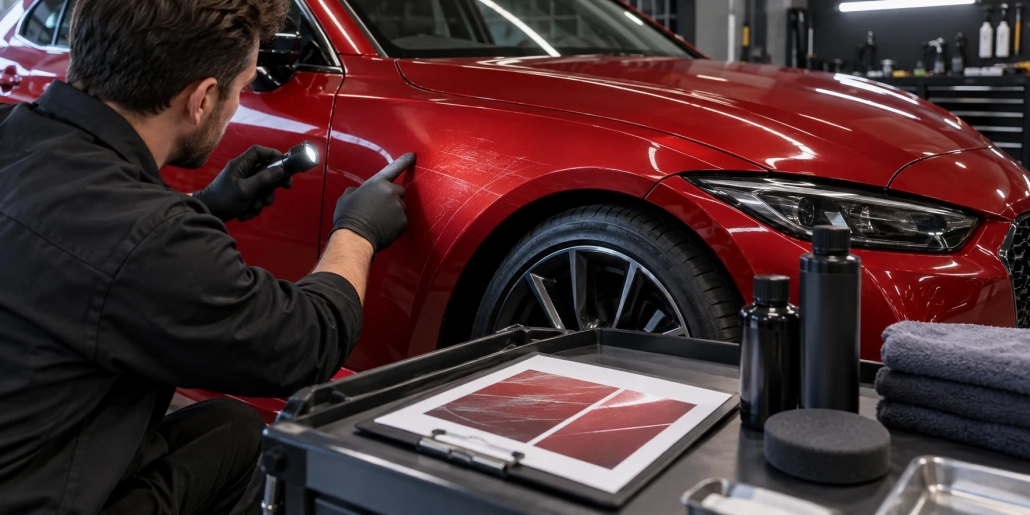
Abrasive polishing can affect an existing ceramic protection system as well as the paint beneath it. When the goal is renewal, define the removal and preparation process with the coating supplier rather than assuming a particular polish automatically produces a bare surface.
Record the product, installation history and any maintenance layers where known. Unknown protection introduces uncertainty that should remain visible in the plan.
Check whether the surface is paint, film or another material. A process suitable for glossy paint should not be transferred automatically to PPF.
The issue may be contamination, local damage, appearance or a planned system change. Not every decline in water behaviour proves that full abrasive removal is necessary.
Use compatible cleaning and assessment before deciding on correction. Preserve sound paint where a less invasive supported response is sufficient.
Follow the supplier’s guidance for the intended renewal. A routine paint gauge or a beading test generally cannot establish complete removal of a thin protective film on its own.
Avoid claiming certainty from one indirect observation. The goal is compliance with the supported preparation process and an accepted substrate condition.
Where polishing is appropriate, assess original defects, any haze introduced and the final finish after compatible cleanup. Removing protection and correcting paint are related tasks but not identical acceptance criteria.
Document the area treated and the replacement product applied. Local renewal may require different boundaries from the visible scratch alone.
A coating-renewal plan should explain what was cleaned, what was abraded, how readiness was established and how protection was restored. That is more defensible than promising complete removal from a fixed number of compound passes.
Browse the complete car polish and compound guide.
For NANOLAB protection selection and application requirements, consult the technical documentation or contact NANOLAB with the intended surface and process.
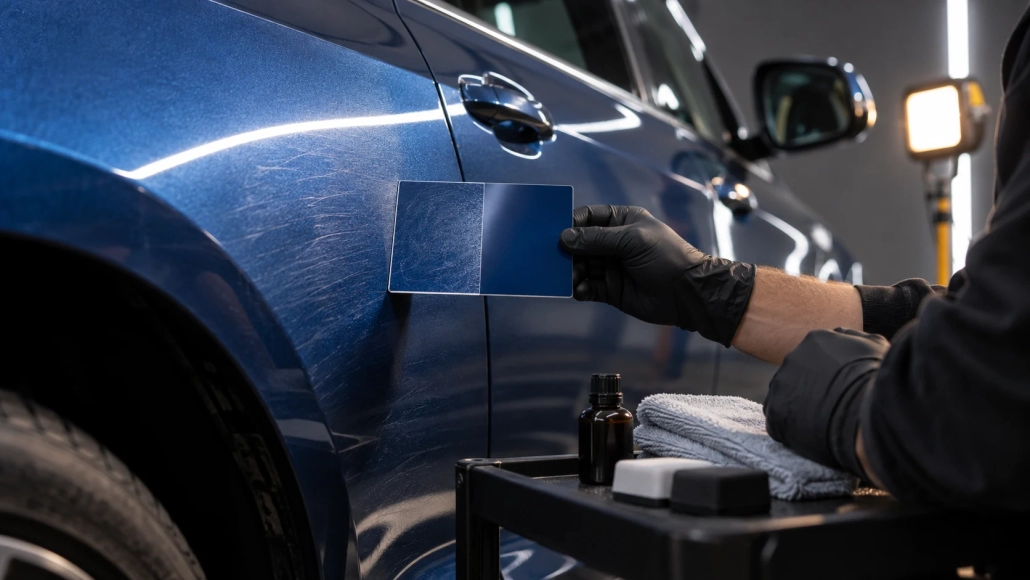
Plan the transition from correction to protection around an accepted finish, compatible residue removal and the chosen coating's actual application requirements.
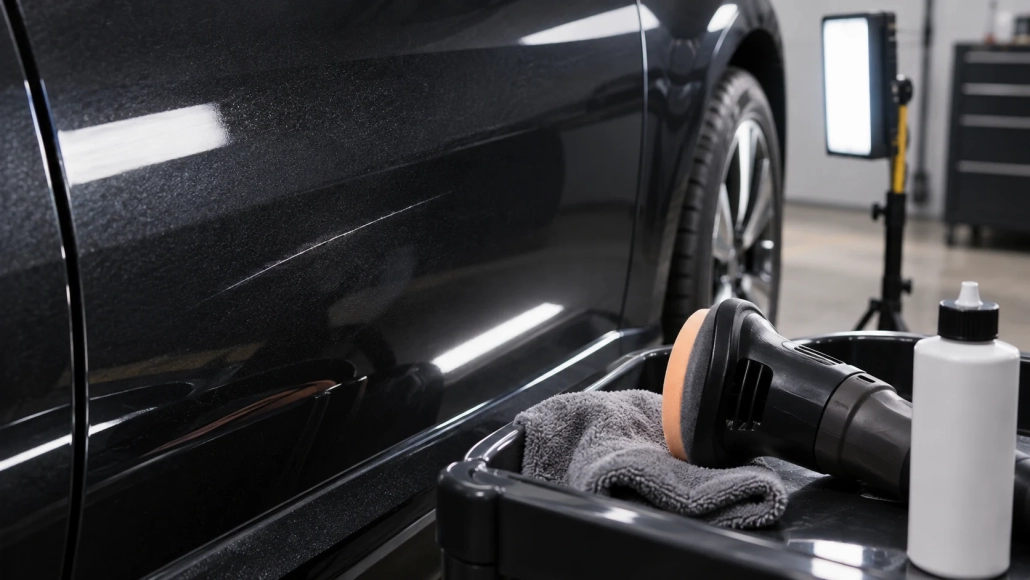
Account for existing protection when planning correction and explain how local abrasion and subsequent preparation affect the final protection system.
Assess new marks without assuming they are limited to the coating, and plan correction around paint preservation and the affected area.

 Polishing a Coated vs Uncoated Car: What Changes in the Plan?