






A full polishing range.
From cutting and one-step correction to final finishing.
Specialist chemistry. Expert application.
 QUARTZ99 / CERAMIC BASE COAT
The foundation of your coating system.
A layerable quartz base coat designed for mechanical protection. Pair it with a suitable top coat to create the final finish.
For application by NANOLAB certified installers only.
Four formulas. Extended working time. Find the coating for your finish.
Explore the BEAST family of ceramic coatings.
Find the coating for each exterior surface.
 PPF & VINYLGLOSSProtection for glossy films and wraps.Discover
 MATTE & SATINMATTEProtection that respects the finish.Discover
 GLASSWINDOWSExplore dedicated glass protection.Discover
 WHEEL PROTECTIONWHEELSA dedicated coating for your wheels.Discover
 TRIM PROTECTIONPLASTICProtection for plastic surfaces.Discover
Dedicated care for the surfaces inside.
 LEATHER SURFACESLEATHERDiscover NANOLAB leather protection.Discover PLASTIC SURFACESPLASTICProtection for interior plastic surfaces.Discover TEXTILE SURFACESFABRICExplore the latest fabric formulation.Discover
Spray protection, maintenance and upcoming wash products.
 MAINTENANCEBEAST 365Explore the BEAST maintenance range.Discover
Next in washing, cleaning & care.
Ceramic protection for boats and yachts.
An easy-to-apply ceramic coating with an established track record on boats and yachts around the world.
Results vary with surface preparation, exposure and maintenance.
Read 50 MARINE guides →Explore MARINEProtection for the surfaces you live with.
A look at what we’re developing.
From cutting and one-step correction to final finishing.
A wider range for professional vehicle care.
Taking shape alongside BEAST & MATRIX.
Practical guidance for your next coating project.
Explore all guides →
Choose a working section that allows even coverage, usable product film and reliable inspection instead of applying one size to every panel.
Updated · NANOLAB Knowledge
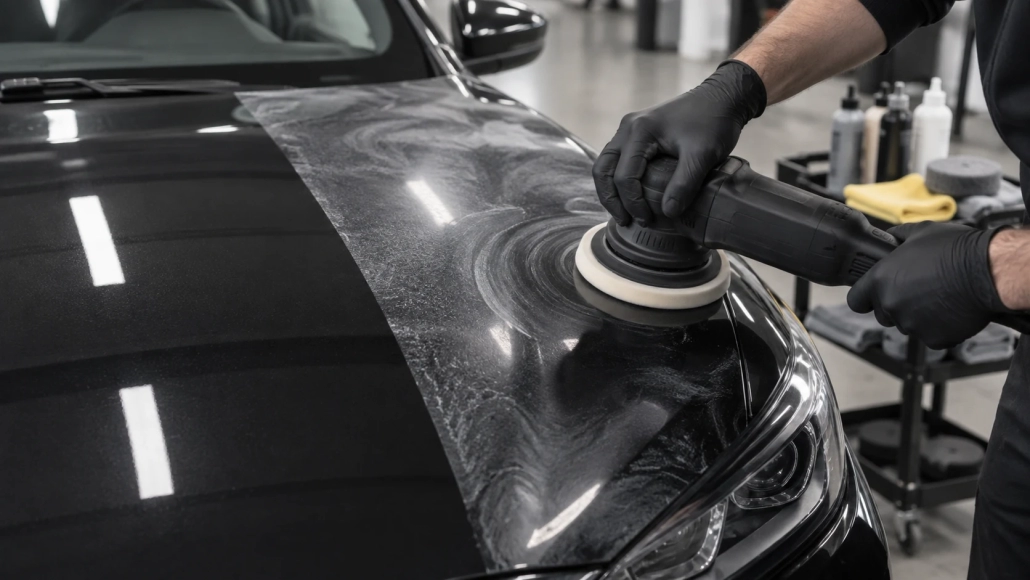
Section size connects the product’s working cycle to the shape of the vehicle. Too broad an area can be difficult to cover consistently before the film changes. An unnecessarily small area can encourage repeated concentrated work. Use the system’s instructions as the starting point.
A flat bonnet, curved wing and narrow pillar do not offer the same working area. Choose boundaries that maintain access and predictable contact.
Do not include a sharp contour in a section merely to make a neat rectangle. Divide the area where the tool or pad arrangement needs to change.
Observe whether the product remains workable through the intended coverage. If part of the section dries before the rest has been treated, investigate temperature, loading and area size.
Do not assume adding more liquid is the correct answer. Excessive loading may create different handling or removal problems while leaving coverage inconsistent.
Check the centre, perimeter and overlaps after residue removal. An accepted centre beside missed strips does not establish an effective process.
If boundaries accumulate extra work because every pass turns there, adjust the path. The section is a planning aid, not a reason to dwell repeatedly along one line.
Describe the area and relevant contours in the test note. Exact dimensions can be useful where they reflect a measured setup, but avoid presenting a universal area as safe for every machine and paint.
When conditions change, recheck the working section instead of preserving it as a fixed rule. A warm panel or different liquid may need a revised approach within the supplier’s guidance.
The correct size is the one that lets the supported process deliver even correction and an inspectable finish. Consistency across the area matters more than completing the largest possible section in one cycle.
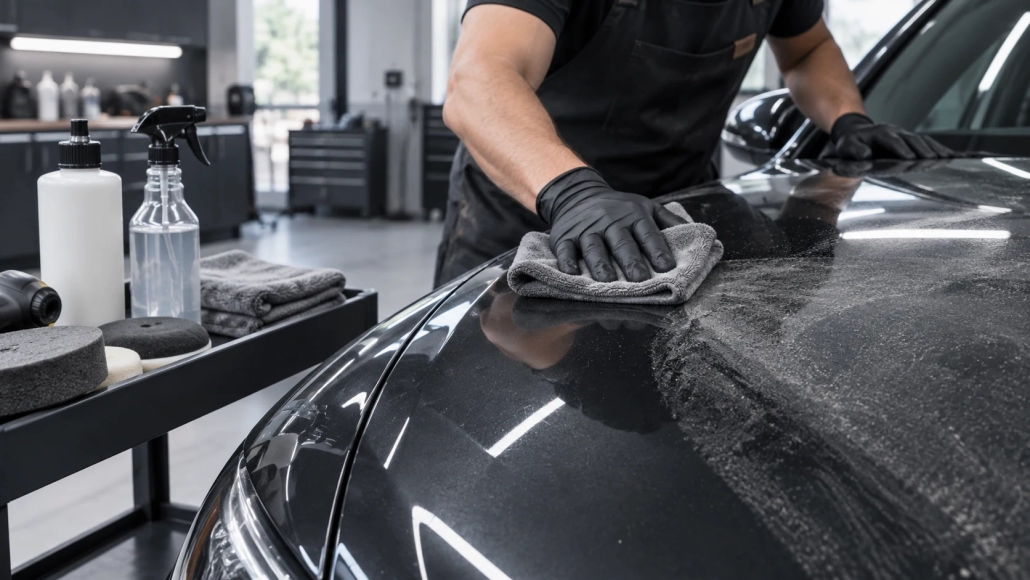
Organise a polishing job into clear decision points for surface assessment, correction, refinement and preparation for protection.
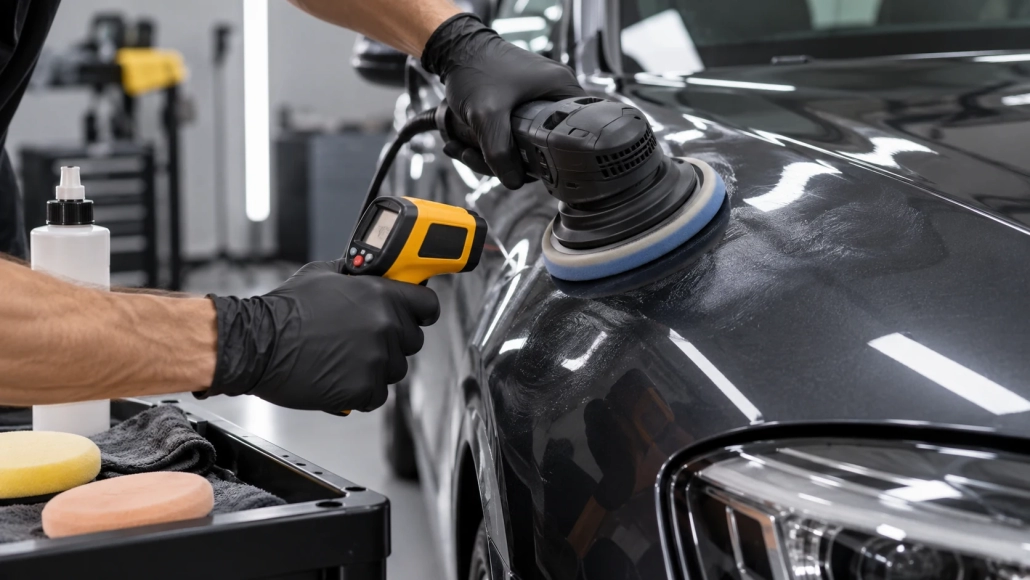
Separate initial pad preparation from reloading and use the product instructions to control quantity without overloading the polishing face.
Investigate grabbing pads and difficult polish removal by reviewing surface temperature, product loading, paint history and section size.

 How Much Compound Should You Put on a Polishing Pad?