






A full polishing range.
From cutting and one-step correction to final finishing.
Specialist chemistry. Expert application.
 QUARTZ99 / CERAMIC BASE COAT
The foundation of your coating system.
A layerable quartz base coat designed for mechanical protection. Pair it with a suitable top coat to create the final finish.
For application by NANOLAB certified installers only.
Four formulas. Extended working time. Find the coating for your finish.
Explore the BEAST family of ceramic coatings.
Find the coating for each exterior surface.
 PPF & VINYLGLOSSProtection for glossy films and wraps.Discover
 MATTE & SATINMATTEProtection that respects the finish.Discover
 GLASSWINDOWSExplore dedicated glass protection.Discover
 WHEEL PROTECTIONWHEELSA dedicated coating for your wheels.Discover
 TRIM PROTECTIONPLASTICProtection for plastic surfaces.Discover
Dedicated care for the surfaces inside.
 LEATHER SURFACESLEATHERDiscover NANOLAB leather protection.Discover PLASTIC SURFACESPLASTICProtection for interior plastic surfaces.Discover TEXTILE SURFACESFABRICExplore the latest fabric formulation.Discover
Spray protection, maintenance and upcoming wash products.
 MAINTENANCEBEAST 365Explore the BEAST maintenance range.Discover
Next in washing, cleaning & care.
Ceramic protection for boats and yachts.
An easy-to-apply ceramic coating with an established track record on boats and yachts around the world.
Results vary with surface preparation, exposure and maintenance.
Read 50 MARINE guides →Explore MARINEProtection for the surfaces you live with.
A look at what we’re developing.
From cutting and one-step correction to final finishing.
A wider range for professional vehicle care.
Taking shape alongside BEAST & MATRIX.
Practical guidance for your next coating project.
Explore all guides →
Build an in-process pad-cleaning routine that preserves useful correction and separates face maintenance from adding more liquid.
Updated · NANOLAB Knowledge
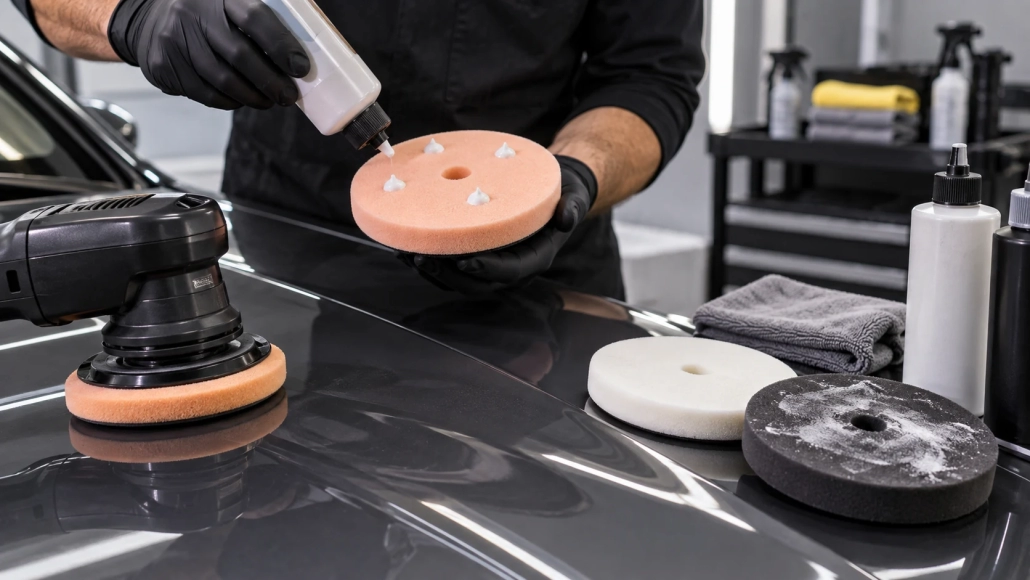
A polishing pad collects product residue and material from the surface as it works. Its condition at the fifth section may differ from the condition that produced the first successful test. In-process cleaning helps maintain consistency, but the method must suit the pad.
Look for accumulating residue, a changed working face, poorer removal or a shift in correction. Do not wait until the pad is visibly overwhelmed before evaluating it.
If performance drops, inspect the pad before adding more liquid. Extra compound can worsen an overloaded condition rather than restoring useful contact.
Follow the pad manufacturer’s instructions for brushes, air, cleaning equipment or other methods. Control the tool and cleaning environment as specified; improvised cleaning of a moving pad can create avoidable handling problems.
Keep released residue away from finished paint, clean towels and coating preparation areas. Cleaning the pad while contaminating the next stage is a false economy.
A face-cleaning step does not necessarily restore a deeply saturated pad to its initial condition. Have clean replacement pads available and change them when the accepted working behaviour cannot be maintained.
Inspect attachment and construction. Cleaning cannot repair a torn face, delamination or compromised fastening.
There is no universal one-pad-per-car rule or fixed cleaning interval for every product and vehicle. Use the manufacturer’s guidance and the actual workload.
For a studio procedure, describe the inspection points and replacement triggers rather than relying only on a timer. New technicians should know what a serviceable working face looks and behaves like.
Evaluate the clean paint after pad changes to confirm consistency. A good maintenance routine keeps the process close to the accepted test conditions and makes it easier to identify a genuine paint or product issue when the result changes.
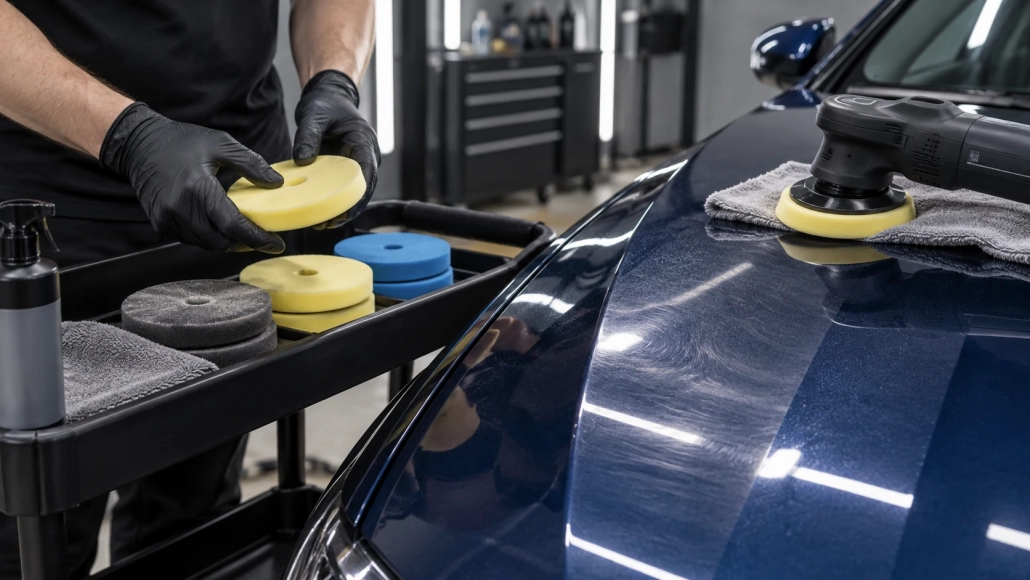
Compare polishing pad materials by their intended role, machine compatibility and maintenance needs before choosing a complete correction system.
Clean polishing pads according to their construction and dry them fully before storage, with attention to residue, attachment and readiness for reuse.
Understand pad priming and product loading so polishing starts evenly without dry contact, excessive residue or inconsistent performance.

 Washing and Drying Polishing Pads After Use