






A full polishing range.
From cutting and one-step correction to final finishing.
Specialist chemistry. Expert application.
 QUARTZ99 / CERAMIC BASE COAT
The foundation of your coating system.
A layerable quartz base coat designed for mechanical protection. Pair it with a suitable top coat to create the final finish.
For application by NANOLAB certified installers only.
Four formulas. Extended working time. Find the coating for your finish.
Explore the BEAST family of ceramic coatings.
Find the coating for each exterior surface.
 PPF & VINYLGLOSSProtection for glossy films and wraps.Discover
 MATTE & SATINMATTEProtection that respects the finish.Discover
 GLASSWINDOWSExplore dedicated glass protection.Discover
 WHEEL PROTECTIONWHEELSA dedicated coating for your wheels.Discover
 TRIM PROTECTIONPLASTICProtection for plastic surfaces.Discover
Dedicated care for the surfaces inside.
 LEATHER SURFACESLEATHERDiscover NANOLAB leather protection.Discover PLASTIC SURFACESPLASTICProtection for interior plastic surfaces.Discover TEXTILE SURFACESFABRICExplore the latest fabric formulation.Discover
Spray protection, maintenance and upcoming wash products.
 MAINTENANCEBEAST 365Explore the BEAST maintenance range.Discover
Next in washing, cleaning & care.
Ceramic protection for boats and yachts.
An easy-to-apply ceramic coating with an established track record on boats and yachts around the world.
Results vary with surface preparation, exposure and maintenance.
Read 50 MARINE guides →Explore MARINEProtection for the surfaces you live with.
A look at what we’re developing.
From cutting and one-step correction to final finishing.
A wider range for professional vehicle care.
Taking shape alongside BEAST & MATRIX.
Practical guidance for your next coating project.
Explore all guides →
Understand cut and gloss ratings on compound bottles and compare systems without treating manufacturer scales as universal measurements.
Updated · NANOLAB Knowledge
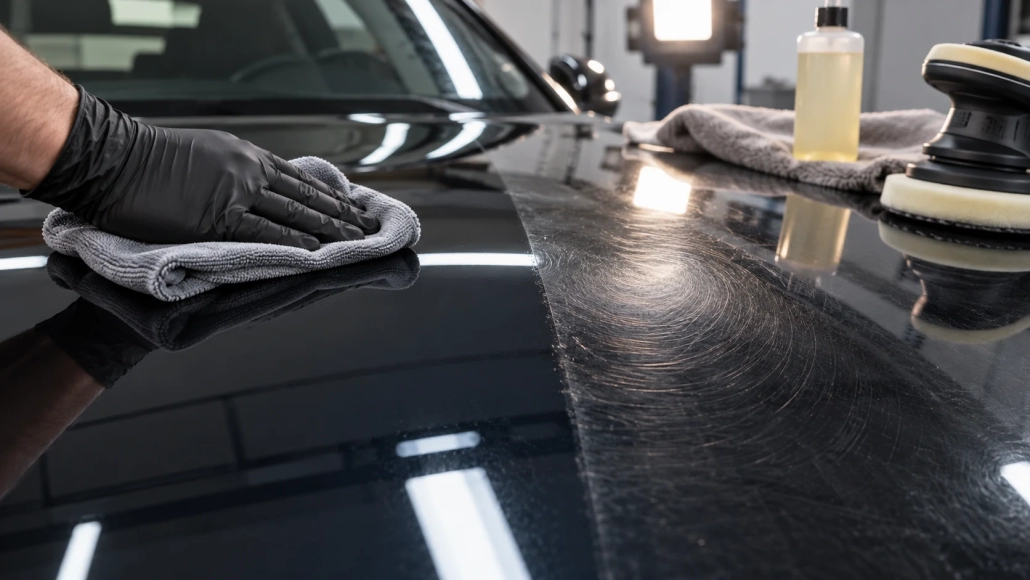
A cut rating helps position a product within a manufacturer’s range. It is not automatically a laboratory value that can be compared with another brand’s number. A nine on one bottle and a six on another may refer to different scales, test conditions or marketing conventions.
Look for a technical sheet explaining the intended correction role, approved pads and machine types. If a cut/gloss chart has no stated method, use it as a relative guide within that range. Do not convert it into a predicted amount of clear-coat removal.
The same caution applies to sanding-mark claims. A statement that a system removes a particular sanding grade depends on the specified finish, abrasive process, pad and operating conditions. It does not authorise chasing arbitrary scratches on an unknown vehicle.
Choose a representative surface and define the target defect before testing. Record the liquid, pad, machine movement, area and working method. Keep the starting condition and inspection process comparable.
Evaluate three separate results: useful defect reduction, finish quality after residue removal, and the work needed to reach the final standard. A fast cutting stage that requires lengthy refinement may not be the fastest complete system.
A high cut figure does not mean a product is better for a car with light swirls. A high gloss figure does not mean it will remove deeper defects. The useful product is the one that performs the required role with a controlled process.
Also consider wipe-off behaviour, dust management, pad cleaning and compatibility with the next treatment. These factors affect practical efficiency even though they may not appear in a simple rating.
If you publish your own evaluation, identify the products and test conditions and show both corrected and remaining defects. Do not present an informal workshop impression as a universal scientific ranking. A defensible conclusion is specific: this combination produced this result on this paint under these conditions. That is considerably more useful than choosing the largest number on a label.
Browse the complete car polish and compound guide.
These references illustrate named product systems. Use the current instructions for the exact product, pad and machine in your own process.
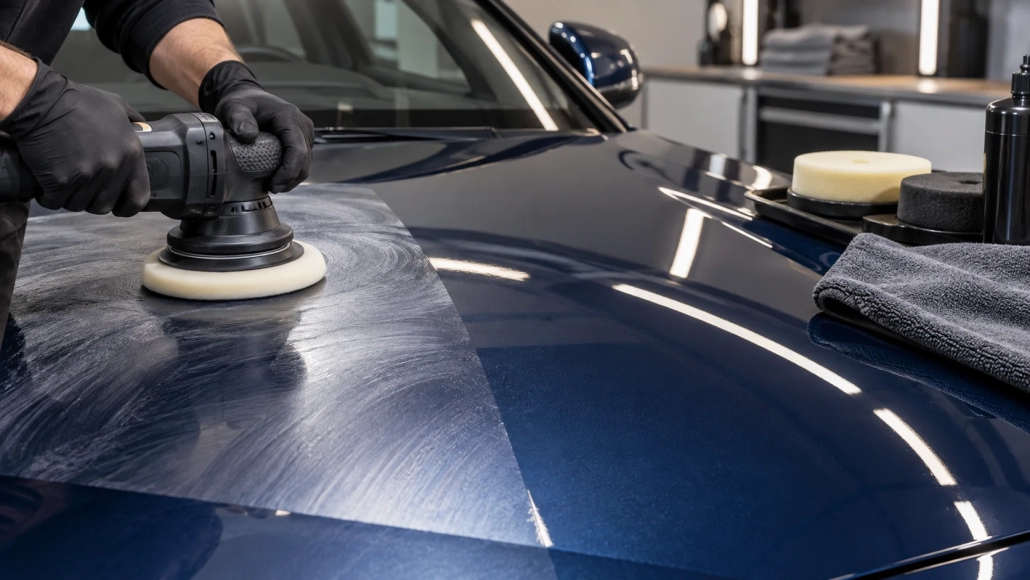
Understand heavy cut compound, fine cut and finishing polish, then choose a paint correction process that fits your paint, machine and intended result.
Explore abrasive behaviour in car polish and why working time, residue appearance and finishing technique must follow the actual product instructions.
Inspect corrected paint after suitable residue removal to distinguish lasting defect improvement from temporary masking by polishing residue.

 Diminishing vs Non-Diminishing Abrasives in Car Polish