






A full polishing range.
From cutting and one-step correction to final finishing.
Specialist chemistry. Expert application.
 QUARTZ99 / CERAMIC BASE COAT
The foundation of your coating system.
A layerable quartz base coat designed for mechanical protection. Pair it with a suitable top coat to create the final finish.
For application by NANOLAB certified installers only.
Four formulas. Extended working time. Find the coating for your finish.
Explore the BEAST family of ceramic coatings.
Find the coating for each exterior surface.
 PPF & VINYLGLOSSProtection for glossy films and wraps.Discover
 MATTE & SATINMATTEProtection that respects the finish.Discover
 GLASSWINDOWSExplore dedicated glass protection.Discover
 WHEEL PROTECTIONWHEELSA dedicated coating for your wheels.Discover
 TRIM PROTECTIONPLASTICProtection for plastic surfaces.Discover
Dedicated care for the surfaces inside.
 LEATHER SURFACESLEATHERDiscover NANOLAB leather protection.Discover PLASTIC SURFACESPLASTICProtection for interior plastic surfaces.Discover TEXTILE SURFACESFABRICExplore the latest fabric formulation.Discover
Spray protection, maintenance and upcoming wash products.
 MAINTENANCEBEAST 365Explore the BEAST maintenance range.Discover
Next in washing, cleaning & care.
Ceramic protection for boats and yachts.
An easy-to-apply ceramic coating with an established track record on boats and yachts around the world.
Results vary with surface preparation, exposure and maintenance.
Read 50 MARINE guides →Explore MARINEProtection for the surfaces you live with.
A look at what we’re developing.
From cutting and one-step correction to final finishing.
A wider range for professional vehicle care.
Taking shape alongside BEAST & MATRIX.
Practical guidance for your next coating project.
Explore all guides →
Plan compatible boat cleaning when freshwater availability is limited, without assuming ceramic coating removes the need for salt management.
Updated · NANOLAB Knowledge
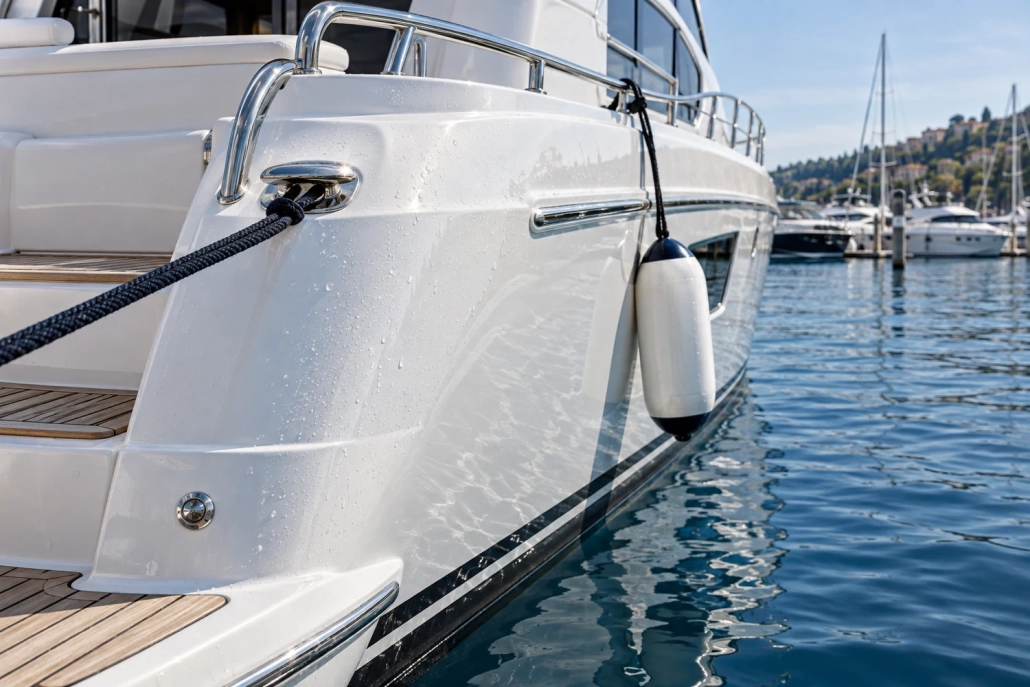
Freshwater availability can affect a boat’s cleaning routine. Ceramic coating does not eliminate the need to manage salt and contamination on compatible surfaces. When supply is limited, plan the whole cleaning process before applying products that require a thorough rinse.
Check marina rules, permitted wash methods and the amount of suitable water available. Follow the vessel’s care requirements for its different materials. Do not divert essential onboard supplies or use an unapproved substitute simply to complete cosmetic maintenance.
Identify the most exposed areas and arrange cleaning around actual use. A coating’s water repellency does not prove that salt has disappeared from a surface after a light spray.
Use only cleaning products whose instructions can be followed with the available equipment and water. If rinsing cannot be completed, postpone that chemical stage or obtain an approved alternative process. Do not allow cleaner to dry while searching for more water.
Keep tools clean and avoid dragging gritty residue across the finish. Areas with functional, electrical or non-slip requirements need their own appropriate care rather than a universal coating-based shortcut.
Consult NANOLAB MARINE for the coating’s guidance and discuss constraints with the supplier or maintenance professional. Record unusual exposure and arrange a suitable follow-up wash when conditions permit.
The goal is a workable routine under the actual water limits. Clear priorities, compatible products and honest recognition of incomplete cleaning are more useful than claiming a coated boat requires no freshwater maintenance.
Ceramic coating does not remove the need to wash a boat exposed to salt.
Divide a catamaran coating project by accessible surfaces, exposure and safe working positions before estimating the job.
Assess dark deposits on a coated transom with suitable cleaning and a separate check of the underlying finish.

 Ceramic Coating for Shower Glass After Building Work