






A full polishing range.
From cutting and one-step correction to final finishing.
Specialist chemistry. Expert application.
 QUARTZ99 / CERAMIC BASE COAT
The foundation of your coating system.
A layerable quartz base coat designed for mechanical protection. Pair it with a suitable top coat to create the final finish.
For application by NANOLAB certified installers only.
Four formulas. Extended working time. Find the coating for your finish.
Explore the BEAST family of ceramic coatings.
Find the coating for each exterior surface.
 PPF & VINYLGLOSSProtection for glossy films and wraps.Discover
 MATTE & SATINMATTEProtection that respects the finish.Discover
 GLASSWINDOWSExplore dedicated glass protection.Discover
 WHEEL PROTECTIONWHEELSA dedicated coating for your wheels.Discover
 TRIM PROTECTIONPLASTICProtection for plastic surfaces.Discover
Dedicated care for the surfaces inside.
 LEATHER SURFACESLEATHERDiscover NANOLAB leather protection.Discover PLASTIC SURFACESPLASTICProtection for interior plastic surfaces.Discover TEXTILE SURFACESFABRICExplore the latest fabric formulation.Discover
Spray protection, maintenance and upcoming wash products.
 MAINTENANCEBEAST 365Explore the BEAST maintenance range.Discover
Next in washing, cleaning & care.
Ceramic protection for boats and yachts.
An easy-to-apply ceramic coating with an established track record on boats and yachts around the world.
Results vary with surface preparation, exposure and maintenance.
Read 50 MARINE guides →Explore MARINEProtection for the surfaces you live with.
A look at what we’re developing.
From cutting and one-step correction to final finishing.
A wider range for professional vehicle care.
Taking shape alongside BEAST & MATRIX.
Practical guidance for your next coating project.
Explore all guides →
Compare coating condition by real exposure when one side of a berthed boat receives more sun or contamination than another.
Updated · NANOLAB Knowledge
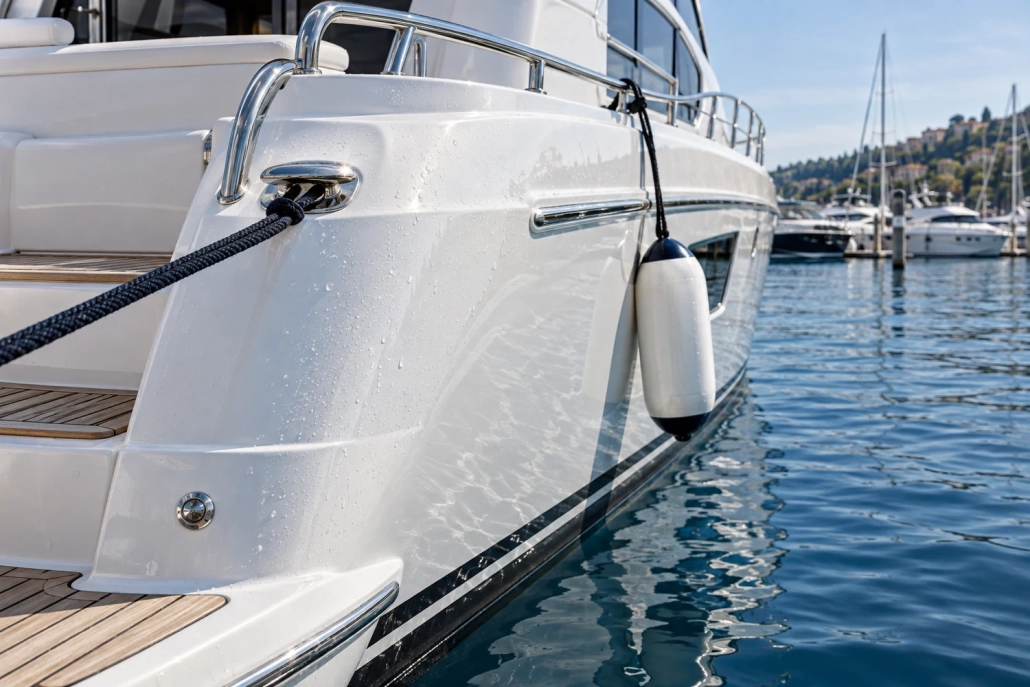
A boat at a fixed berth can expose its surfaces unevenly. One side may face stronger sunlight or recurring spray while another remains sheltered. Ceramic coating maintenance should account for that exposure instead of expecting every area to look and behave identically.
Map the berth position, shaded areas and common contamination routes. Note horizontal surfaces separately from vertical hull sides. These records help explain why washing needs or visible deposits differ across the vessel.
Do not infer coating thickness or installation quality solely from a difference in water beading between two differently exposed areas. Inspect cleanliness and maintenance history first.
Use compatible cleaning and a defined inspection method on representative areas. Photograph the dry finish in comparable lighting where practical. A shaded wet patch and a sunlit dry panel are not a useful direct comparison.
Record persistent differences and any local damage. If a sheltered area retains residue because it dries slowly, address that care issue separately from contamination on the exposed side. Avoid adding a topper everywhere just to make one observation look more uniform.
Review NANOLAB MARINE for product-specific care and seek advice where a change remains unexplained. Set more frequent condition checks for areas with greater exposure or recurring contamination.
Keep the whole-vessel maintenance plan coherent while allowing local needs to differ. A zone-based record helps the owner and cleaning contractor make proportionate decisions without labelling normal exposure differences as universal coating failure.
Horizontal ledges and panels can retain water and debris differently from vertical hull sides.
Plan compatible boat cleaning when freshwater availability is limited, without assuming ceramic coating removes the need for salt management.
Divide a catamaran coating project by accessible surfaces, exposure and safe working positions before estimating the job.
 Marine Ceramic Coating and Freshwater Wash Restrictions