






A full polishing range.
From cutting and one-step correction to final finishing.
Specialist chemistry. Expert application.
 QUARTZ99 / CERAMIC BASE COAT
The foundation of your coating system.
A layerable quartz base coat designed for mechanical protection. Pair it with a suitable top coat to create the final finish.
For application by NANOLAB certified installers only.
Four formulas. Extended working time. Find the coating for your finish.
Explore the BEAST family of ceramic coatings.
Find the coating for each exterior surface.
 PPF & VINYLGLOSSProtection for glossy films and wraps.Discover
 MATTE & SATINMATTEProtection that respects the finish.Discover
 GLASSWINDOWSExplore dedicated glass protection.Discover
 WHEEL PROTECTIONWHEELSA dedicated coating for your wheels.Discover
 TRIM PROTECTIONPLASTICProtection for plastic surfaces.Discover
Dedicated care for the surfaces inside.
 LEATHER SURFACESLEATHERDiscover NANOLAB leather protection.Discover PLASTIC SURFACESPLASTICProtection for interior plastic surfaces.Discover TEXTILE SURFACESFABRICExplore the latest fabric formulation.Discover
Spray protection, maintenance and upcoming wash products.
 MAINTENANCEBEAST 365Explore the BEAST maintenance range.Discover
Next in washing, cleaning & care.
Ceramic protection for boats and yachts.
An easy-to-apply ceramic coating with an established track record on boats and yachts around the world.
Results vary with surface preparation, exposure and maintenance.
Read 50 MARINE guides →Explore MARINEProtection for the surfaces you live with.
A look at what we’re developing.
From cutting and one-step correction to final finishing.
A wider range for professional vehicle care.
Taking shape alongside BEAST & MATRIX.
Practical guidance for your next coating project.
Explore all guides →
Divide a catamaran coating project by accessible surfaces, exposure and safe working positions before estimating the job.
Updated · NANOLAB Knowledge
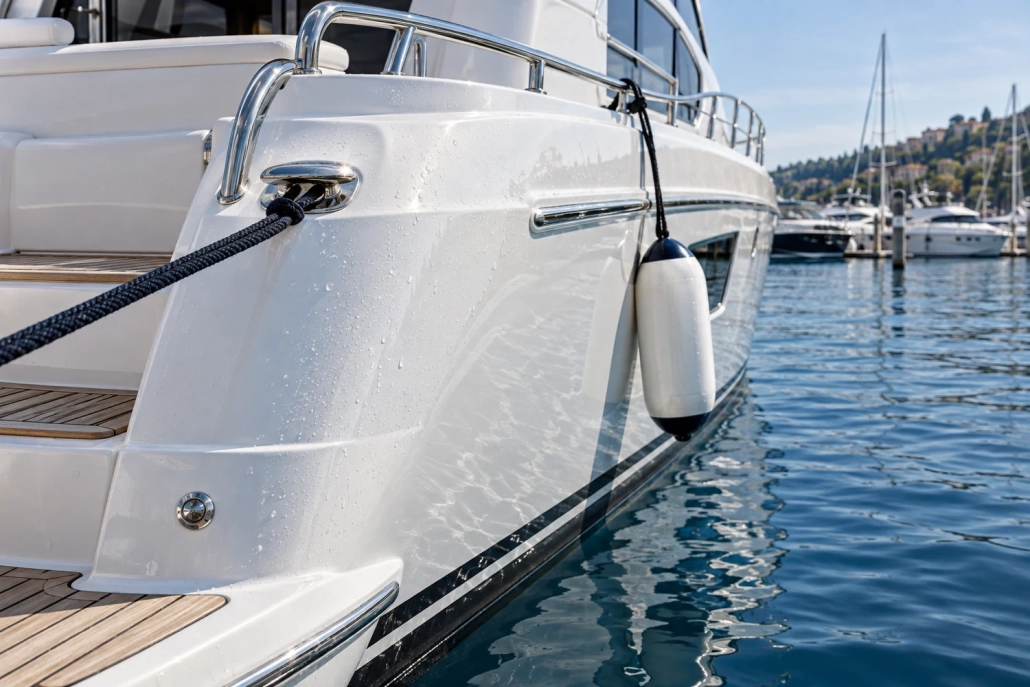
A catamaran presents several different working zones, including two hulls, connecting structures and areas with restricted access. A ceramic coating plan should describe the surfaces actually included. Overall boat length alone is a poor description of the work.
Identify gelcoat, paint, glazing, metal and other finishes. Mark the waterline, excluded underwater areas and components with functional requirements. Cosmetic ceramic coating is not a substitute for antifouling or an approval for every marine substrate.
Agree safe access with the boatyard or responsible operator. Do not begin application where the installer cannot maintain a stable position, inspect the finish or remove excess material. Hard-to-reach areas need a practical plan, not a promise that they will be dealt with somehow.
Outer hull sides, sheltered inner areas and horizontal surfaces may have different contamination and working conditions. Inspect them independently and record preparation needs. A successful test on one shaded face does not automatically represent a sun-exposed deck surface.
Sequence cleaning and coating so work above does not drip onto freshly completed sections below. Coordinate neighbouring trades and the movement of equipment before the protective stage begins.
Check NANOLAB MARINE for the supported application and current instructions. Use a zone checklist to record preparation, application and inspection, including any exclusions agreed during the job.
At handover, provide the owner with that map and the relevant care requirements. A clear record supports later maintenance because different hull and deck areas can be inspected against what was actually treated, rather than a vague description of a completely coated boat.
A successful marine coating project has a clear sequence: inspection, preparation, application, protected curing and handover.
Assess dark deposits on a coated transom with suitable cleaning and a separate check of the underlying finish.
Coordinate lifting and coating schedules so fresh protection and existing finishes are assessed around strap contact areas.

 Exhaust Residue on a Ceramic-Coated Boat Transom