






A full polishing range.
From cutting and one-step correction to final finishing.
Specialist chemistry. Expert application.
 QUARTZ99 / CERAMIC BASE COAT
The foundation of your coating system.
A layerable quartz base coat designed for mechanical protection. Pair it with a suitable top coat to create the final finish.
For application by NANOLAB certified installers only.
Four formulas. Extended working time. Find the coating for your finish.
Explore the BEAST family of ceramic coatings.
Find the coating for each exterior surface.
 PPF & VINYLGLOSSProtection for glossy films and wraps.Discover
 MATTE & SATINMATTEProtection that respects the finish.Discover
 GLASSWINDOWSExplore dedicated glass protection.Discover
 WHEEL PROTECTIONWHEELSA dedicated coating for your wheels.Discover
 TRIM PROTECTIONPLASTICProtection for plastic surfaces.Discover
Dedicated care for the surfaces inside.
 LEATHER SURFACESLEATHERDiscover NANOLAB leather protection.Discover PLASTIC SURFACESPLASTICProtection for interior plastic surfaces.Discover TEXTILE SURFACESFABRICExplore the latest fabric formulation.Discover
Spray protection, maintenance and upcoming wash products.
 MAINTENANCEBEAST 365Explore the BEAST maintenance range.Discover
Next in washing, cleaning & care.
Ceramic protection for boats and yachts.
An easy-to-apply ceramic coating with an established track record on boats and yachts around the world.
Results vary with surface preparation, exposure and maintenance.
Read 50 MARINE guides →Explore MARINEProtection for the surfaces you live with.
A look at what we’re developing.
From cutting and one-step correction to final finishing.
A wider range for professional vehicle care.
Taking shape alongside BEAST & MATRIX.
Practical guidance for your next coating project.
Explore all guides →
Identify film condition and seek product information before coating a used vehicle with undocumented paint protection film.
Updated · NANOLAB Knowledge
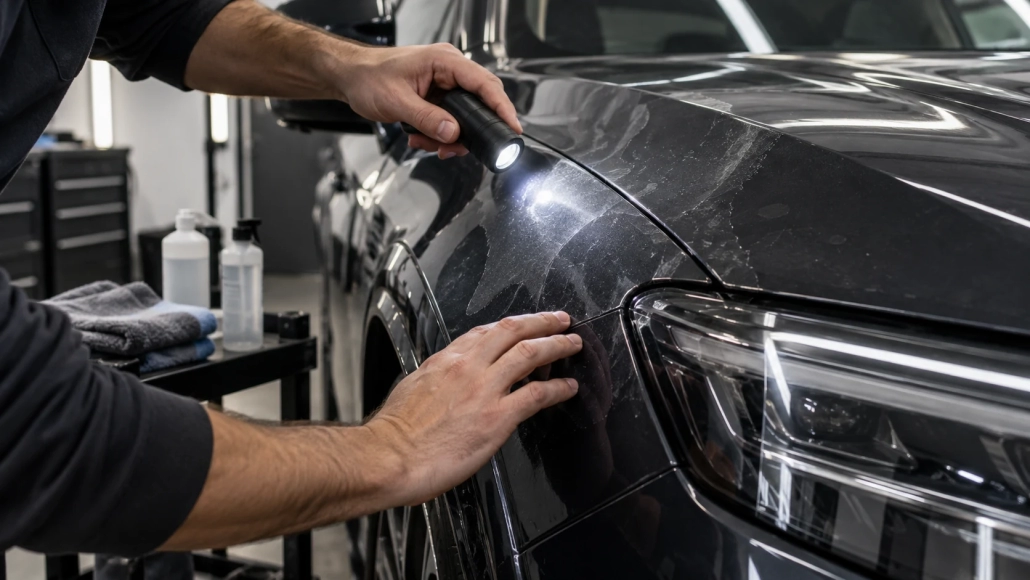
A used car may arrive with PPF but no record of the film brand, installation date or previous treatments. Ceramic coating should follow an assessment of that uncertainty. A clear-looking film is not proof that every preparation chemical or coating will be suitable.
Ask for invoices, installer details and any care records. Map film coverage and look for ageing, edge lifting, staining and repaired sections. Different panels may have been installed at different times with different products.
Do not identify a film solely from its water beading or colour. Previous toppers and cleaners can change surface behaviour. Record what is known and what remains unconfirmed.
If the film appears sound, seek guidance for a conservative cleaning and compatibility check. An inconspicuous test can provide useful local information but does not establish the identity or remaining life of the whole installation.
If the film is failing or its condition makes treatment uncertain, obtain a film installer’s assessment first. Coating will not repair the adhesive or reverse deterioration. Avoid aggressive polishing intended to make the old film look temporarily newer.
Contact NANOLAB support with photographs, surface details and available history before choosing a coating. If suitability cannot be established, leave the film outside the coating scope and discuss cleaning or replacement options with the appropriate installer.
Retain the new inspection record even if no coating is applied. Future owners and workshops then have a better starting point, and any later protection decision can be based on documented condition rather than assumptions inherited with the car.
Assess older PPF for staining, lifting, cracking and finish changes before deciding whether cleaning, coating or film review is appropriate.
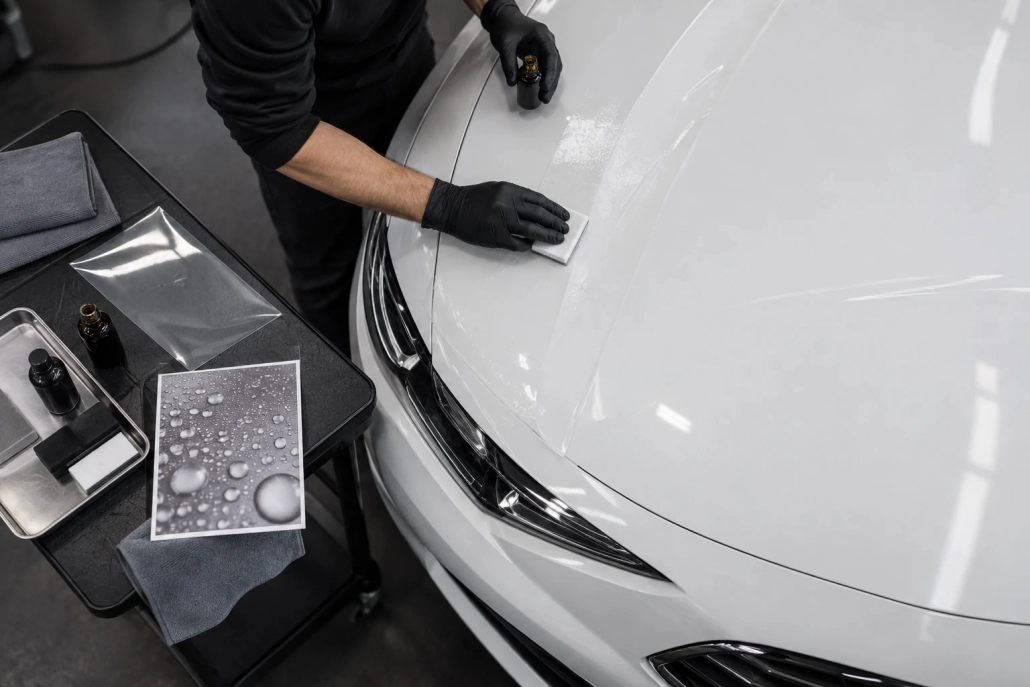
Check film-installation residue and preparation requirements before adding ceramic coating to newly fitted paint protection film.
Coordinate film readiness and coating curing requirements when planning PPF installation and ceramic protection together.

 Ceramic Coating Job Estimates: Separate Labour from Cure Time