






A full polishing range.
From cutting and one-step correction to final finishing.
Specialist chemistry. Expert application.
 QUARTZ99 / CERAMIC BASE COAT
The foundation of your coating system.
A layerable quartz base coat designed for mechanical protection. Pair it with a suitable top coat to create the final finish.
For application by NANOLAB certified installers only.
Four formulas. Extended working time. Find the coating for your finish.
Explore the BEAST family of ceramic coatings.
Find the coating for each exterior surface.
 PPF & VINYLGLOSSProtection for glossy films and wraps.Discover
 MATTE & SATINMATTEProtection that respects the finish.Discover
 GLASSWINDOWSExplore dedicated glass protection.Discover
 WHEEL PROTECTIONWHEELSA dedicated coating for your wheels.Discover
 TRIM PROTECTIONPLASTICProtection for plastic surfaces.Discover
Dedicated care for the surfaces inside.
 LEATHER SURFACESLEATHERDiscover NANOLAB leather protection.Discover PLASTIC SURFACESPLASTICProtection for interior plastic surfaces.Discover TEXTILE SURFACESFABRICExplore the latest fabric formulation.Discover
Spray protection, maintenance and upcoming wash products.
 MAINTENANCEBEAST 365Explore the BEAST maintenance range.Discover
Next in washing, cleaning & care.
Ceramic protection for boats and yachts.
An easy-to-apply ceramic coating with an established track record on boats and yachts around the world.
Results vary with surface preparation, exposure and maintenance.
Read 50 MARINE guides →Explore MARINEProtection for the surfaces you live with.
A look at what we’re developing.
From cutting and one-step correction to final finishing.
A wider range for professional vehicle care.
Taking shape alongside BEAST & MATRIX.
Practical guidance for your next coating project.
Explore all guides →
Keep film and coating identities, installation dates and care instructions together when adding ceramic protection to PPF.
Updated · NANOLAB Knowledge
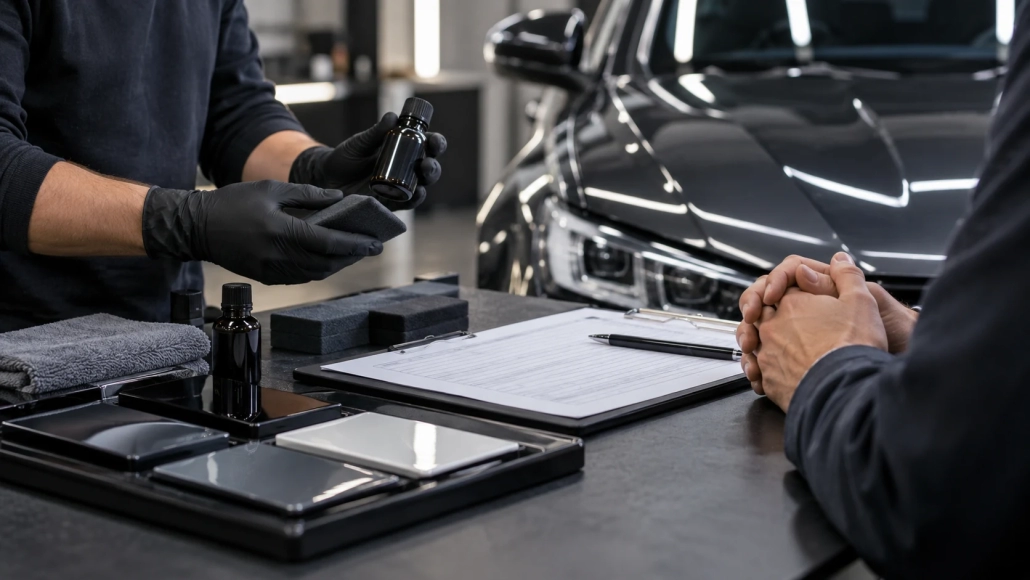
When ceramic coating is added to PPF, two different products and installation histories may need to be tracked. Keeping those records together helps the owner ask useful support questions. It does not mean that one supplier automatically covers the other’s product or workmanship.
Retain film and coating product names, installer details, dates and written care requirements. Ask for the terms that apply to the exact products and location. Avoid relying on a general website headline or an informal promise of a fixed number of years.
Record which panels received film and which received only coating. Include any exceptions, repairs or test areas. A coverage map is easier to use later than a receipt that says only ‘full protection’.
Before application, ask whether the film manufacturer supports the proposed coating and preparation process. Keep the written answer where available. A compatible coating still needs correct installation and care; compatibility is not a blanket performance guarantee.
For product-specific questions, contact NANOLAB with the film identity and intended use. Do not treat this guide as a legal interpretation of warranty coverage; the applicable written terms and relevant parties determine that.
If a film panel is replaced, record the new film and any renewed coating separately. Keep the replacement date and care restrictions visible so the owner does not apply the older system’s timeline to a fresh section.
At a support visit, provide the records and an accurate account of maintenance. Clear documentation helps distinguish film adhesion, paint condition and surface-coating concerns without assuming the cause from the first visible symptom.
Clarify the product, coverage, maintenance obligations and claim process before accepting a ceramic coating warranty proposal.
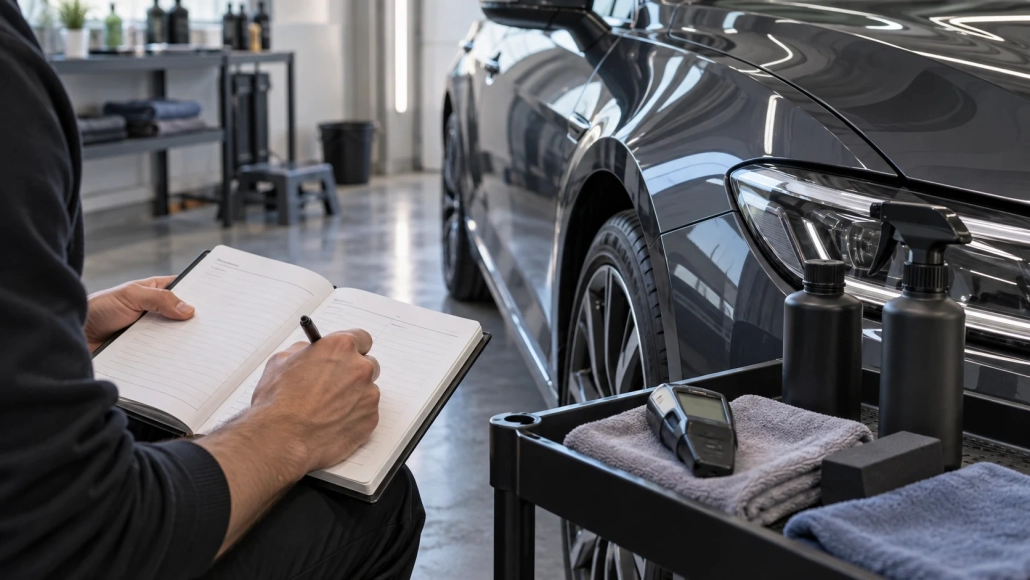
Check the film, existing coating and maintenance goal before adding another spray or topper to paint protection film.
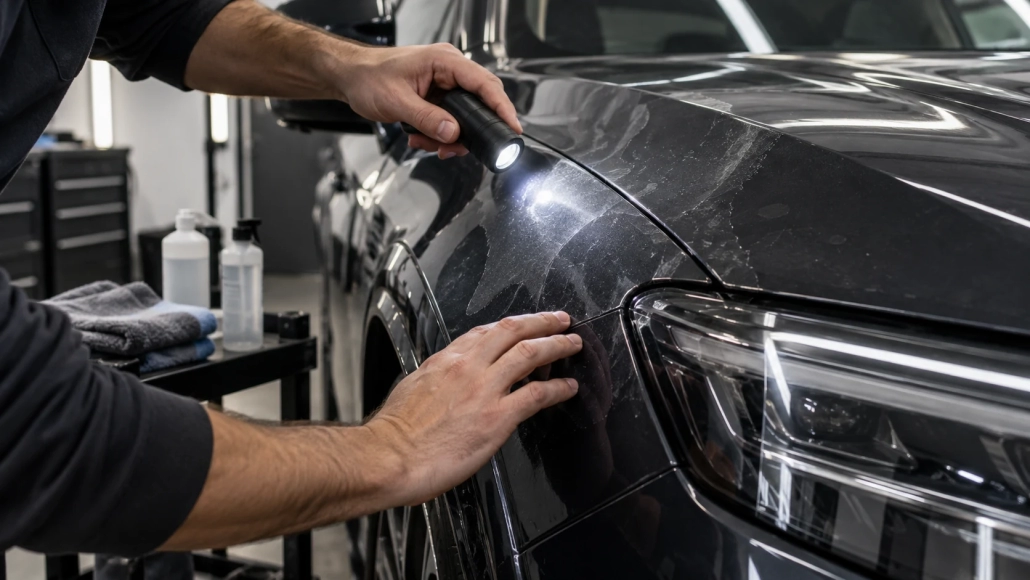
Identify film condition and seek product information before coating a used vehicle with undocumented paint protection film.

 Ceramic Coating Toppers on PPF: Avoiding Unclear Layering