






A full polishing range.
From cutting and one-step correction to final finishing.
Specialist chemistry. Expert application.
 QUARTZ99 / CERAMIC BASE COAT
The foundation of your coating system.
A layerable quartz base coat designed for mechanical protection. Pair it with a suitable top coat to create the final finish.
For application by NANOLAB certified installers only.
Four formulas. Extended working time. Find the coating for your finish.
Explore the BEAST family of ceramic coatings.
Find the coating for each exterior surface.
 PPF & VINYLGLOSSProtection for glossy films and wraps.Discover
 MATTE & SATINMATTEProtection that respects the finish.Discover
 GLASSWINDOWSExplore dedicated glass protection.Discover
 WHEEL PROTECTIONWHEELSA dedicated coating for your wheels.Discover
 TRIM PROTECTIONPLASTICProtection for plastic surfaces.Discover
Dedicated care for the surfaces inside.
 LEATHER SURFACESLEATHERDiscover NANOLAB leather protection.Discover PLASTIC SURFACESPLASTICProtection for interior plastic surfaces.Discover TEXTILE SURFACESFABRICExplore the latest fabric formulation.Discover
Spray protection, maintenance and upcoming wash products.
 MAINTENANCEBEAST 365Explore the BEAST maintenance range.Discover
Next in washing, cleaning & care.
Ceramic protection for boats and yachts.
An easy-to-apply ceramic coating with an established track record on boats and yachts around the world.
Results vary with surface preparation, exposure and maintenance.
Read 50 MARINE guides →Explore MARINEProtection for the surfaces you live with.
A look at what we’re developing.
From cutting and one-step correction to final finishing.
A wider range for professional vehicle care.
Taking shape alongside BEAST & MATRIX.
Practical guidance for your next coating project.
Explore all guides →
Check the film's existing surface treatment and approved care before adding a separate ceramic coating.
Updated · NANOLAB Knowledge
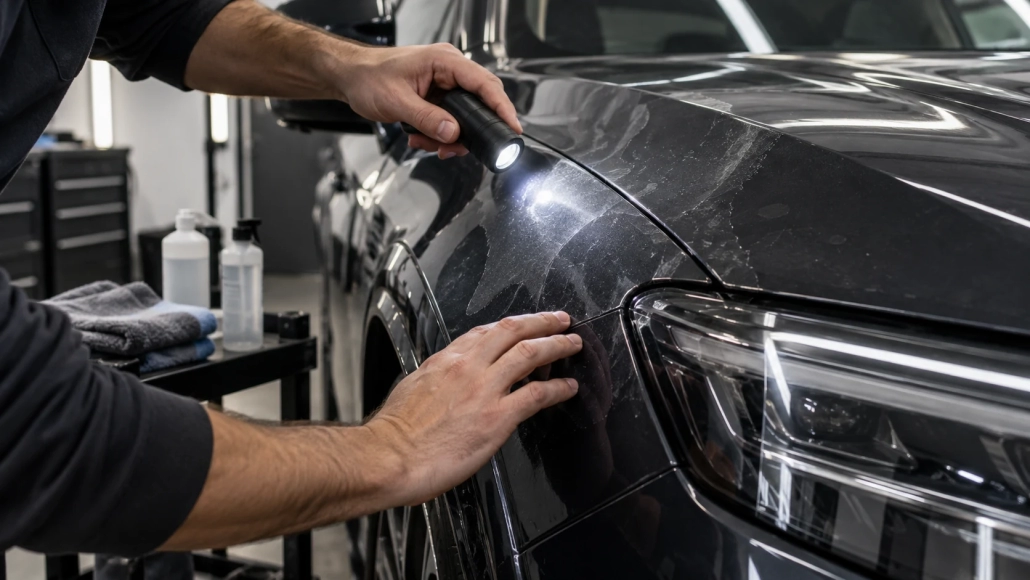
Many PPF products have an engineered outer surface with their own maintenance requirements. An additional ceramic coating should be evaluated as part of that surface system. The fact that the film already repels water neither proves compatibility nor means a second treatment is necessary.
Ask for the film product name, installation date and current care instructions. Marketing terms such as self-healing or hydrophobic do not fully describe preparation compatibility. Check whether the film manufacturer supports the proposed coating and cleaning sequence.
Inspect existing condition before deciding on additional protection. A stained, damaged or lifting film requires assessment of that problem first. Coating does not repair the adhesive layer or restore a failing topcoat.
State what the extra treatment is meant to achieve: a particular maintenance routine, appearance or supported surface behaviour. If the film already meets the owner’s needs, additional layering may add complexity without a clear reason.
Where treatment is supported, test an appropriate inconspicuous area using the complete preparation and application process. Assess appearance and cleaning behaviour after the required curing stage. Do not polish the film to remove its factory treatment unless explicitly instructed by the film manufacturer.
Ask NANOLAB support about the exact film and proposed coating when compatibility is uncertain. Retain both product identities with the vehicle’s records.
At handover, specify which maintenance products are approved and avoid an open-ended instruction to add any ceramic spray. A clear system makes future troubleshooting easier because the owner and installer know which treatments are present on the film.
Assess older PPF for staining, lifting, cracking and finish changes before deciding whether cleaning, coating or film review is appropriate.
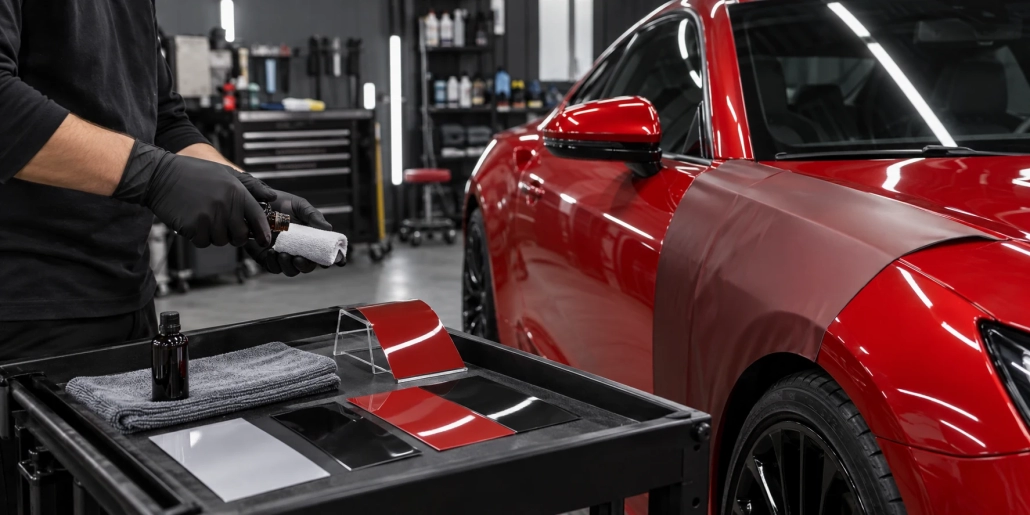
Assess texture, sheen and residue removal before considering ceramic coating on carbon-look or patterned vinyl wrap.
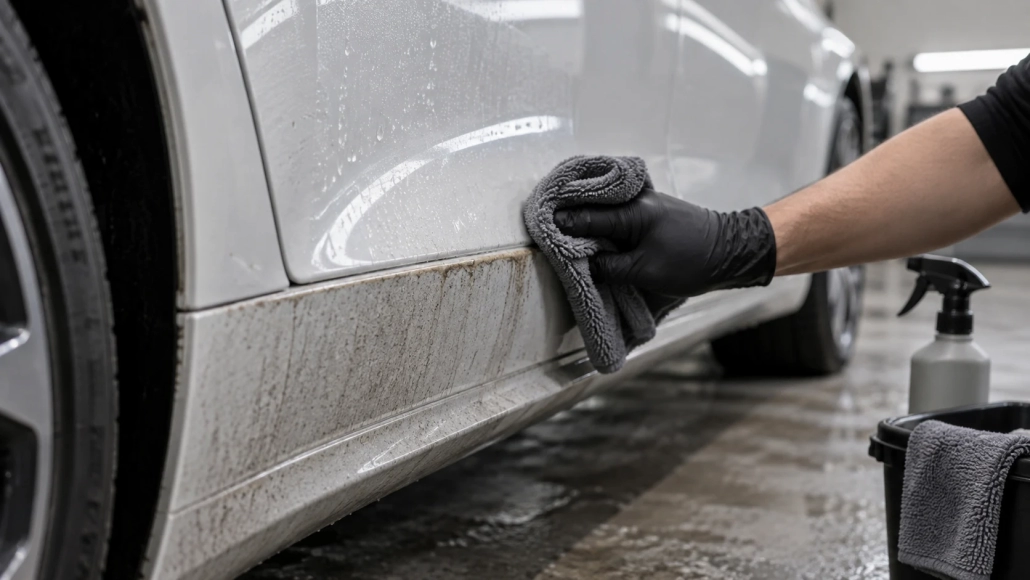
Plan preparation and coating where protected film ends midway across a painted panel, keeping the boundary clean and inspectable.

 Ceramic Coating on Textured Carbon-Look Vinyl