






A full polishing range.
From cutting and one-step correction to final finishing.
Specialist chemistry. Expert application.
 QUARTZ99 / CERAMIC BASE COAT
The foundation of your coating system.
A layerable quartz base coat designed for mechanical protection. Pair it with a suitable top coat to create the final finish.
For application by NANOLAB certified installers only.
Four formulas. Extended working time. Find the coating for your finish.
Explore the BEAST family of ceramic coatings.
Find the coating for each exterior surface.
 PPF & VINYLGLOSSProtection for glossy films and wraps.Discover
 MATTE & SATINMATTEProtection that respects the finish.Discover
 GLASSWINDOWSExplore dedicated glass protection.Discover
 WHEEL PROTECTIONWHEELSA dedicated coating for your wheels.Discover
 TRIM PROTECTIONPLASTICProtection for plastic surfaces.Discover
Dedicated care for the surfaces inside.
 LEATHER SURFACESLEATHERDiscover NANOLAB leather protection.Discover PLASTIC SURFACESPLASTICProtection for interior plastic surfaces.Discover TEXTILE SURFACESFABRICExplore the latest fabric formulation.Discover
Spray protection, maintenance and upcoming wash products.
 MAINTENANCEBEAST 365Explore the BEAST maintenance range.Discover
Next in washing, cleaning & care.
Ceramic protection for boats and yachts.
An easy-to-apply ceramic coating with an established track record on boats and yachts around the world.
Results vary with surface preparation, exposure and maintenance.
Read 50 MARINE guides →Explore MARINEProtection for the surfaces you live with.
A look at what we’re developing.
From cutting and one-step correction to final finishing.
A wider range for professional vehicle care.
Taking shape alongside BEAST & MATRIX.
Practical guidance for your next coating project.
Explore all guides →
Review cleaner, dilution, contact and inspection conditions before using wash-cycle counts to compare ceramic coatings.
Updated · NANOLAB Knowledge
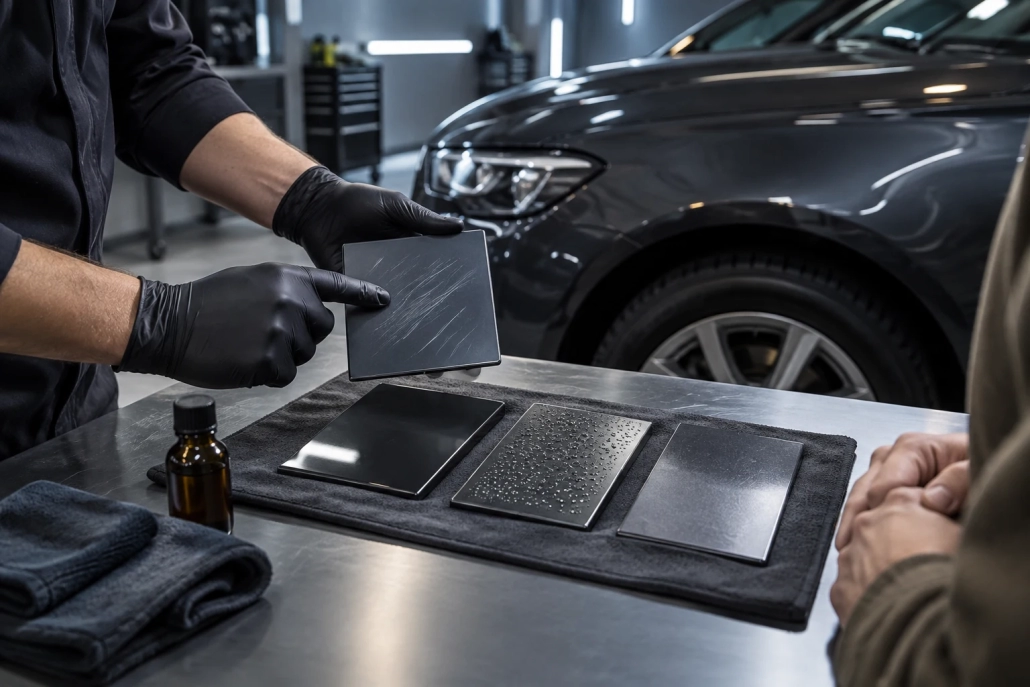
A wash-cycle count describes a test only when the wash itself is defined. Ten gentle cleaning cycles and ten aggressive laboratory exposures may answer different questions. The number alone should not be converted into years of normal vehicle use.
Record cleaner identity, concentration, contact time, application method, rinsing and drying. Include whether mechanical contact was involved and how it was controlled. If those details change during testing, the resulting count no longer represents one consistent process.
Prepare equivalent samples and follow each coating’s specified curing requirements. Start measurements from a clearly documented baseline so pre-existing differences do not become apparent product effects.
Decide what will be assessed after each interval: appearance, a defined water-behaviour observation or another supported measurement. Avoid switching the definition of success after the results are known. A temporary surface residue can influence beading without proving complete loss of the underlying treatment.
Use repeat samples and retain all relevant results. If one panel behaves differently, investigate and report the variation rather than excluding it without a documented reason.
A useful summary states the tested conditions, number of cycles and observed change. It should not say ‘survives any cleaner’ or promise a fixed service life unless appropriate evidence actually supports those claims.
Use NANOLAB product documentation to plan compatible real-world maintenance. A laboratory wash challenge can contribute to evaluation, but it should remain distinct from the care instructions customers are expected to follow on their vehicles.
Keep coating performance statements connected to their product version, test method and limitations before using them in sales material.
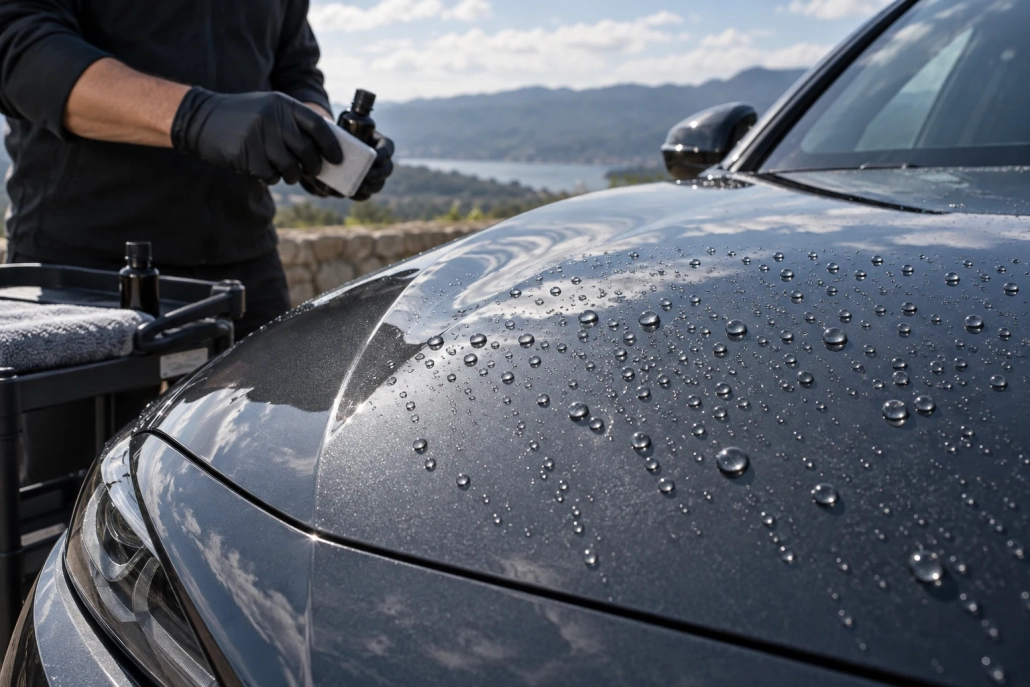
Distinguish the shape of a water drop from how easily it moves when comparing ceramic coating water behaviour.
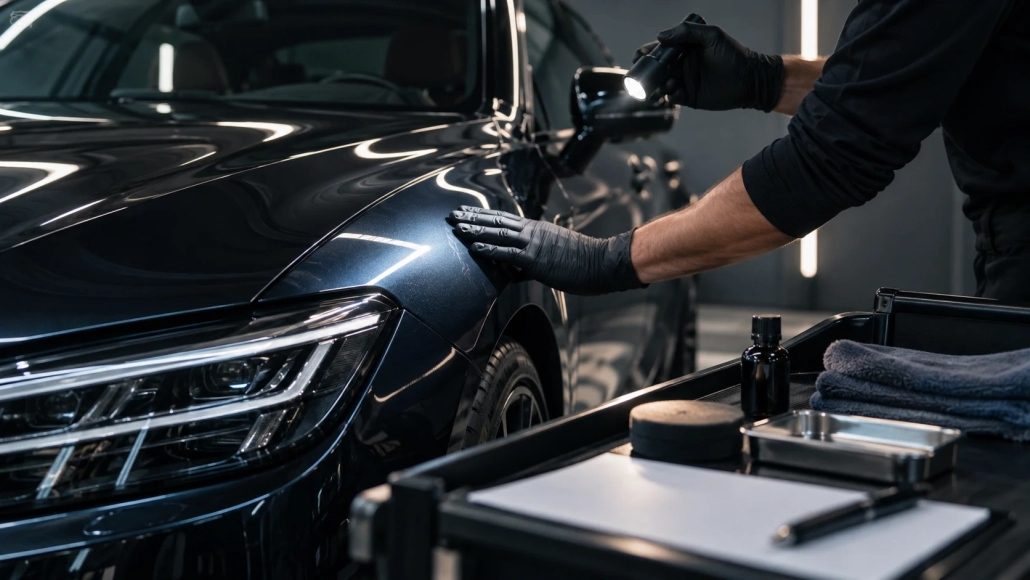
Compare gloss readings with the same measurement geometry, surface preparation and locations rather than treating every gloss number as equivalent.

 Ceramic Coating Split-Panel Tests: Controlling the Boundary