






A full polishing range.
From cutting and one-step correction to final finishing.
Specialist chemistry. Expert application.
 QUARTZ99 / CERAMIC BASE COAT
The foundation of your coating system.
A layerable quartz base coat designed for mechanical protection. Pair it with a suitable top coat to create the final finish.
For application by NANOLAB certified installers only.
Four formulas. Extended working time. Find the coating for your finish.
Explore the BEAST family of ceramic coatings.
Find the coating for each exterior surface.
 PPF & VINYLGLOSSProtection for glossy films and wraps.Discover
 MATTE & SATINMATTEProtection that respects the finish.Discover
 GLASSWINDOWSExplore dedicated glass protection.Discover
 WHEEL PROTECTIONWHEELSA dedicated coating for your wheels.Discover
 TRIM PROTECTIONPLASTICProtection for plastic surfaces.Discover
Dedicated care for the surfaces inside.
 LEATHER SURFACESLEATHERDiscover NANOLAB leather protection.Discover PLASTIC SURFACESPLASTICProtection for interior plastic surfaces.Discover TEXTILE SURFACESFABRICExplore the latest fabric formulation.Discover
Spray protection, maintenance and upcoming wash products.
 MAINTENANCEBEAST 365Explore the BEAST maintenance range.Discover
Next in washing, cleaning & care.
Ceramic protection for boats and yachts.
An easy-to-apply ceramic coating with an established track record on boats and yachts around the world.
Results vary with surface preparation, exposure and maintenance.
Read 50 MARINE guides →Explore MARINEProtection for the surfaces you live with.
A look at what we’re developing.
From cutting and one-step correction to final finishing.
A wider range for professional vehicle care.
Taking shape alongside BEAST & MATRIX.
Practical guidance for your next coating project.
Explore all guides →
Plan leather protection around perforations, seams and seat features while preventing excess liquid from entering openings.
Updated · NANOLAB Knowledge
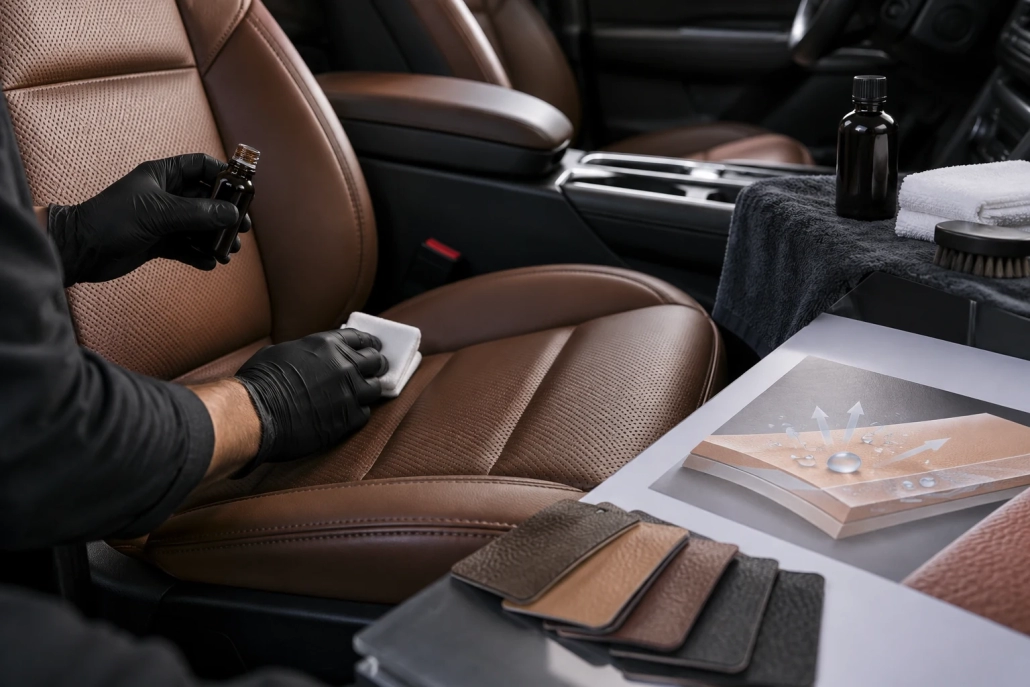
Perforated seats require attention to both the leather finish and the openings within it. A ceramic leather treatment should be applied only when the product and vehicle guidance support the specific surface. Perforations are not reservoirs for extra material.
Confirm whether the exposed surface is genuine leather, synthetic leather or another material, and check any factory treatment. Inspect wear, cracks and staining before applying protection. A coating is not a repair for a damaged surface finish.
Note ventilation, heating and other seat features. Follow the vehicle manufacturer’s cleaning restrictions and avoid introducing liquid into openings or electrical components. Suitability for leather does not authorise saturating the seat.
Review NANOLAB LEATHER for supported uses and the current preparation and application process. Use a representative inconspicuous area where practical, assessing colour, sheen and feel after the specified curing stage.
Apply only by the approved method, controlling material near perforations and seams. Do not compensate for an awkward pattern by spraying large amounts directly onto the seat unless explicitly instructed. Inspect for residue collecting around holes.
Explain the waiting period before use and the compatible cleaning routine. Blot or treat spills through the recommended process rather than assuming they cannot reach a protected surface. Protection does not make leather immune to wear or remove the need for regular cleaning.
Record which seats and panels were treated, including any excluded areas. Future repairs, upholstery replacement or deep cleaning may change the protection plan locally, so retain the product information with the vehicle’s maintenance record.
Identify the upholstery finish, clean without over-wetting and test a dedicated interior treatment before applying it across the seats.
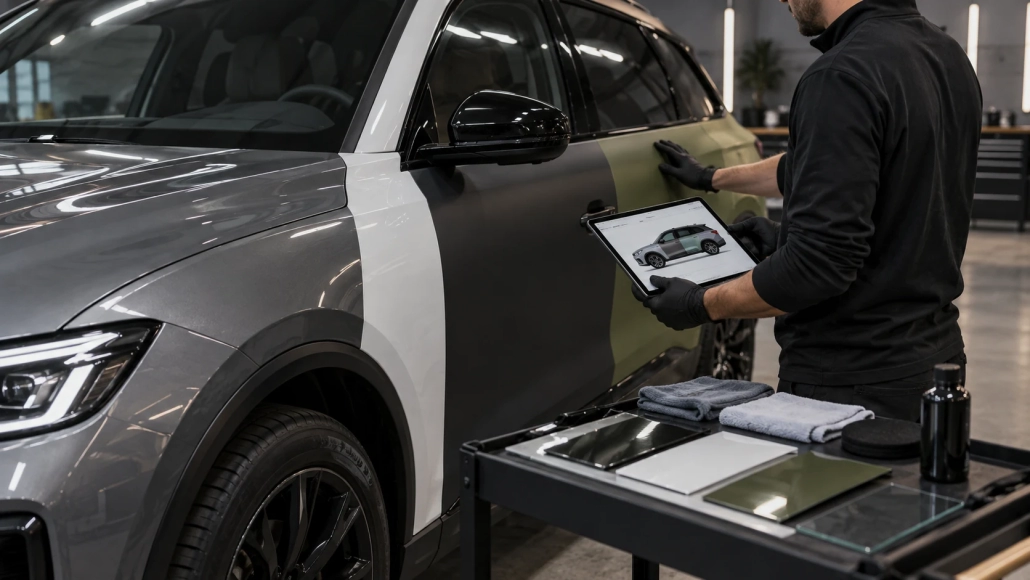
Check screen-specific care requirements before applying a ceramic coating or preparation cleaner to an automotive display.
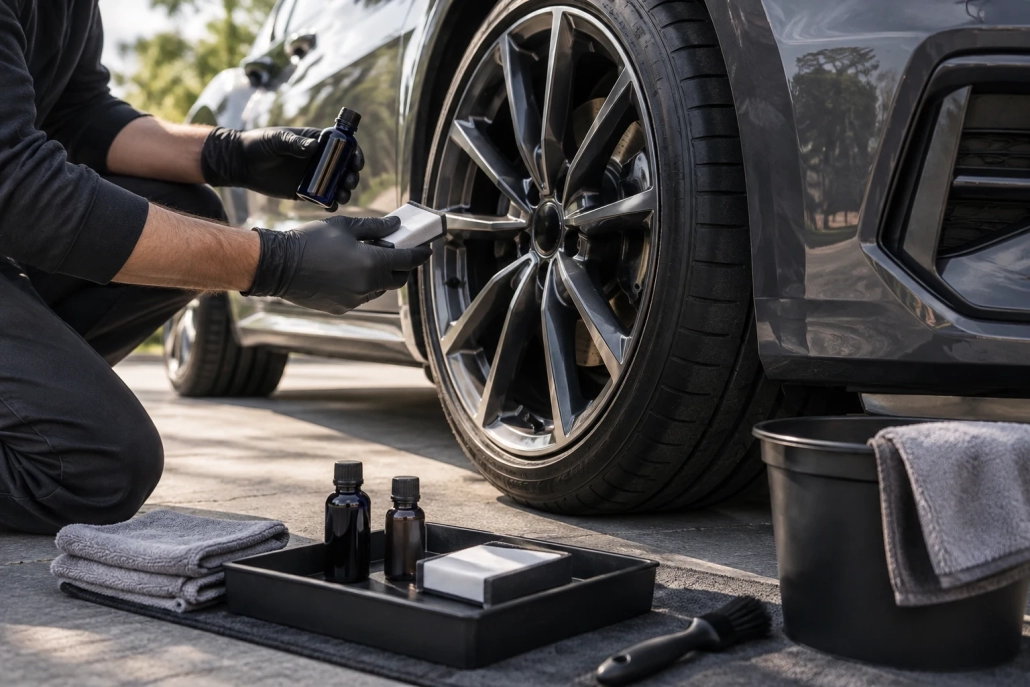
Separate compatible caliper finishes from braking friction surfaces and plan qualified access before applying a dedicated coating.

 Dye Transfer on Ceramic-Protected Leather